Why Black and White Is the Language of Portrait Photography
Color tells you what someone looks like. Black and white tells you who they are.
Think about the last portrait that stopped you. The one that felt like it actually contained a person rather than just showing you what they looked like. There is a good chance it was in black and white.
That is not a coincidence. There is something specific that black and white does to a portrait that color cannot replicate and it has nothing to do with style or trend or looking artistic. It has to do with what the viewer is forced to pay attention to when the color information is gone.
Color tells you what someone looks like. Black and white tells you who they are. That difference is the whole argument.
What color is actually doing in a portrait
When you look at a color portrait your eye processes a significant amount of information very quickly. Hair color. Skin tone. The color of the clothing. Whether the subject is flushed or pale. The color of the background and how it relates to everything else in the frame.
This is useful data if you are trying to identify someone. It is not particularly useful if you are trying to understand them. Color fills the frame with facts about appearance and the eye processes those facts efficiently and moves on. The portrait has been received. It has not necessarily been felt.
There is also something else color does that most photographers do not consciously notice. It introduces emotional associations that have nothing to do with the subject. A red shirt reads as warm or aggressive depending on the viewer. A blue background reads as calm or cold. These associations are not in the person being photographed. They are the viewer's response to color and they quietly compete with the actual emotional information the subject is providing.
Remove the color and all of that falls away. What remains is the person.
What black and white reveals instead
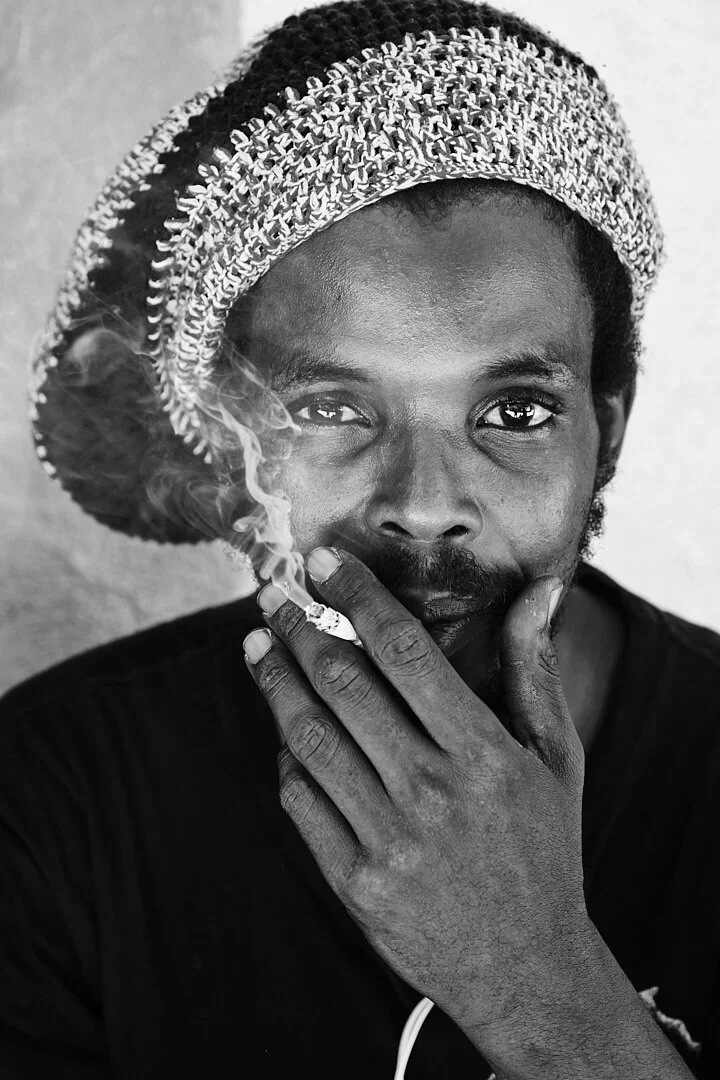
When you convert a portrait to black and white something happens to the face that is worth understanding. Skin stops being a color and becomes a texture. The landscape of a face. The topography of a life actually lived.
Lines that read as signs of age in a color photograph read as evidence of experience in black and white. The same face that might seem simply old in color seems characterized, specific, and deeply interesting in monochrome. The removal of color is an act of translation. The facts of appearance become the qualities of a person.
This is one of the most practically useful things about black and white portraiture and it does not get discussed enough. Skin texture in monochrome is one of the richest and most revealing surfaces you can photograph. Every line, every shadow, every subtle variation in tone tells you something about the person that color was quietly covering up with pigmentation information.
What happens to the eyes
Eyes in color portraits carry color information first. Blue eyes. Brown eyes. The specific and often striking pigmentation of an iris. The eye of the viewer notices this immediately and it shapes how the portrait is received before anything else registers.
In black and white eyes carry only tonal information. The relative lightness or darkness of the iris. The catchlight that tells you where the light was coming from. The shadow under the brow that tells you something about the structure of the face. And because the color is gone the viewer's eye spends more time in the subject's eyes looking for what is actually there. Expression. Emotion. The weight behind the gaze in this particular moment. Whether the person is present or somewhere else entirely.
You look longer because there is more to find. That extended looking is where the portrait does its real work.
The emotional information in stillness and tension
Color flattens the emotional temperature of a portrait. The color associations compete with the subject's actual emotional state and often win simply by being louder. A bright background can make a grieving person seem less grief-stricken. A warm color scheme can make a tense subject seem more relaxed than they are. The colors are telling a different story than the person and the viewer receives a blended version of both.
In black and white the color associations are gone and the emotional information in the face and body has the frame entirely to itself. The particular quality of a person's stillness. The tension that shows in the set of a jaw or the position of a hand. The way someone holds themselves when they are trying to appear more composed than they feel. Whether a smile is reaching the eyes or stopping just before it gets there.
These are the things that make a portrait feel true. And they are significantly easier to see when color is not competing with them for the viewer's attention.
The photographers who understood this best
The greatest portrait photographers of the twentieth century worked almost exclusively in black and white. Yousuf Karsh. Irving Penn. Richard Avedon. August Sander. Diane Arbus. Dorothea Lange. This was partly because color photography was not widely practical for much of their careers. But it was also because they understood intuitively what monochrome does to a face.
Look at Karsh's portrait of Winston Churchill. The one made in 1941 after Karsh famously removed the cigar from Churchill's mouth to produce the expression he wanted. That portrait in color would be a historical document. In black and white it is something more. The texture of Churchill's face, the weight in his expression, the particular quality of defiance and exhaustion that coexist in that image, all of it is available to the viewer because nothing is competing with it. The color is gone. The person remains.
The portraits that have endured across the twentieth century and that still feel like they contain something permanently true about the people in them are almost all monochrome. That is not nostalgia. That is evidence.
What to look for when you shoot black and white portraits
Understanding why black and white works in portraiture changes what you look for when you are actually shooting.
Skin texture becomes a primary subject. You are looking for faces that have lived. Lines and shadows and the particular topography of a person's features rendered in tone rather than color. You pay attention to the quality of the light and what it does to the surface of the face rather than how it affects the color of the skin.
You pay more attention to the eyes. Not their color but their weight. What the person is doing behind them. Whether they are present or absent. Whether the expression is genuine or performed.
You look at posture and tension as emotional information. The body tells you things the face is trying not to say and in black and white with the color distraction removed that information is more available to the viewer.
And you think carefully about the tonal relationship between the face and the background. In color portraiture the background color does a lot of work. In black and white the background tone does all of it. A dark background presses the face forward. A light background creates a different kind of presence. The tonal choices you make in the frame are the portrait's grammar and in black and white they are the only grammar you have.
The natural language of the medium
Color photography is extraordinarily good at many things. Landscape. Food. Fashion. The documentation of a colorful world. But portraiture at its deepest and most honest has always been about the person underneath the appearance. About what is true rather than what is visible. About the weight and texture and emotional reality of another human being rendered with enough honesty that the viewer feels something beyond recognition.
Black and white is the natural language of that intention. Not because it is old or classic or artistic. Because it removes everything that competes with the person and leaves only the person.
That is the whole argument. And the next time you look at a portrait that stops you, that makes you feel like you are actually in the presence of another human being rather than just looking at a photograph of one, check whether it is in color or black and white.