The Monochrome Camera Guide
DEDICATED SENSORS, DIGITAL AND FILM CAMERAS FOR BLACK AND WHITE PHOTOGRAPHY
You do not need a special camera to shoot black and white. But knowing which cameras were built with monochrome in mind and which ones reward that kind of seeing changes the conversation entirely.
This guide is organized into three sections: dedicated monochrome sensor cameras, the best color cameras for black and white photography, and film cameras. Read all three, or go straight to the section that applies to you. Either way, what you are looking for is not the best camera. It is the right camera for how you work.
Dedicated Monochrome Sensor Cameras
Most digital cameras capture color by placing a Bayer filter over the sensor a grid of red, green, and blue filters that assigns a color value to each pixel. The camera then uses interpolation to construct the final image. It works. But it is a compromise.
A dedicated monochrome camera removes the Bayer filter entirely. Every pixel records light directly. No color channels. No interpolation. Just tonal information, captured at full resolution.
The result is images with noticeably more detail, cleaner shadow gradation, and far better low-light performance than any color camera converted to black and white. It is not subtle. The files look different.
The trade-off is obvious. These cameras cannot shoot color. Once you commit, you have committed.
Here are the cameras worth knowing about.
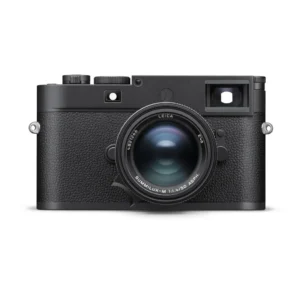
Leica M11 Monochrom
The M11 Monochrom is the benchmark. A 60-megapixel full-frame rangefinder with a monochrome sensor, built by the company that has been making dedicated black-and-white digital cameras since 2012. The files are extraordinary fine grained, tonally deep, with a rendering quality that no color conversion can replicate. The rangefinder experience adds something too. Slow, deliberate, manual focus. You earn the photograph.
It is also expensive. Significantly so. This is a camera for photographers who have already decided that monochrome is not a phase. If that is you, there is nothing better in 35mm digital.
Best for: Fine art, portraiture, street photography, documentary. Anyone who shoots primarily in black and white and has the budget to match the commitment.
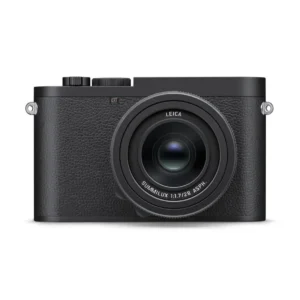
Leica Q3 Monochrom
The Q3 Monochrom takes the same monochrome-sensor philosophy and puts it into a compact, fixed-lens camera with a 28mm equivalent lens and excellent autofocus. It is more accessible than the M11 in terms of handling faster, more modern, less of a learning curve while still delivering Leica’s signature tonal quality.
At roughly $7,800, it is not cheap. But it is considerably more than a simplified alternative to the M11. The fixed lens is an asset as much as a limitation. It forces a way of working. You get close. You commit to the frame.
Best for: Street photographers and documentary shooters who want dedicated monochrome quality without the rangefinder learning curve.
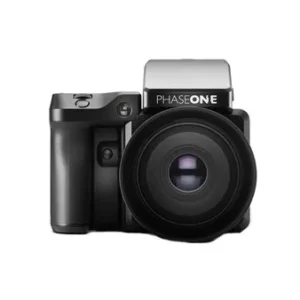
Phase One XT IQ4 150MP Achromatic
The ceiling. A medium-format monochrome system with a 150-megapixel sensor that also captures infrared and ultraviolet light wavelengths human eyes cannot see. With the right lens filters, the Achromatic can shoot standard black and white, or deep infrared, where foliage goes white and skies go black.
The price is what you would expect: the system starts around $50,000 depending on configuration. This is not a street camera. It is not a travel camera. It is a tool for commercial photographers, scientific researchers, and fine art landscape work where a print needs to hold at enormous scale.
Best for: Archival, scientific, and high-end commercial work. Gallery printing at scale.
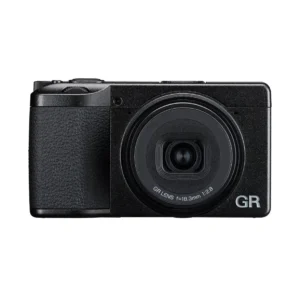
Ricoh GR IV Monochrome
The most significant development in dedicated monochrome cameras in years. The Ricoh GR IV Monochrome takes the legendary GR compact body, pocketable, APS-C sensor, 28mm equivalent lens and replaces the color sensor with a dedicated monochrome one.
The result is a camera with an ISO range of 160 to 409,600, a built-in switchable red filter for dramatically punchy skies, 25.74 megapixels of pure tonal information, and a form factor that fits in a jacket pocket. It retails at $2,199 a significant jump from the standard GR IV, but a fraction of the Leica alternatives.
For years, dedicated monochrome photography was a Leica conversation. The GR IV Monochrome changes that. It will not suit everyone. There is no color mode. No fallback. But for the photographer who has already made peace with that who already sees the world in light, shadow, and grain this camera is a serious tool at a far more serious price point.
Best for: Street photography, documentary, travel. Anyone who wants dedicated monochrome quality without a Leica budget.
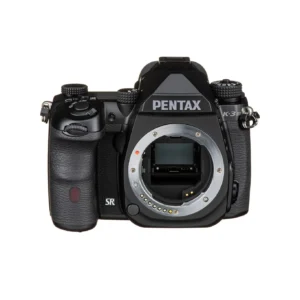
Pentax K-3 III Monochrome
The camera that started a conversation Leica had been having quietly for years. In 2023, Pentax took their flagship APS-C DSLR and swapped the sensor for a dedicated monochrome unit. The result was a cult camera one with a character all its own.
The K-3 III Monochrome does not produce clinically clean files. It produces files with grit. At high ISOs, the noise structure is textured and film like, in the best possible sense. Weather-sealed, DSLR form factor, optical viewfinder. A camera built for bad conditions and patient seeing.
Note: The Pentax K-3 III Monochrome went out of production in early 2025. It has largely disappeared from dealer shelves, though used examples are available and worth seeking out.
Best for: Landscape photographers, DSLR traditionalists, anyone drawn to a more tactile, analog feeling file.
The Best Color Cameras for Black and White Photography
You do not need a dedicated monochrome sensor to produce serious black and white photography. What you need is a camera that gives you the tonal information to work with and ideally one that helps you see in monochrome while you are shooting.
These are the cameras that do that best.
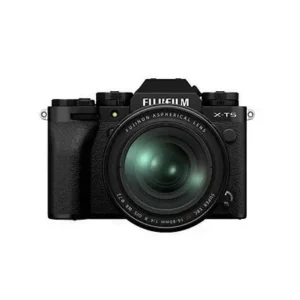
Fujifilm X-T5
Fujifilm has been thinking about black and white more carefully than almost any other manufacturer. The X-T5 is the clearest expression of that. Its Acros film simulation is not a filter. It is a carefully developed tonal profile that mimics the character of classic black and white film the contrast curve, the grain structure, the shadow rendering.
The X-T5 also has 40 megapixels in an APS-C body, physical exposure dials, and a form factor that feels right in the hand. Shooting in Acros on the X-T5 gives you a live preview in black and white that is close enough to the final file to inform your shooting decisions in real time. That matters. It changes how you see.
Best for: Photographers who want strong in-camera JPEG output in black and white, with significant flexibility in post. Also a strong choice for anyone transitioning from film.
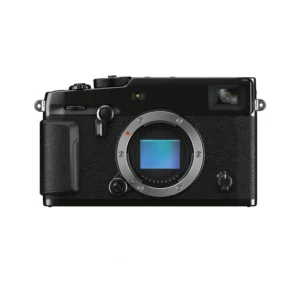
Fujifilm X-Pro3
A camera for a specific kind of photographer. The X-Pro3 hides its LCD screen by default you have to flip it open deliberately to review an image. It is designed to make you shoot more like you are shooting film. You compose. You expose. You move on.
Combined with the X-series film simulations and a hybrid optical/electronic viewfinder, the X-Pro3 rewards commitment. It is not for everyone. It is very much for some people.
Best for: Photographers who want a shooting experience that slows them down and sharpens their intentions. Street and documentary work.
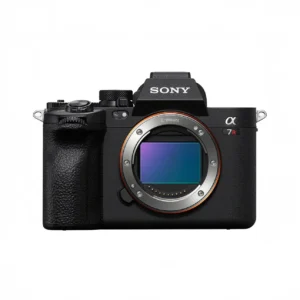
Sony A7R V
The technical argument. A 61-megapixel full-frame sensor with autofocus that borders on astonishing and dynamic range that gives you enormous latitude in post. Sony’s monochrome profile is not Fujifilm’s. It is not trying to be. This is a camera you shoot in RAW and convert deliberately, with full control over the tonal rendering in editing.
If your workflow is RAW-based and you want the most information to work with, the A7R V delivers it.
Best for: Studio and portrait work, landscape photography, any context where maximum resolution and post-processing flexibility matter most.
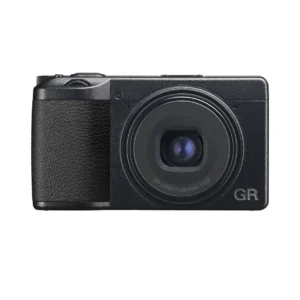
Ricoh GR IIIx
The original GR compact with a color sensor. A 40mm equivalent lens in a truly pocketable body. Ricoh’s in camera black and white rendering has always had character high contrast, strong grain and the GR IIIx is no exception. This is a camera that disappears into your pocket and comes out when something is happening.
Best for: Street photography, travel, everyday carry. Photographers who value discretion and spontaneity over system flexibility.
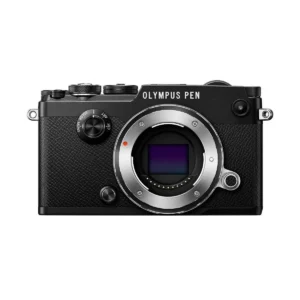
Olympus/OM System PEN-F
An older body discontinued but widely available used with a Monochrome profile control that many photographers consider some of the best JPEG output ever made for black and white. The files have been described as the most film like JPEGs from any digital camera. The 20-megapixel Micro Four Thirds sensor is not the largest, but the rendering is genuinely distinctive.
If you find one in good condition, it is worth your attention.
Best for: Photographers who want character over clinical precision. Anyone drawn to a film-like rendering without film.
Film Cameras
Film is not a workaround. It is a discipline. Every frame costs something. You cannot review the back of the camera. You have to know what you are doing, or learn quickly.
For black and white work specifically, film gives you something digital does not: the grain is baked in. The tonal structure is chemical. The process is physical. And with stocks like Kodak Tri-X, Ilford HP5, and Ilford Delta 400, you have access to materials that photographers have been trusting for decades.
These are the cameras worth considering.
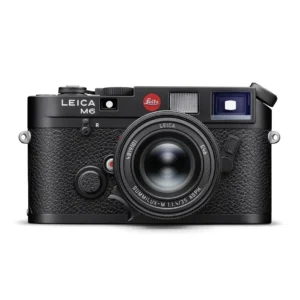
Leica M6
The standard against which most 35mm rangefinders are measured. A fully mechanical camera with a built-in light meter, a quiet shutter, and access to the best lenses ever made for 35mm photography. The rangefinder system focusing by aligning two images in a small patch in the viewfinder is slower than autofocus and more deliberate than SLR focusing. That deliberateness is the point.
The M6 is not cheap. Used prices have risen steadily as film photography has resurged. But for serious black-and-white work on film, it remains the benchmark.
Best for: Street photographers, documentary photographers, anyone committed to film as a long-term practice and willing to invest accordingly.
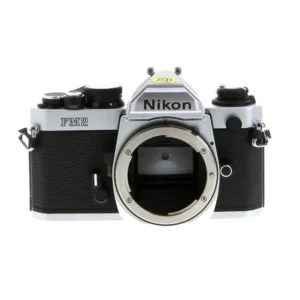
Nikon FM2
A fully mechanical SLR with a titanium shutter that can sync flash at 1/250 and operate without a battery if necessary. The FM2 is built to last. It works with a wide range of Nikon’s AI-s lenses, many of which can still be found at reasonable prices. The SLR viewfinder gives you a clear, bright view of the scene through the lens a different experience from rangefinder shooting, and one that suits different subject matter.
Best for: Photographers coming from digital SLRs who want a direct transition to film. Landscape, portrait, and general-purpose black and white work.
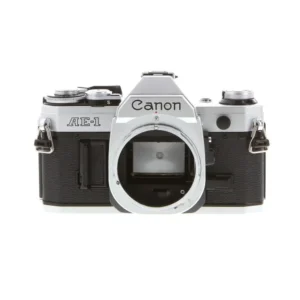
Canon AE-1 Program
The camera that introduced millions of people to photography and never stopped being relevant. The AE-1 Program offers both aperture-priority and program auto modes alongside full manual control — a forgiving learning curve for photographers transitioning to film. An enormous range of FD-mount lenses is available used. It is not the most refined camera on this list. It is one of the most useful.
Best for: Photographers new to film who want a capable, affordable starting point with room to grow.
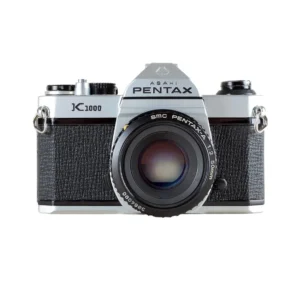
Pentax K1000
Fully manual. No frills. No batteries required for exposure (only for the meter). The K1000 is a camera that teaches you photography by refusing to do it for you. It is widely available, robust, and compatible with a strong range of K-mount lenses. For learning the fundamentals of exposure on film, few cameras are better.
Best for: Beginners and students. Anyone who wants to understand the exposure triangle without automation getting in the way.
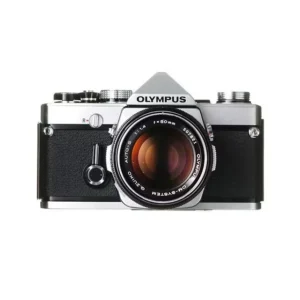
Olympus OM-1
A compact SLR considerably smaller and lighter than most cameras of its era with a bright viewfinder and strong metering. The OM-1 pairs well with black and white film, particularly in low-contrast or overcast conditions where its metering holds up well. Street photographers who prefer SLRs often gravitate toward the OM-1 for exactly this reason.
Best for: Street photography and travel on film. Photographers who find the SLR form factor more natural than rangefinder.
A Final Word on Which Camera to Choose
The camera that will make you a better monochrome photographer is the one you will use. Not the one with the most megapixels. Not the one with the most prestigious name on the front.
Buy within your budget. Learn it completely. Shoot with it until the handling disappears and all you are thinking about is light and composition. Then, if you still feel like you need something else, you will know exactly what that something else needs to be.