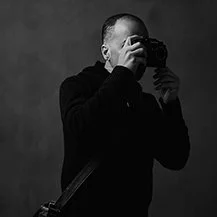
A Photo Story: Ignitions
Every year Portugal burns. Andrés Gonzalez rides in on a motorcycle to find out why.
The question that started everything was a simple one. Why does this keep happening.
Andrés Gonzalez lives in Porto. Every year when wildfire season begins he follows the reports of developing fires across Portugal. He has done this since 2023. And every year the scale of the destruction asks the same question with increasing urgency. Why do these fires return. Who benefits from the conditions that make them inevitable. What does it mean to live in a place where catastrophe has become part of the rhythm of ordinary life.
While dry conditions, heat and drought do create favorable conditions for fire to spread, there are multiple other factors at play. Human factors, especially arson and poor land management are primary drivers in Portugal year after year. Climate change influence severity but isn't the "main" reason for the wildfires.
Andrés had lived for many years in Brazil, another major producer of eucalyptus for the pulp industry, and was struck by how differently the issue manifests itself in Portugal. The eucalyptus plantations. The drought. The extreme heat. The human factors including arson. The complex web of political and economic interests that shape what burns and what does not. A mainstream media reporter who covers the fires every year told him he had no real answer when Gonzalez asked why the coverage never went deeper, never explained who was really benefiting. Maybe he was asking the wrong person.
So Gonzalez started asking with his camera instead.
The motorcycle and the forestry roads
When a fire develops Gonzalez gets on his motorcycle and rides. Sometimes hundreds of kilometers into the interior of Portugal. He monitors active fires and stays prepared to travel at short notice. His intention is to arrive while events are still unfolding and the network of forestry roads built for timber extraction has become an essential part of how he navigates the remote areas where the fires burn. The motorcycle goes where other vehicles cannot.
He often arrives early. Sometimes alongside firefighters. Occasionally before emergency crews have reached the scene. He is not chasing flames. He is chasing the broader reality that surrounds them. The people waiting and watching. The residents who have been through this before and carry a resignation that is different from despair. The communities that adapt to a threat that never seems to end.
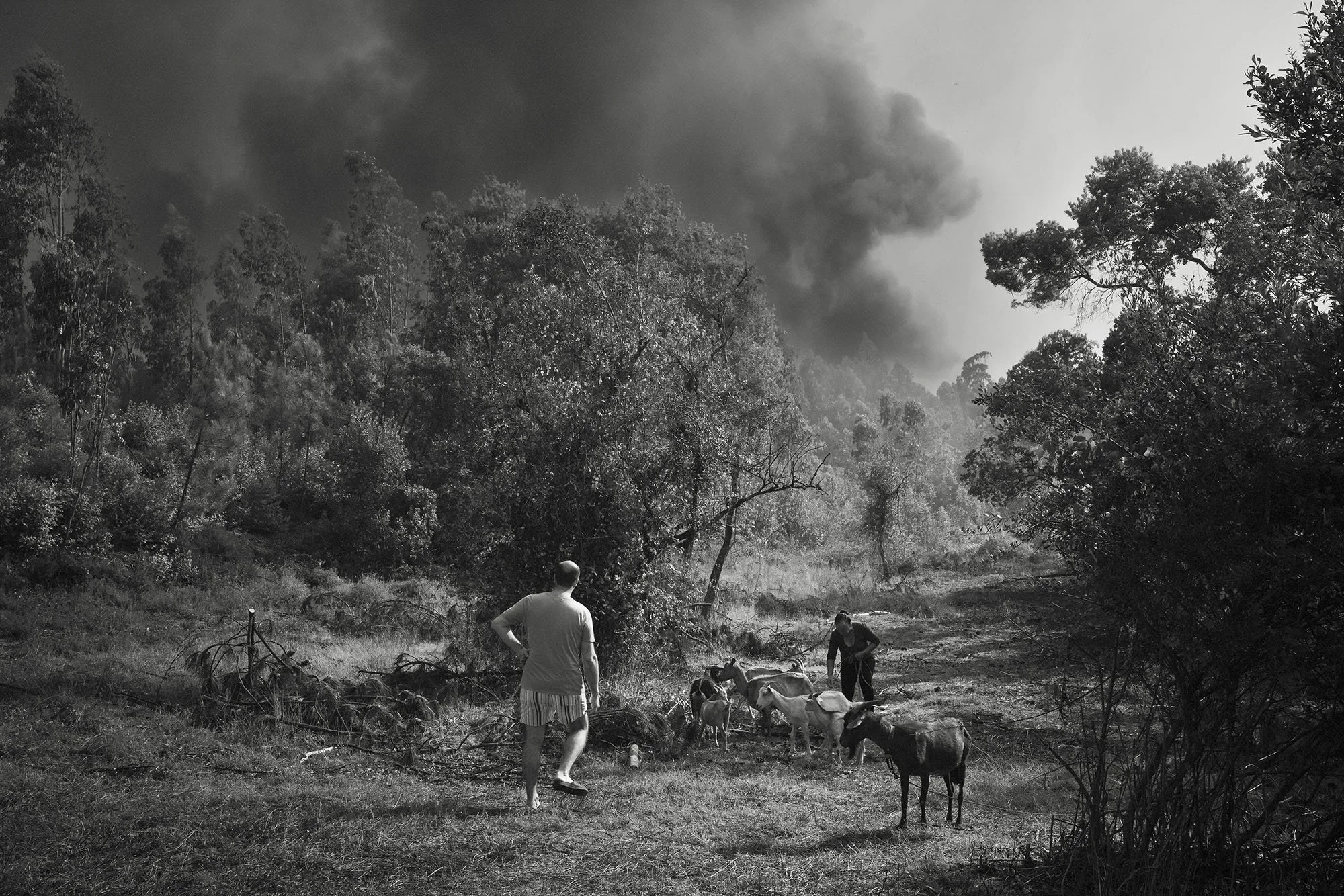
One day he arrived at a wildfire before anyone else. A few local residents stood watching the smoke. He followed a forestry road deeper into the woods. The heat intensified. The smoke made it hard to breathe. And then he saw them. Several goats tied with ropes in a clearing directly in the path of the advancing flames. No one was around.
Photography stopped being relevant. He turned back and found help. Together with local residents they freed the goats and moved them to safety.
One photograph from that day was later shortlisted. But what stays with him is not the image. It is the memory of those animals waiting, completely unaware, and the understanding that settled over him in that clearing. Wildfires destroy far more than landscapes.
The image that does not exist
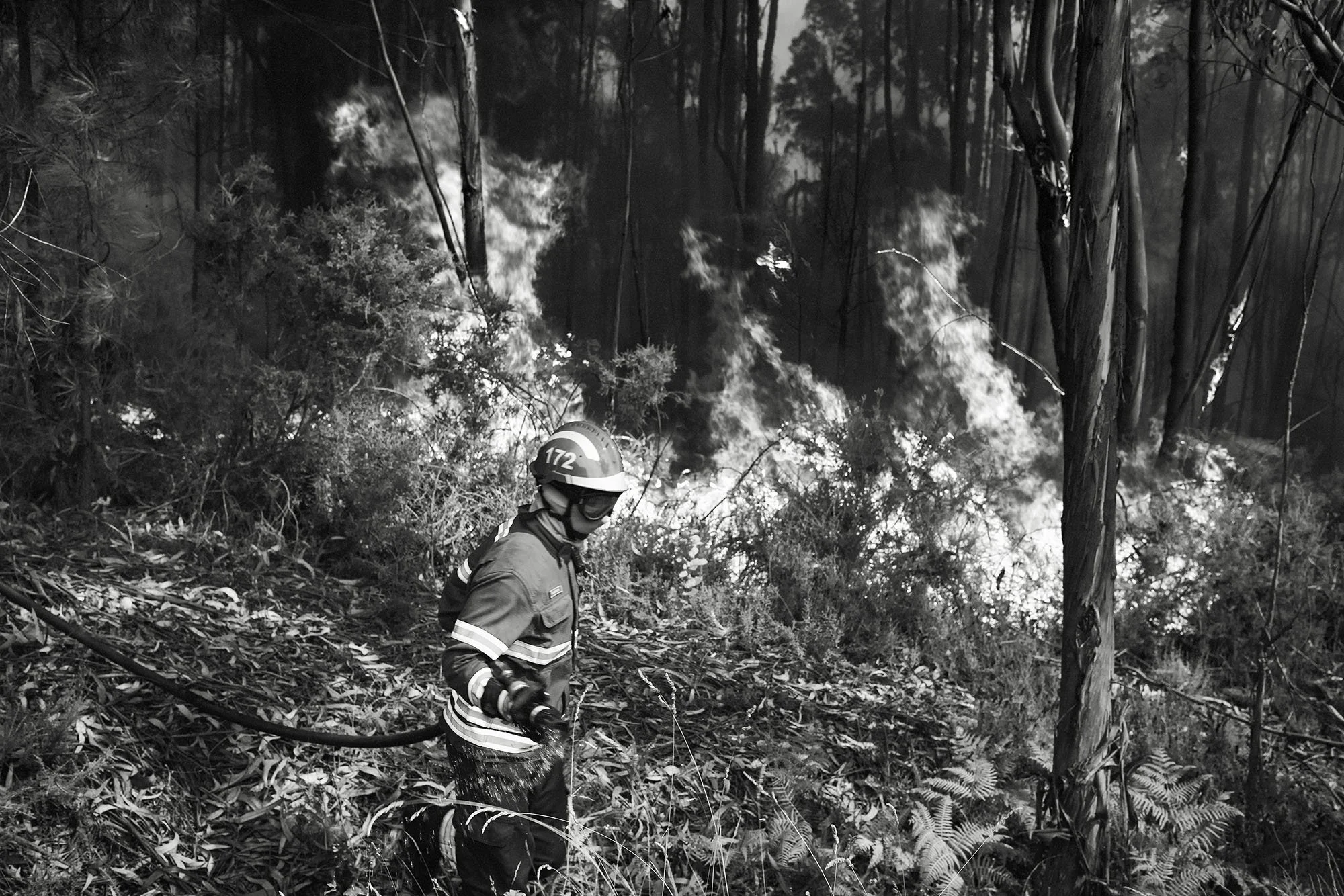
Not every significant moment becomes a photograph. Gonzalez followed a team of firefighters after they changed shifts one day. They went to a safe area to rest and eat. He asked if he could photograph the whole group together. They politely declined. He respected that immediately.
The image he did not make is the one that stays with him. Exhausted men sitting quietly, covered in ash and sweat, sharing a simple meal. He says it captured something real about their work that no dramatic fire shot ever could. It exists only in his memory and he has come to understand that some of the most important images a photographer carries never appear in the work at all.
What the aftermath looks like
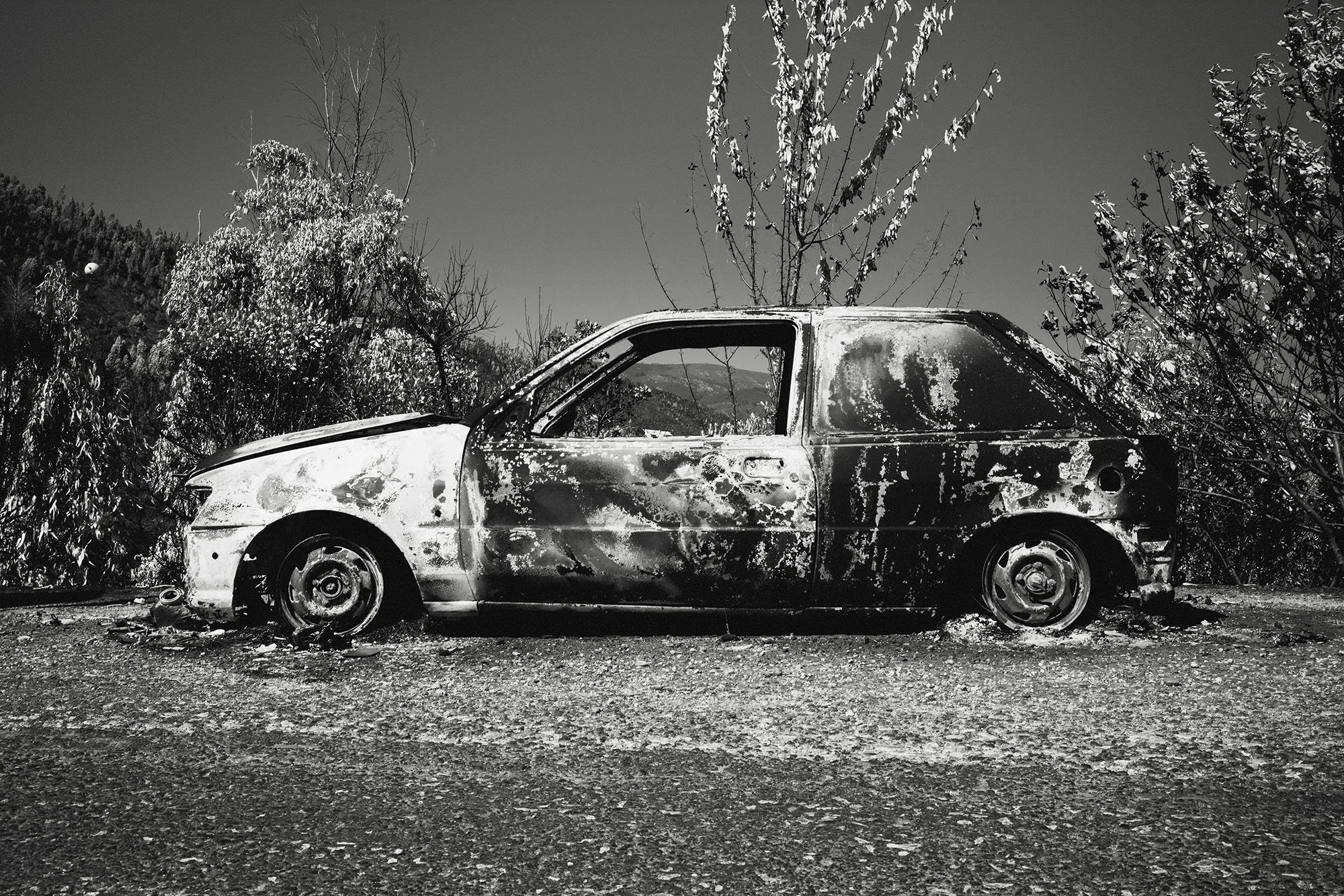
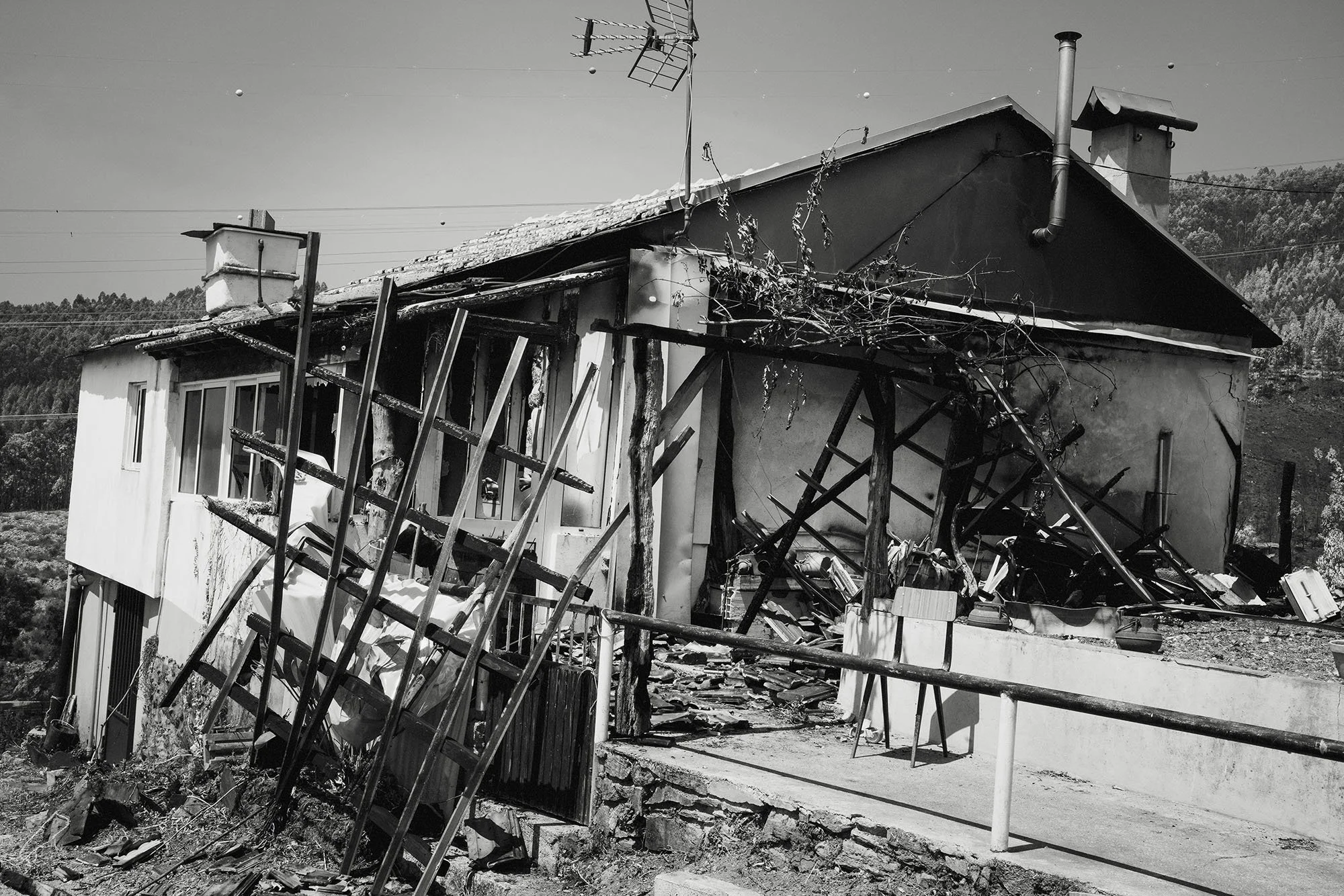
Gonzalez committed to black and white from the beginning of the project. The decision was less aesthetic than it was honest. The aftermath of these fires is naturally almost monochrome. Black, white, and shades of gray. Charred forests. Ash landscapes. The heavy smell of burned wood and houses in completely abandoned areas where people have been evacuated and nothing remains but silence.
He approaches it slowly. He does not try to dramatize it. He walks through it, lets the emptiness speak, and photographs what remains. The challenge, he says, is to show that this is not just destruction. It is absence. The weight of what used to be there.
The only color photographs he has made for the series came months later when he returned to burned areas and found nature beginning to come back. Green shoots pushing through the ash. He shot those in color because the return of color felt like the right way to tell that part of the story.
What keeps burning
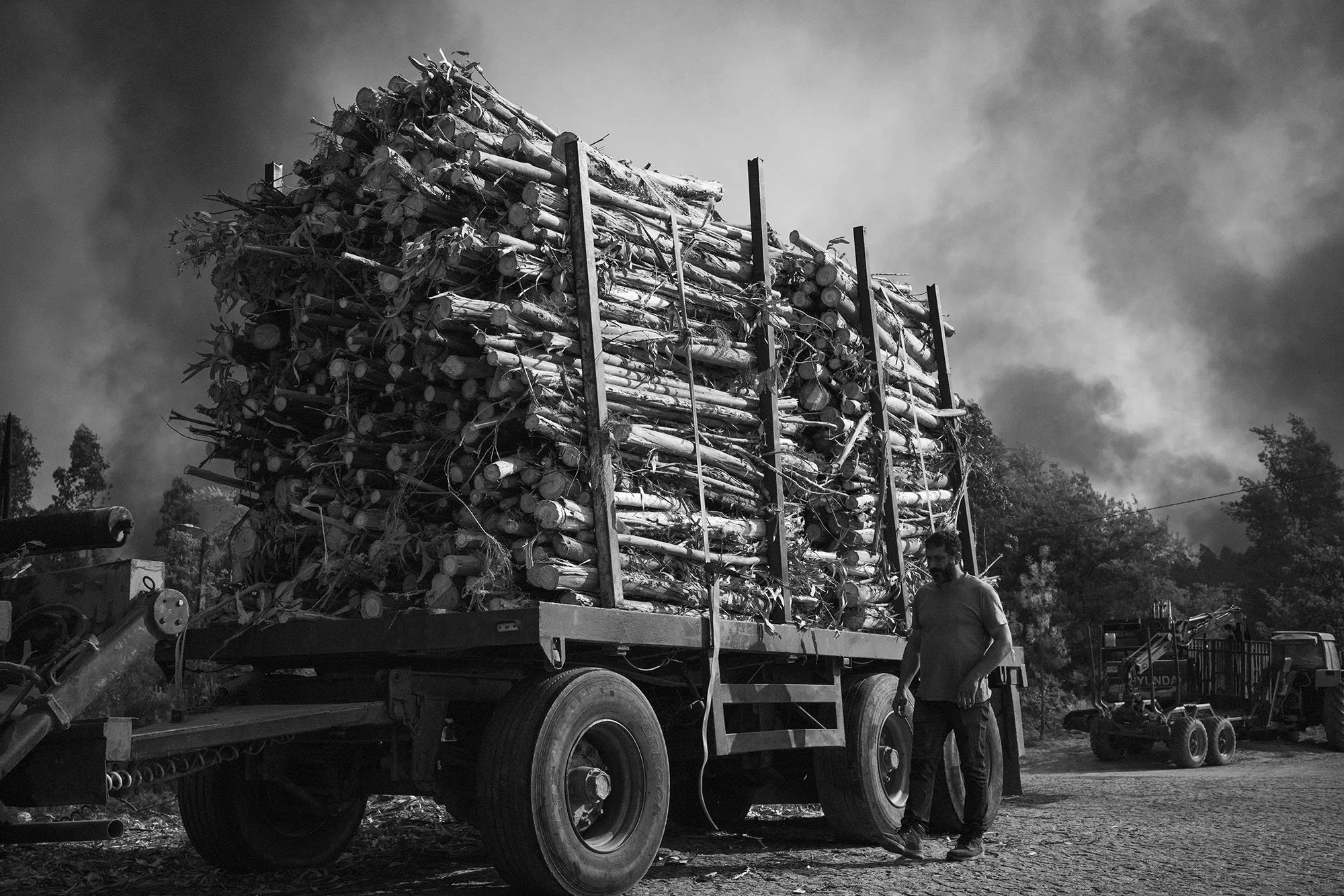
Over 250,000 hectares burned in Portugal's 2025 wildfire season. The causes are multiple and interconnected. Drought and extreme heat intensified by climate change. Eucalyptus plantations that burn faster and hotter than native forest and that have been expanding for decades driven by the pulp industry. Rural depopulation that leaves forest land unmanaged. And human factors including arson.
Gonzalez is careful about how he frames this complexity. He is not making a simple argument. He knows that photography alone cannot fully explain what is happening or who benefits from the conditions that make it inevitable. But he believes it can build a feeling that stays with people longer than a news report. A stronger and more lasting narrative. That is what he is working toward.
The project has been shortlisted for the PJP Photo Journalism Prize. He is grateful for the recognition but he is clear about what the project actually needs. Greater attention from the general public. The kind of sustained attention that forces the deeper questions to be asked and answered.
Whether it will ever end
Gonzalez does not think the project will ever feel truly complete unless the wildfires finally give the land and the people a break. He does not know when that will be. He is not sure the people whose decisions shape the conditions that fuel the fires are in any hurry to change them.
So he keeps monitoring the reports. Keeps the motorcycle ready. Keeps riding into the interior when the smoke appears on the horizon.
The perfect image is always out there somewhere, he says. Waiting for the right moment.
For the people who live in Portugal's fire zones that patience has a different weight entirely. They are waiting for the same thing. They have been waiting for years.
You can check out more of Andrés work on foto@deshabitua
Andrés Gonzalez is a photographer based in Porto, Portugal whose work blends documentary and artistic approaches to capture movement, time, and transformation in the urban and natural world. Ignitions is an ongoing project shortlisted for the PJP Photo Journalism Prize.