Does It Matter How You Carry Your Camera?
Every serious photographer has strong opinions about this and almost none of them agree.
Does it actually matter how you carry your camera? Here's a question that sounds small and isn't.
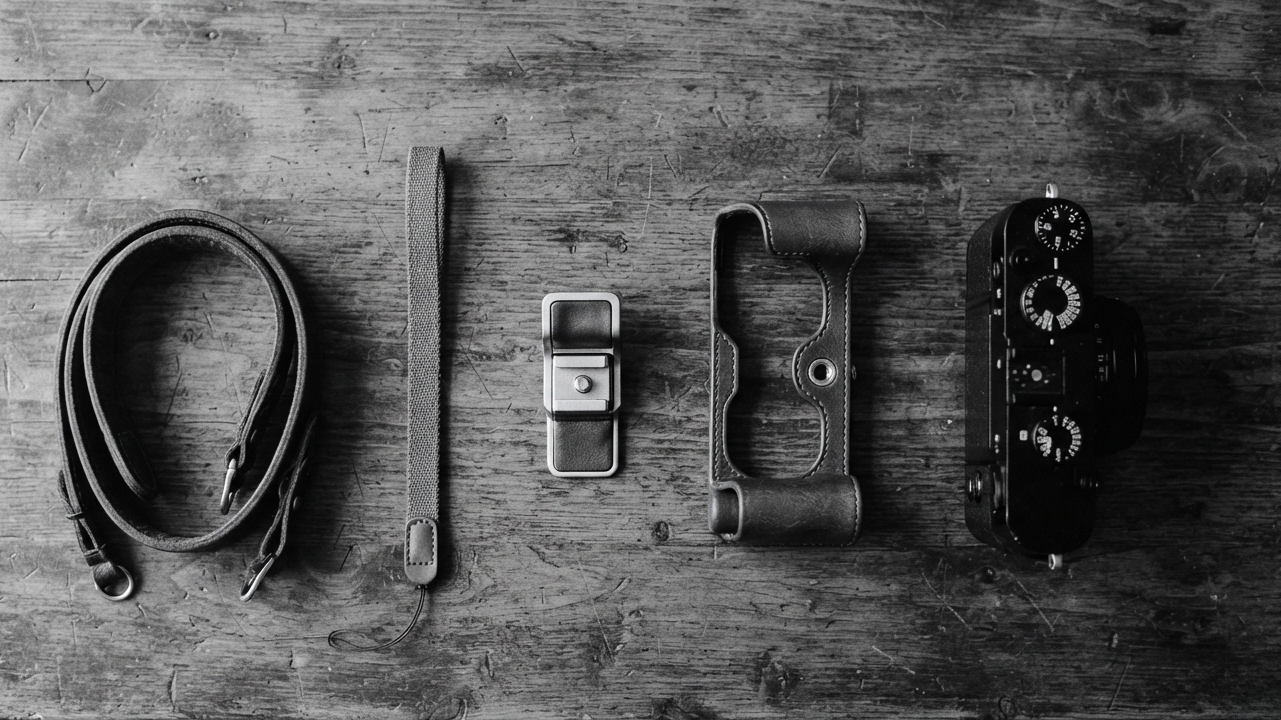
What's actually attached to your camera right now? Neck strap. Wrist strap. Hand grip. Nothing at all, just a bare body sitting in your palm or your pocket. Every serious photographer has landed somewhere specific on this, usually after a fair amount of trial and error, and almost everyone defends their choice with real conviction. There's no universal right answer here. There's just what works for your body, your gear, your shooting style, and how you feel about being visibly identifiable as someone holding a camera.
Let's go through the honest tradeoffs of each.
Neck straps
This is the default. It's what comes in the box, and for a lot of photographers it's never worth replacing. A neck strap distributes the weight of the camera across your shoulders and chest rather than concentrating it in one hand or wrist, which matters a lot on a long day, especially with a heavier body and lens. It's also instantly accessible. The camera hangs right there, ready, no fumbling for it in a bag.
The honest downside is that it swings. Bend down to tie your shoe or crouch for a lower angle, and the camera swings forward and can knock against something, your gear, a wall, the ground if you lean too far. It also telegraphs "photographer" pretty clearly, which some people want and others actively try to avoid, especially in street work where blending in matters.
Wrist straps
A much more compact, discreet option. The camera sits close to your hand rather than dangling on your chest, which a lot of street and travel photographers prefer specifically because it doesn't announce "person with camera" the way a neck strap does. It also keeps the camera tucked closer to your body, which feels more secure in crowds.
The tradeoff is fatigue. Hold a heavier body on a wrist strap for hours and your wrist will let you know about it by the end of the day. There's also a real risk if you let go without thinking, the camera can swing and bang against your leg or whatever's nearby, since there's a lot less length to absorb the motion compared to a neck strap.
Thumb grips and hand grips
These attach directly to the body, something like a thumb rest or a half-case grip, and let you hold the camera securely with one hand without any strap touching your neck or wrist at all. A lot of photographers who want speed and minimal bulk gravitate here. The camera becomes an extension of your hand rather than something hanging off you, and there's nothing to swing, catch on anything, or get in your way.
The honest cost is that you're trusting your grip entirely. No backup if your hand slips, which makes some people genuinely nervous in crowds, near water, on uneven ground, or anywhere a dropped camera would be a real problem rather than just an inconvenience.
No strap at all
More common than you'd think, especially with smaller compacts and rangefinders. The camera just lives in a hand, a pocket, or a small bag, and comes out only when needed. Maximum freedom of movement. Nothing announcing the camera's presence until the moment you actually raise it, which matters a lot for candid or unposed work. Nothing to catch on a door handle, a railing, another person in a crowd.
The obvious risk is the one you'd expect. No safety net if it slips. This approach asks for a level of constant physical awareness that not everyone wants to maintain for an entire day, but for photographers who've built the habit, it becomes second nature.
There's no winner here, and that's the point
The right answer depends on your body, your camera's weight, whether you shoot fast and reactive or slow and deliberate, how you feel about being visibly identified as a photographer, and a fair amount of plain personal comfort that doesn't reduce to logic. This is exactly the kind of practical, lived in topic where forty different members of the Collective sharing forty different answers is more useful than any single definitive guide could ever be.
So tell us. How do you carry your camera, and why that method? We genuinely want to know, and we suspect the answers are going to be a lot more varied, and a lot more interesting, than this post.