Everyone Thinks Pizza Is Easy. That's The Problem.
Anyone can open a pizza place. Very few can make it worth remembering.
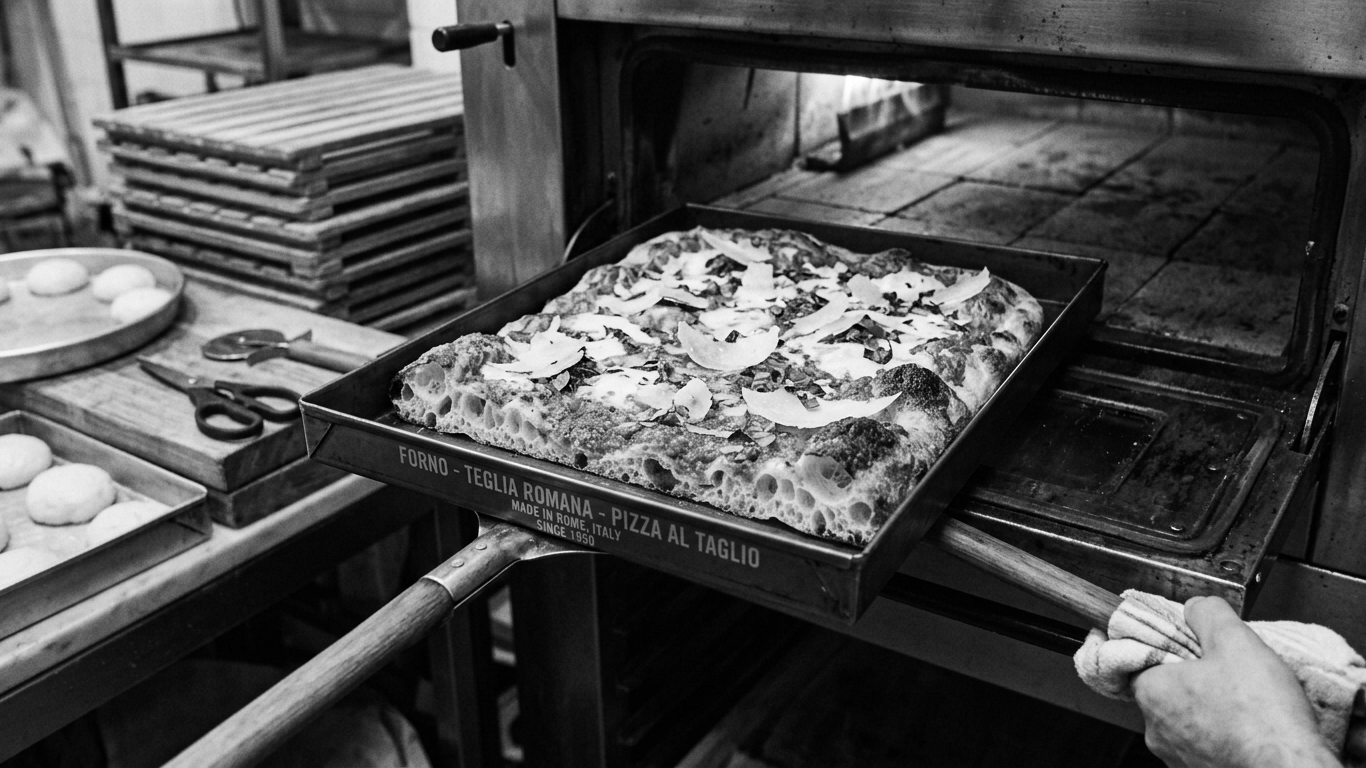
There's a new pizza place that just opened here in Boston, and it's doing something nobody else in the city is doing. Authentic Roman style pizza. Not New York style. Not Neapolitan. Roman, the real thing, and as far as we can tell, it's the only place in the entire city doing it properly.
It's delicious. It's also, unsurprisingly, already packed.
And it got us thinking about something that applies just as directly to photography as it does to pizza. There are roughly a million pizza places in the world, and if we're being honest, about ninety percent of them are mediocre at best. Fine. Edible. Completely forgettable by the time you've finished the slice. Only a small handful actually stand out, actually get talked about, actually make you plan a trip specifically to eat there.
Photography is the same. There are more photographers alive right now than at any point in human history, a camera in nearly every pocket on the planet, and the overwhelming majority of the work being made is, honestly, fine. Competent. Forgettable within about four seconds of scrolling past it. Only a tiny fraction ever actually stops anyone.
So why does pizza work the same way photography does? We think it comes down to two things.
The first path: do something nobody else is doing
Some pizza places stand out because they're doing something genuinely different. A wild topping combination, an unusual technique, a style nobody else in town has bothered with. The Roman place here in Boston is a perfect example. There's exactly one of them, which means anyone who wants that specific thing has exactly one option, and that option gets to be memorable almost by default, before you even factor in whether the pizza is good. It stands out because it's simply not competing with anyone.
This is the photographer whose visual signature is unmistakable. You see three of their images in a lineup of a hundred others and you know instantly whose work it is. Bold, sometimes a little divisive, but impossible to confuse with anyone else. That's one legitimate path to being genuinely good.
The second path: be completely authentic to one specific thing
The other kind of pizza place that stands out isn't doing anything wild or new at all. It's doing one very specific, very traditional style, and doing it with total conviction. No shortcuts, no fusion, no trying to please everyone. Real Neapolitan made exactly the way it's supposed to be made. Real New York style, whatever the tradition actually calls for, done properly, every single time.
This is the photographer who hasn't chased novelty at all. They've gone deep instead of wide, committed completely to one way of seeing, one approach, one discipline, and gotten so good at it through sheer repetition and conviction that the work simply carries more weight than most of what's around it. Nothing flashy. Just the real thing, done properly, in a world where most people are cutting corners on the fundamentals.
Both paths work. Almost nobody takes either one. Most pizza places, and most photographers, land somewhere in the comfortable middle, competent enough to stay open, indistinguishable from the one down the street, forgotten the moment you're done with it.
Why so few places actually pull it off
Here's the part that we think is genuinely funny once you notice it. Nobody wakes up and casually decides to open a sushi restaurant, because everyone intuitively understands that sushi is hard, that it takes years to do properly, that there's real skill hiding behind the simplicity.
Pizza doesn't get that respect. Flour, water, cheese, some sauce, a hot oven. How hard can it be? So everyone opens a pizza place, and the barrier to entry stays incredibly low while the barrier to actually being great stays exactly as high as it's always been. That gap, between how easy it looks and how hard it actually is, is precisely why there are a million mediocre pizza places and only a handful of truly great ones.
Photography has the identical false approachability. A camera has an automatic mode. Point, focus, shoot. How hard can it be? And the honest answer, same as with pizza, is: much harder than it looks. The barrier to entry is basically zero. The barrier to excellence hasn't moved an inch. Almost nobody clocks the size of that gap until they're already years into trying to close it.
The plain slice is the hardest one
One more thing worth saying, because it's the part that took a truly great pizza place to teach us. A plain cheese slice, nothing on it, nowhere to hide, is often harder to get right than something loaded with fifteen toppings. There's no distraction to cover for a mediocre crust or a lazy sauce. It either works or it doesn't, and everyone can tell immediately which one it is.
A stripped down black and white photograph works the exact same way. No color to distract, no busy composition to hide behind, nothing extra doing the work for you. Just light, tone, and a single clear idea, and it either lands or it doesn't, and everyone looking at it can tell immediately which one it is.
Go find the plain slice. Go find the photograph with nothing extra in it. Both are a lot harder to make well than they look, and that's exactly why almost nobody actually pulls it off.