A Photo Story: What the Wood Knows
Every year he gives one guitar away. That tells you most of what you need to know.
Ask David how long it takes to build a guitar and he'll laugh a little before he answers. It's the question he gets more than any other, and the one he's least able to answer honestly. Somewhere around 80 to 100 hours, depending on the model, depending on what a customer wants worked in. But he doesn't really know, not precisely, because that's not how the hours actually get counted when you're the one holding the tools.
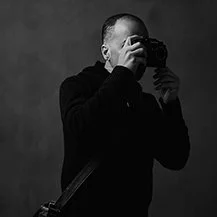
The wood knows, even if David can't say the number out loud. Every measurement taken with a caliper, every line drawn for a back plate, every small correction made and remade, gets absorbed into the material itself. By the time an instrument is finished, it carries a history that no interview and no photograph can fully retrieve. Andre Vallgren spent a day trying to get as close to that history as a camera allows.
Finding David
Andre found David the way most people find things now, scrolling. A feature on one of Sweden's major news channels, a workshop full of tools and light, a man building guitars by hand for people like Keith Richards and Ryan Adams. Andre had only been shooting photography for about two years, working full-time as a chef the rest of the week, but something about the atmosphere in that clip stopped him. He reached out and asked if he could come photograph David at work.
David said yes, on one condition. The work would always come first. Nothing staged for the sake of the photographs. Andre wasn't there to direct him. He was there to watch.
A day in the workshop
Andre spent a few hours there that day, one visit so far, though David has already mentioned wanting to make a short documentary-style film together at some point. Andre hasn't touched filmmaking yet. He said it sounds like something he'd really enjoy.
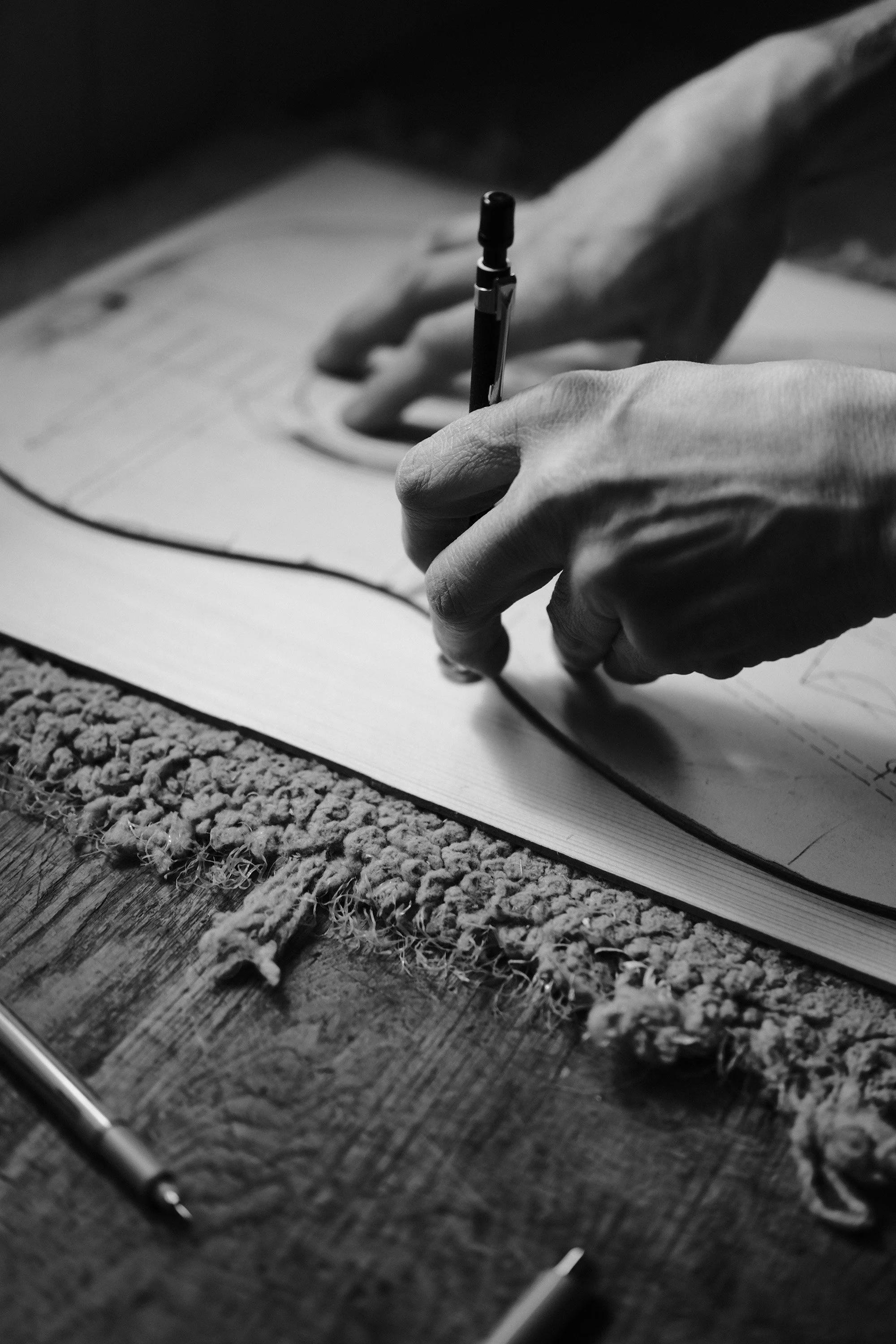
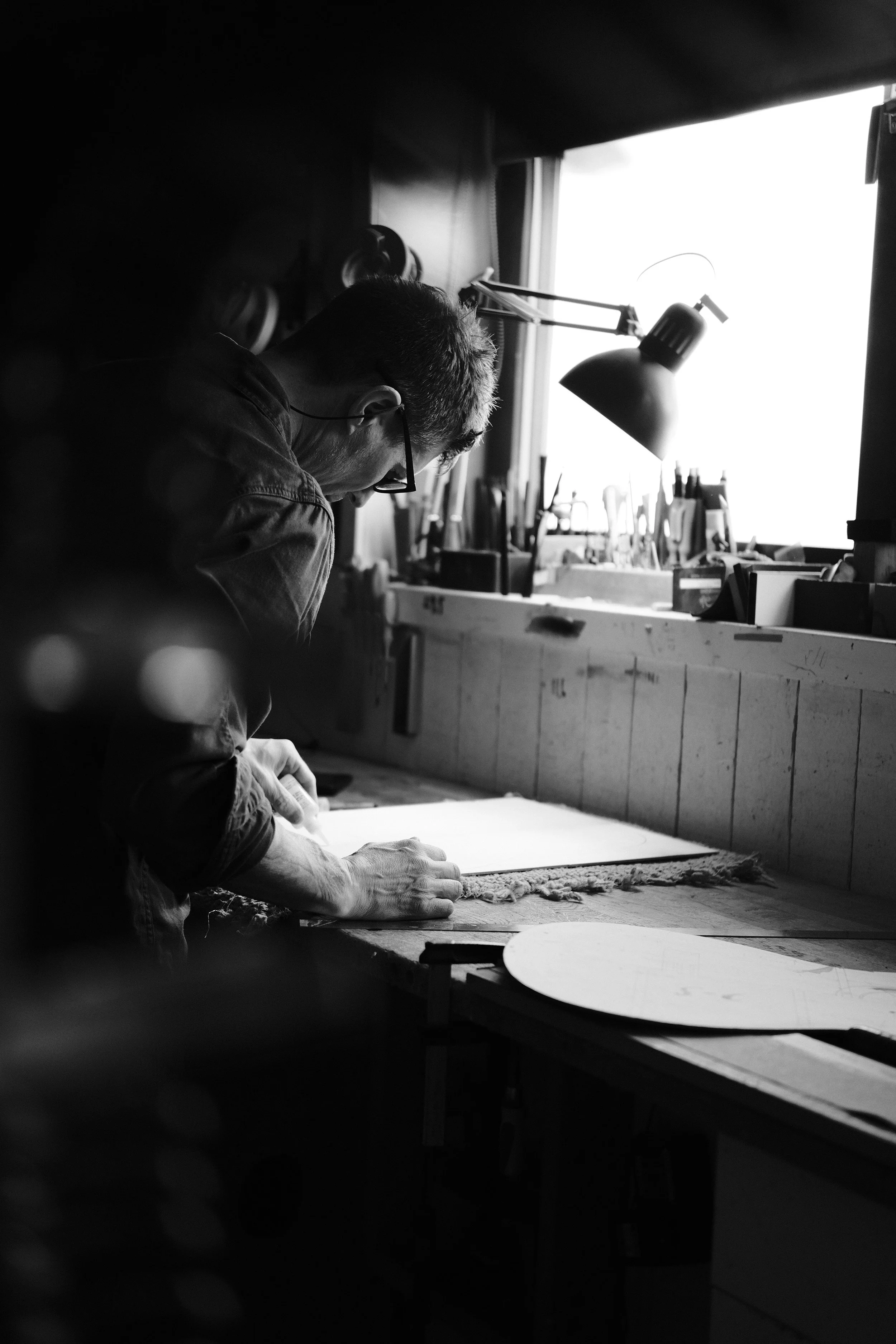
That day, David was partway through a dreadnought, a guitar commissioned by a customer who'd asked for a few personal details built in. Andre caught him at several different stages across the visit, in some frames drawing the outline for the guitar's back plate, in others working the finer points of a second instrument that was much further along. Nothing was arranged for the camera. Andre simply moved around the room and photographed what was actually happening in front of him.
There wasn't one dramatic moment that revealed who David was, Andre says. It came through gradually, in the way David moved. Fast, but never rushed. Confident without being careless. Energetic and calm at the same time, which is a harder combination to hold than it sounds, and rarer to actually witness in a stranger's workshop over the course of a single afternoon.
What Andre was actually looking for
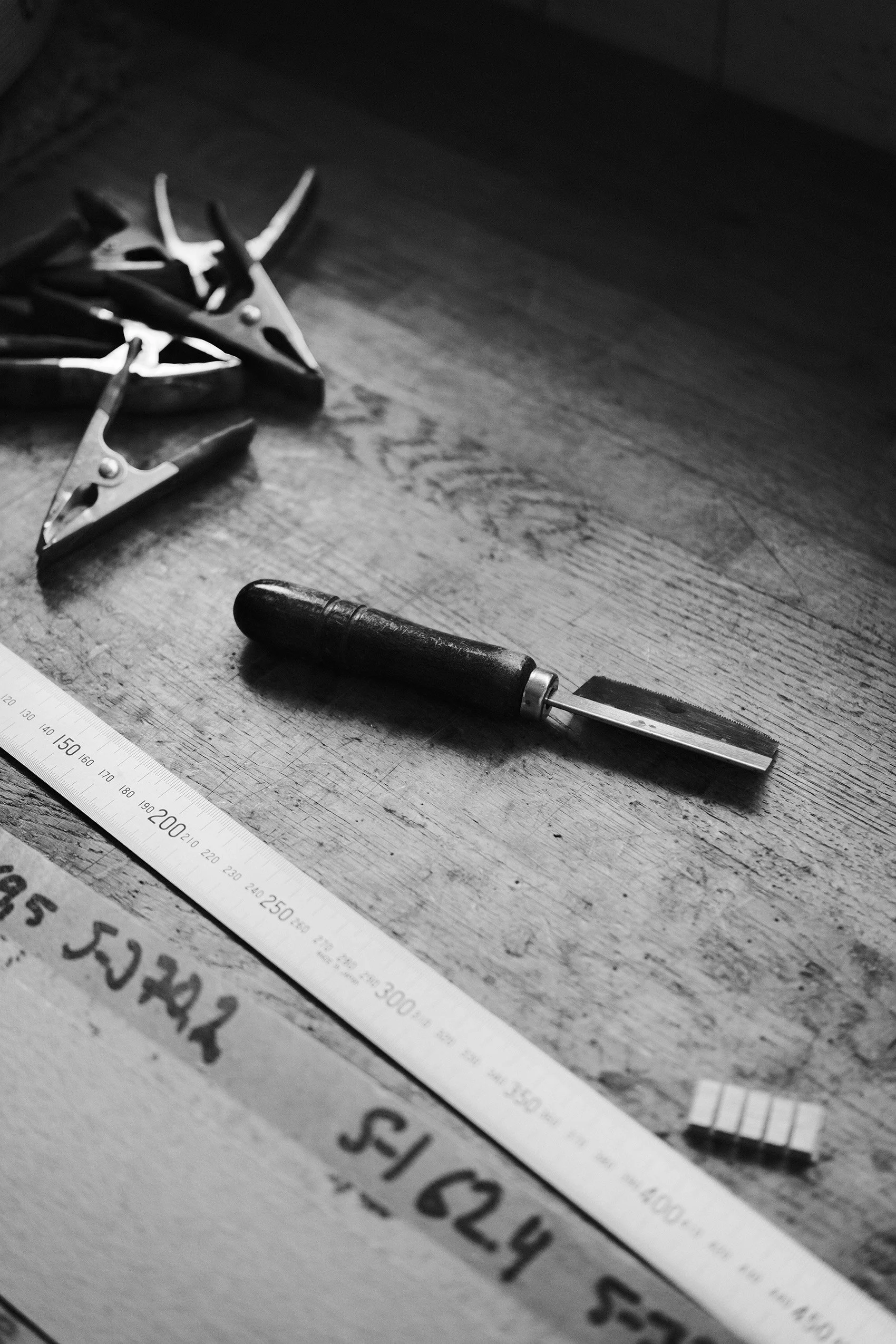
Andre has been fascinated by craftsmanship for a long time, since before he ever picked up a camera. He remembers visiting a glassblower as a child and being completely mesmerized, not by the finished object but by the process of getting there. There's something about being inside a workshop specifically, he says, the smell of the wood, the sound of the tools, the sense of being surrounded by equipment worn smooth by years of use, that pulls him in every time.
Part of that recognition comes from his own life. Working full-time as a chef, Andre knows what it looks like to be completely absorbed in a craft, hands moving faster than conscious thought, precision built entirely out of repetition. Watching David work, he saw something he understood from the inside rather than admired from the outside. His goal wasn't only to document a guitar being built. It was to capture the feeling of the room while it happened.
Of everything he shot that day, Andre keeps returning to the very first image in the series. In it, you genuinely can't tell what David is doing. That ambiguity is exactly why Andre loves it, it makes you look longer instead of less. The small desk lamp throwing its narrow pool of light. The tools lined up by the window. The foreground elements crowding gently into frame, giving the whole image a sense of depth that pulls you physically into the room rather than just showing it to you. He didn't plan which frames would end up in black and white and which would stay in color either, that decision came later, during editing, image by image, decided by feel rather than formula.
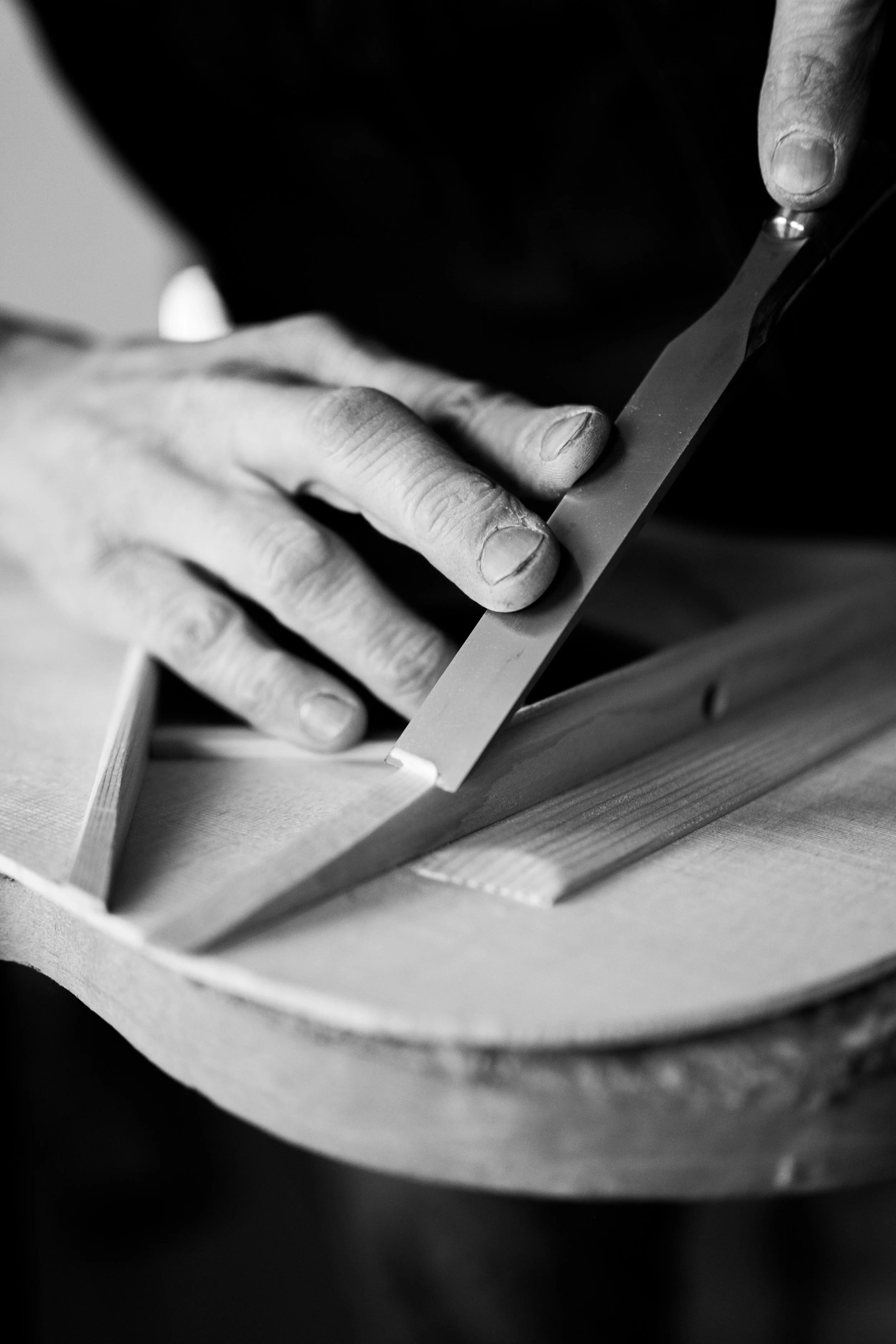
What the wood actually knows
Andre isn't trying to sell anyone on a finished guitar. He wants people to see the person behind the instrument, and the process most customers never witness, the hours, the specific quiet concentration, the atmosphere of a room built entirely around one person's devotion to getting something exactly right.
There's one more thing about David that Andre keeps coming back to, something that has nothing to do with the woodworking at all. Every year, David gives one of his guitars away. Not sold, not commissioned. Given, to someone who's made a real difference in another person's life or their community. A quiet, everyday hero, as Andre puts it, someone whose kindness deserved to be noticed by somebody.
Andre thinks that says most of what actually needs to be said about who David is. Not the eighty to a hundred hours. Not the customers with famous names. The instrument he doesn't sell at all.
That's the part the wood knows and the number never could.
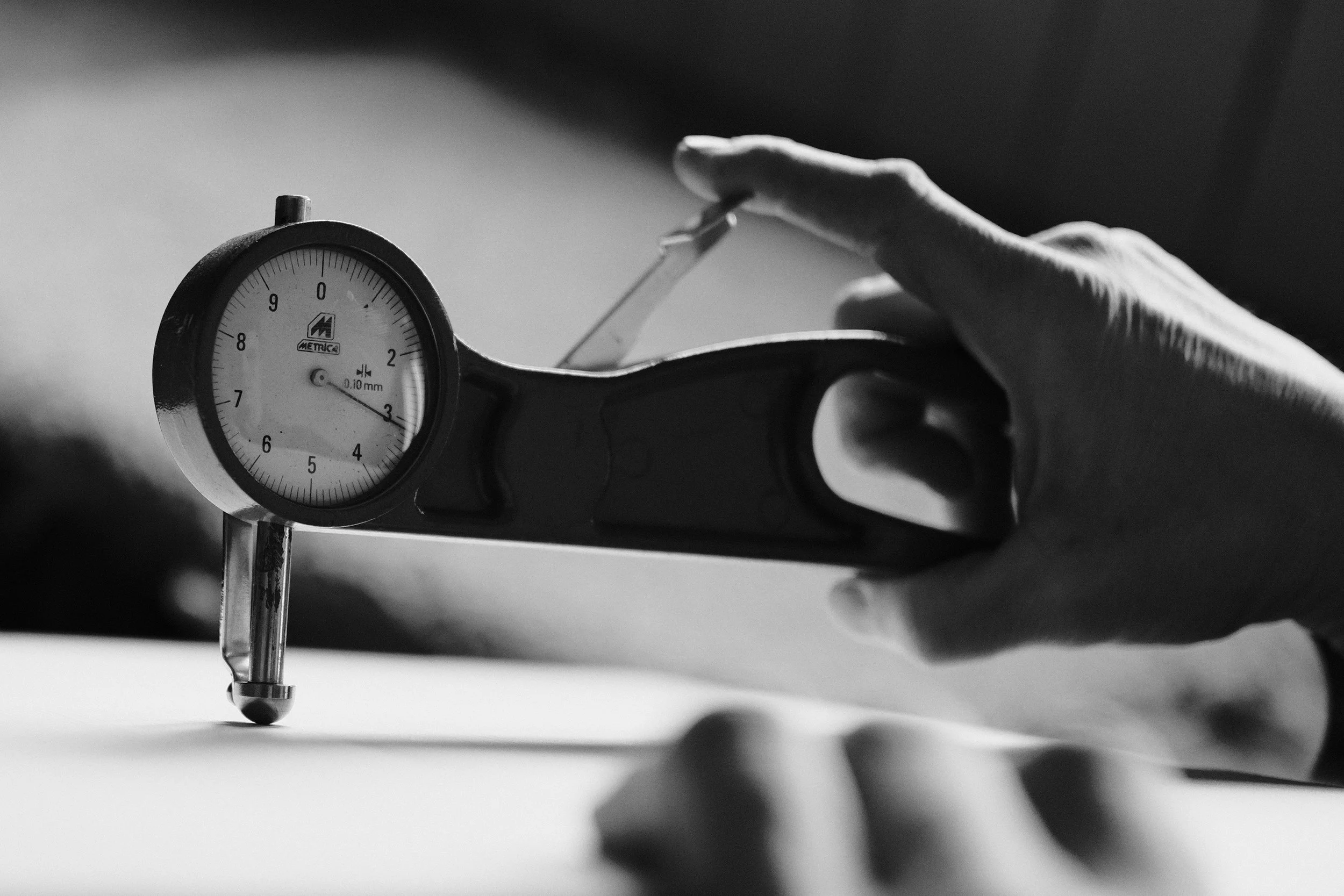
You can check out more of Andres work on foto@andrevallgren
Andre Vallgren is a photographer based in Sweden who works full time as a chef and has been shooting photography for about two years. He is especially drawn to documenting craftsmanship and the people fully absorbed in it. Follow his work on Foto at @andrevallgren.