
Same amount of information in the air. The only thing that changes is what you let through.
A while back we wrote about the noise in your head, the unfinished argument, the running mental list, the internal static that keeps you from actually seeing what’s in front of you before you’ve even raised the camera. That post was about what happens before the shutter.
This one is about what happens inside the frame itself, once the shutter has already gone down and the image exists. A different kind of noise, and it’s worth understanding clearly because it’s the thing separating a photograph that lands from one that almost does.
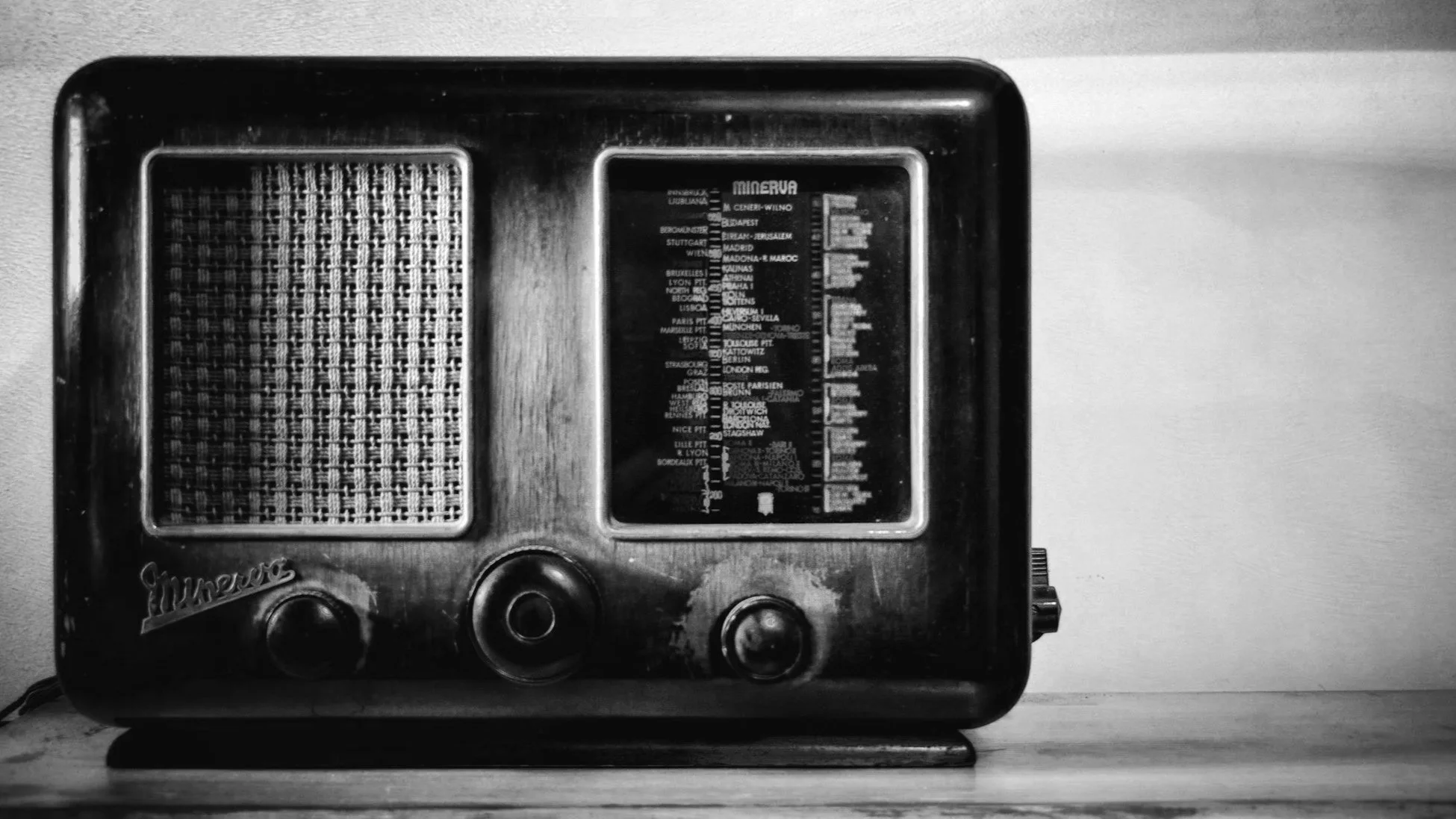
A dial between two stations
Think about turning a radio dial slowly, searching for a station. For most of that turn, you get a mess. Static hissing underneath fragments of two or three broadcasts all fighting for the same space, none of them clear enough to actually follow. Then, for one small window, the dial lands exactly right and a single station comes through clean. Every word audible. Nothing else competing for your attention.
Here’s the part worth sitting with. The air in that room didn’t change. Every one of those radio waves was there the entire time, before you found the station and after. The only thing that changed was how precisely the dial was tuned, letting one signal through cleanly and rejecting everything else that was fighting to occupy the same space.
A photograph works exactly the same way. All the information in a scene is technically available to you the moment you raise the camera. The subject is in there somewhere. So is the cluttered background, the stray element at the edge of the frame, the competing patch of bright tone pulling attention toward a corner that has nothing to do with what the image is actually about. Composing a photograph is tuning the dial. You’re not adding the subject. It was already there. You’re rejecting everything else loud enough to be fighting it for the same attention.
What counts as static
In a photograph, noise is anything drawing attention away from the actual subject without earning its place. It’s rarely one dramatic mistake. More often it’s several small ones stacking up at once, each easy to justify in the moment and collectively enough to blur the signal into something the eye has to work to parse.
A bright highlight in the background that competes with the tonal weight of your subject. A second person half visible at the edge of the frame who adds nothing to the story but still pulls the eye toward them. A busy, detailed surface behind your subject that has more visual texture than the subject itself. None of these individually ruins a photograph. Together, they’re static, and the viewer ends up straining to find the one thing you actually meant for them to see, the same way a listener strains to catch words underneath the hiss of two overlapping stations.
Tuning the dial before the shutter
The good news is that composing for signal over noise is almost entirely a decision you get to make before you press the shutter, not a fix you’re hoping to apply afterward.
Move your position. Sometimes the cleanest tuning happens simply by shifting a few feet left or right, letting a distracting background element fall out of frame or slide behind your subject instead of beside it. Wait for a gap. A busy street corner has moments where it briefly clears, and the signal you’re after is often only available for the few seconds when the noise around it happens to thin out. Change your distance. Getting physically closer to your subject is one of the fastest ways to reduce how much competing information fits into the frame at all, since there’s simply less real estate left for anything else to occupy.
Use light itself as a dial. In black and white specifically, tonal contrast is one of the most powerful tuning tools available to you. A subject that sits in a brighter or darker range than everything surrounding it gets tuned in automatically, the eye finds it first without you needing to do anything else to draw attention there.
Tuning after the fact
Some noise reduction genuinely does happen in the edit, and it’s worth naming honestly rather than pretending everything has to be solved in the field. Cropping tighter than felt comfortable in the moment. Dodging down a background element that’s pulling too much attention. Deepening a shadow just enough to let a distracting shape recede rather than compete.
But this is closer to fine tuning than actual reception. If the signal wasn’t findable at the moment of capture, no amount of adjustment afterward fully recovers it. The dial gets its best tuning in the field, when you still have the freedom to move, wait, and choose your distance. Editing can sharpen a signal that was already mostly clean. It struggles to rescue one that was buried in static from the start.
The habit worth building
Before you press the shutter, do a quick, deliberate scan of the whole frame, not just the subject you’re excited about. Corners. Edges. Whatever’s sitting directly behind the thing you actually care about. Ask, plainly, what in this frame is static, and what is signal.
It’s a small habit, and it takes seconds once you’ve done it a few times. But it’s the difference between a photograph where the viewer has to search for what you meant them to see, and one where they find it instantly, the way a station suddenly comes in clean the moment the dial finally lands exactly right.