You Might Need a Fixer
A local guide can be the difference between photographing a place and actually understanding it.
The word fixer comes from journalism. A local person hired to help a visiting photographer or reporter navigate a place they do not know. Translation. Introductions. Local knowledge. Sometimes safety. It carries a whiff of war correspondents and conflict zones, which makes a lot of photographers assume it does not apply to them.
It applies to more situations than you think, and it is far more accessible than the word suggests.
This is already in the stories you have read here
A few of the strongest photo stories we have featured in this community happened because a photographer had exactly this kind of relationship, even when nobody called it a fixer at the time.
Andrés Gonzalez rides hundreds of kilometers on a motorcycle into Portugal's wildfire zones, and the forestry roads he uses to get there, the ones that let him arrive before emergency crews, are knowledge he built through relationships with the people who actually live and work in those areas. Lindsay Brice went out one morning specifically to photograph a liquor store with NO LOITERING signs posted on it, and ended up being personally escorted through an upholstered door into a club she never would have found or been welcomed into alone, guided entirely by two men she happened to talk to on a street corner. Jami Azad's work across rural and urban Pakistan depends on local access and trust built over years, not something a visiting photographer could simply arrive and expect.
None of these were formal, paid arrangements. But they were all versions of the same underlying thing. A photographer gaining real access and real understanding through a local relationship, rather than showing up cold and hoping the camera alone would be enough.
What a guide actually gives you that you cannot get alone
Language is the obvious benefit, and sometimes the least important one. A good local guide gives you context no amount of research prepares you for. Which street corners are genuinely safe and which only look that way. What a specific gesture or interaction actually means in that particular culture, the kind of thing that is invisible to an outsider and completely obvious to anyone who grew up there. When a scene you are photographing is about to become something you should not be photographing at all.
A guide also provides access, sometimes literally. Lindsay Brice was walked through a door she never would have found on her own, into a room that had been hopping with music and life the entire time, invisible from the street. That kind of access almost never opens for a stranger holding a camera. It opens because someone who belongs there is standing next to you, vouching for you without having to say a word.
The honest complications
This is worth being direct about rather than just enthusiastic. A paid fixer is a real cost, and rates vary enormously depending on the country, the complexity of the work, and how much local risk or effort is actually involved. There is also a real power dynamic worth naming honestly. A paid guide is working for you. That relationship, however warm and genuine it becomes over the course of a project, is not quite the same as an organic connection made on the street with no money changing hands at all.
There is a dependency risk too. Leaning entirely on a guide, every time, in every location, can mean you never develop your own instincts for a place. That matters if you are hoping to return repeatedly and build the kind of sustained, personal familiarity we talked about in our post on long-term projects. A guide can open the first door. Eventually you want some of those doors to start opening for you directly.
How to actually find one
A few genuinely practical starting points. Journalism organizations and press associations sometimes maintain fixer directories for specific countries or regions, particularly useful if you are working somewhere with real logistical or safety complexity. Local photographers, often found through Foto or Instagram, are frequently a better and more organic option than a formal booking service, since you end up building a genuine peer relationship rather than a purely transactional one. Word of mouth from other photographers who have already worked in the same region tends to be the most reliable source of all, ask in the Collective before you go, someone here may already have a contact.
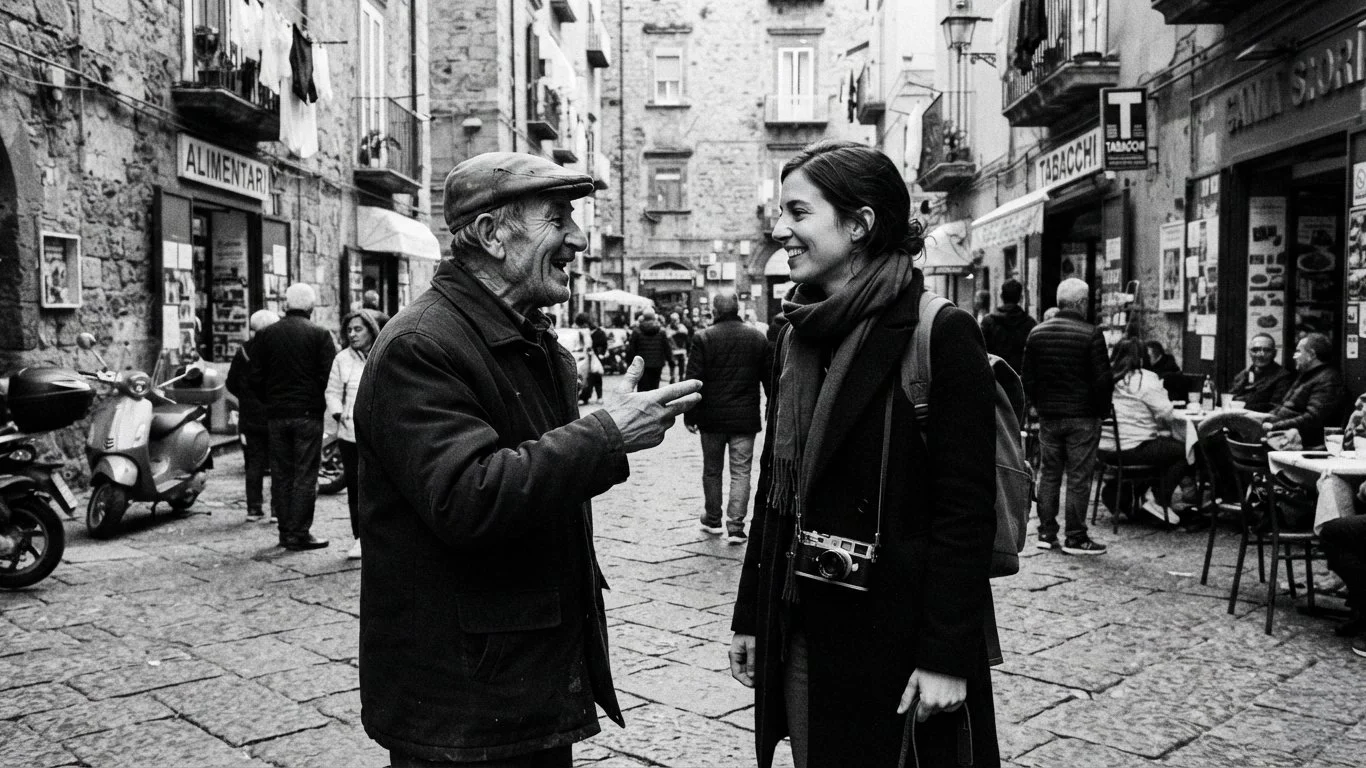
And sometimes, as Lindsay Brice's story showed, the best guide is simply the person you talk to honestly on a street corner. No fee. No formal arrangement. Just genuine curiosity, met with genuine hospitality, in a place that was always going to remain closed to you otherwise.
National Press Photographers Association (NPPA), nppa.org. A reputable, professional directory of working photojournalists, many of whom either work as fixers themselves in their home regions or maintain networks of contacts who do. This is the strongest, most credible option to link to.