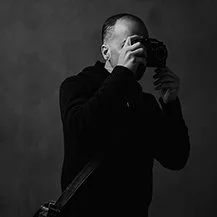
A Photo Story: In the Light Again
When you first visit Peter Westra’s website, you’re greeted by the words Work → Mono • Surf • RGB • W.L. • Expats a shorthand roadmap of the visual themes he explores. There’s the contemplative stillness of his monochrome portraiture; the raw, kinetic energy of waves and surf; the lush palette of real-colour landscapes; the travel diaries of a wanderer among expatriate communities. What ties it all together is Peter’s thoughtful eye and his empathy for his subjects—whether a surfer riding dawn’s first swell or a writer enduring illness in shade-lit isolation. His photographs don’t just show us a moment in time they invite us to linger in it.
Whether you’re a photographer, a writer, or simply someone drawn to images that linger Peter Westra’s work deserves your time. In the portrait we’re featuring here, this sensibility becomes especially visible.
Here is the story:
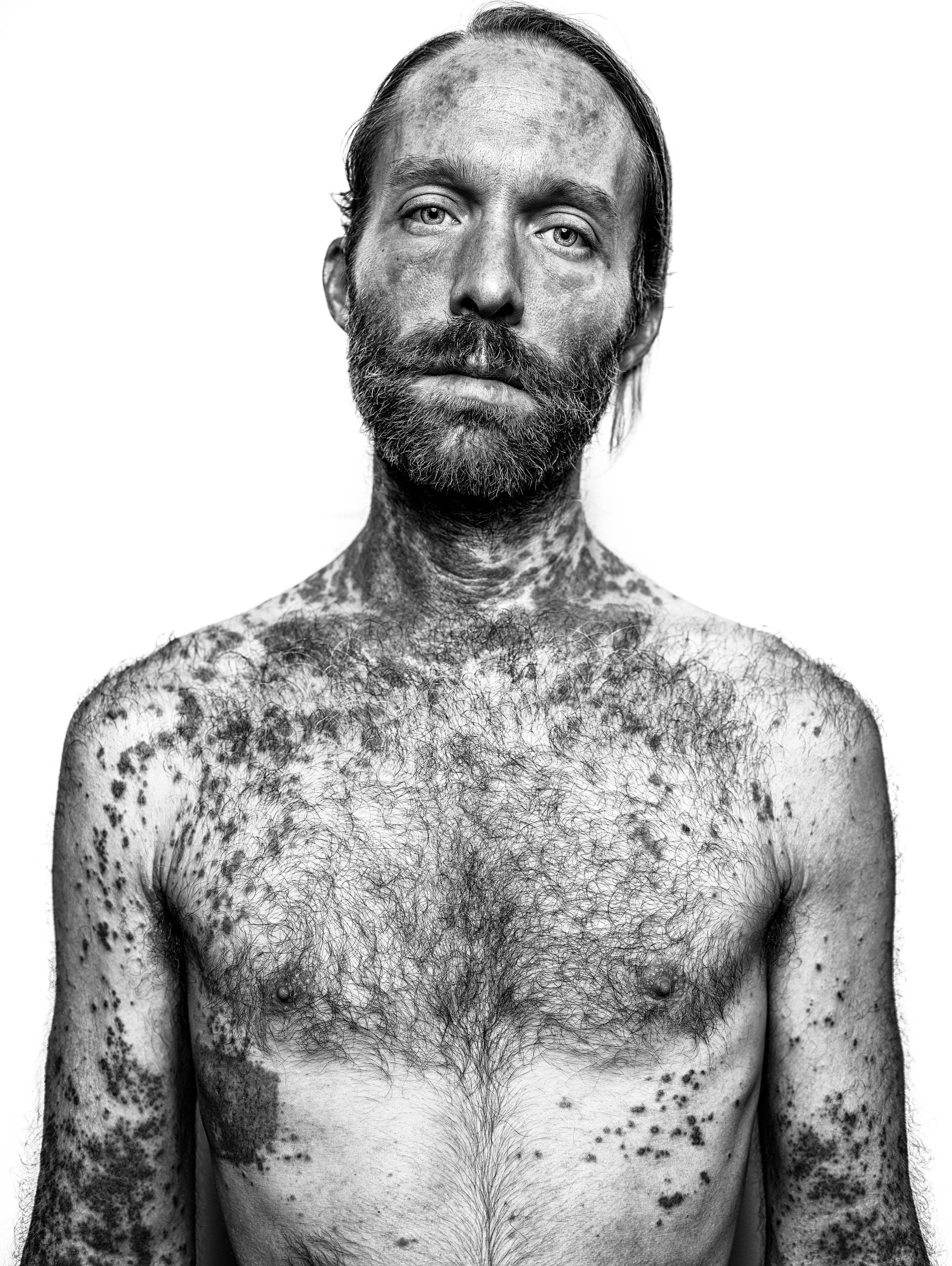
The kitchen was dim, its windows shuttered against the Costa Rican sun. Outside, the light was relentless a brilliance that could harm as much as it could heal. Inside, Peter Westra set up his camera. A single Elinchrom flash through an umbrella. A white wall. A friend waiting in the shadows.
The man was a writer from Devon, England a companion Peter had met a decade earlier. Now, years later, illness had turned the light itself into an adversary. A mysterious skin condition kept him cloistered indoors, unable to step into the day. The air hung still, the sound of the flashgun’s charge the only punctuation in that heavy quiet.
When Peter saw his friend again, he thought of Richard Avedon’s Beekeeper from The American West that haunting portrait of a man whose swollen face was a testament to endurance. The echo was undeniable: the starkness, the isolation, the unspoken suffering. But where Avedon worked with daylight and dust, Westra worked with the faint pulse of artificial light a single strike against the dark.
He raised his Fuji GFX 50R, fitted with the GF 110mm F2, and in that small kitchen, he built a world of his own. The flash burst, soft through the umbrella’s fabric, scattering light across the white wall. His subject did not flinch. In the photograph, the pain is there, yes the uncertainty, the exhaustion but also something else. A quiet defiance. A human tether that pulls you in through his gaze.
“What makes the portrait work,” Peter later said, “is the connection you feel through the eye contact. His desperation in the moment, with no cure in sight, is palpable.”
The connection is undeniable. In that look is both surrender and strength the meeting of vulnerability and resilience. The kind of eye contact that doesn’t just ask to be seen, but demands to be understood.
The photograph is stark, almost ascetic. There are no props, no distractions. Just a man, a wall, a flash of light. Yet within that simplicity, there’s something profoundly sacred a reminder that even when life withdraws us from the world, the human spirit keeps reaching outward.
He has since recovered. The illness has receded, and sunlight no longer threatens him. But the portrait endures a moment suspended between darkness and healing, between confinement and freedom.
It’s not a story of suffering, but of survival. Of art made in the margins of fear. Of friendship that becomes a mirror.
In the end, the light returned as it always does and with it, a renewed faith in what it means to be seen.
Peter Westra is a bilingual photographer whose lens bridges two worlds: his roots in the Netherlands and his adopted home in Costa Rica. His diverse portfolio spans stark monochrome portraits, surf culture, vivid colour landscapes and intimate explorer stories of expats. Across each series from “Mono” to “Surf” to “RGB” and “Expats” Westra captures vulnerability, resilience and the moment when the everyday reveals the extraordinary.
Check out more of Peters work at www.peterwestra.com