A Violin Doesn't Make Music
The instrument shapes what is possible. The music comes from the person holding it.
A violin does not make music. A violinist does.
This sounds obvious when you say it about a violin. Nobody picks up a Stradivarius and expects the instrument to do the work. Nobody blames the bow when the music falls flat. Nobody believes that owning a better violin will make them a better musician before they have put in the years of practice that playing well actually requires.
And yet photographers do the equivalent of this constantly. We read reviews of cameras we cannot afford and watch comparison videos between lenses that cost more than our monthly rent and spend hours in forums debating specifications that have almost no bearing on the photographs we actually make. We act as though the instrument is the variable when the evidence in front of us every day says otherwise.
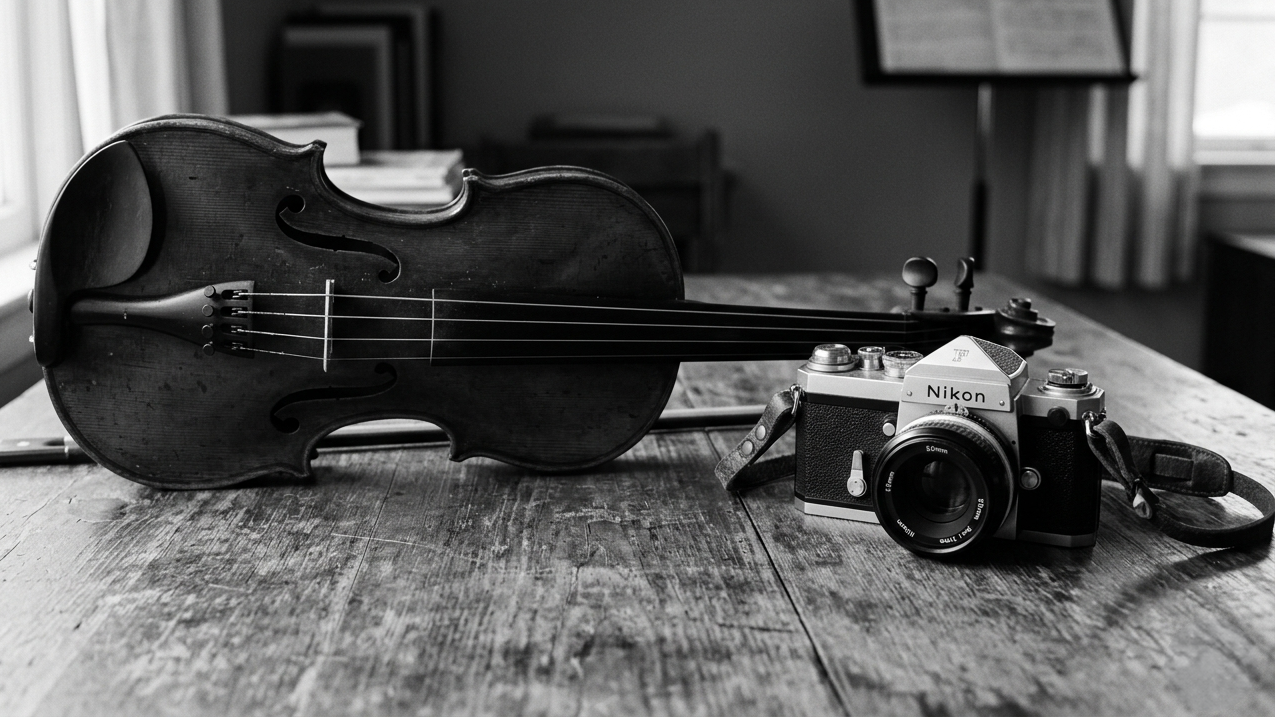
Same camera. Different everything.
Here is something worth thinking about. Two photographers standing in the same place with identical cameras will make completely different photographs. Different subjects. Different moments. Different compositions. Different relationships with the light. Different instincts about when to press the shutter and when to wait. Different ideas about what is worth capturing and why.
The camera is identical. The photographs are not even close.
Now think about the reverse. Take a photographer whose work you deeply admire and hand them a camera you consider inferior to your own. A cheaper body. An older sensor. A kit lens. Come back an hour later and look at what they made. It will almost certainly be better than what you make with your more expensive gear. Not because the camera is better. Because they are.
The instrument shapes what is possible. A camera with better low light performance gives you more options in difficult conditions. A faster lens gives you more control over depth of field. These things are real and they matter at the margins. But they are margins. The center of the frame, the thing that determines whether a photograph stops you or passes through your attention without leaving a mark, has nothing to do with the sensor and everything to do with the person who decided to point the camera at this specific thing at this specific moment.
What the years of practice actually build
A violinist who has played for twenty years has something that cannot be bought or upgraded. Their relationship with the instrument has become unconscious. They are not thinking about technique when they play. They are thinking about the music. The mechanics are handled by muscle memory and the conscious mind is free to feel.
This is what years of serious photography builds. Not the ability to operate a camera. The ability to see. The instinct for light. The patience to wait for the moment that is actually worth capturing rather than the moment that is simply available. The editorial judgment to know which frame from a shoot is the one. The compositional sense that places elements in a frame in a way that feels inevitable rather than accidental.
None of that lives in the camera. All of it lives in the photographer. And none of it can be purchased.
The musician analogy goes further
Think about what separates a technically proficient musician from a genuinely moving one. They might play the same notes. The same tempo. The same dynamics marked on the score. But one performance leaves you feeling something and the other leaves you admiring the accuracy. The difference is not in the technique. It is in what the musician brings to the technique. The feeling. The interpretation. The specific and personal relationship with the music that no amount of practice can manufacture but that practice creates the conditions for.
Photography works the same way. Two photographers can follow every rule of composition, nail the exposure, pick the right moment, and produce photographs that are technically identical in their correctness. And one of them will be interesting and the other will not. The difference is what each photographer brings to the frame. The specific way they see the world. The things they find worth looking at and why. The personal vision that is theirs alone and that no camera upgrade can provide or replace.
What this means practically
This is not an argument against buying better gear. Better tools are genuinely useful when you have developed the skill to use them. A professional violinist playing a Stradivarius is a different experience from the same musician playing a student instrument. The quality of the instrument matters when the skill is there to reveal it.
But the sequence matters. The skill comes first. The instrument serves the skill. Not the other way around.
For most photographers the limiting factor is not the camera. It is the eye. The hours spent looking carefully at great photographs and understanding why they work. The time in the field developing instincts that cannot be rushed. The editorial judgment that only comes from making a large volume of work and sitting with it honestly. The willingness to ask hard questions about what is working and what is not rather than assuming the next camera body will answer those questions for you.
The violin does not make the music. You do. And the good news is that what you need to make better photographs is almost entirely within your control and almost entirely free.
Go practice.