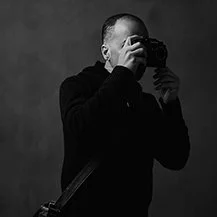
The Photographs You Weren't Trying to Make
The dedicated outing comes home with nothing. The walk to the grocery store comes home with everything.
Almost every photographer has lived this exact moment, and almost nobody talks about it directly because it's a little embarrassing to admit.
You plan a shoot. You pick a location. You check the light, charge the battery, set an intention. You go out specifically to make photographs. And you come home with nothing. Not bad photographs exactly, just nothing that holds your attention for more than a second once you're looking at it on a screen instead of in your head.
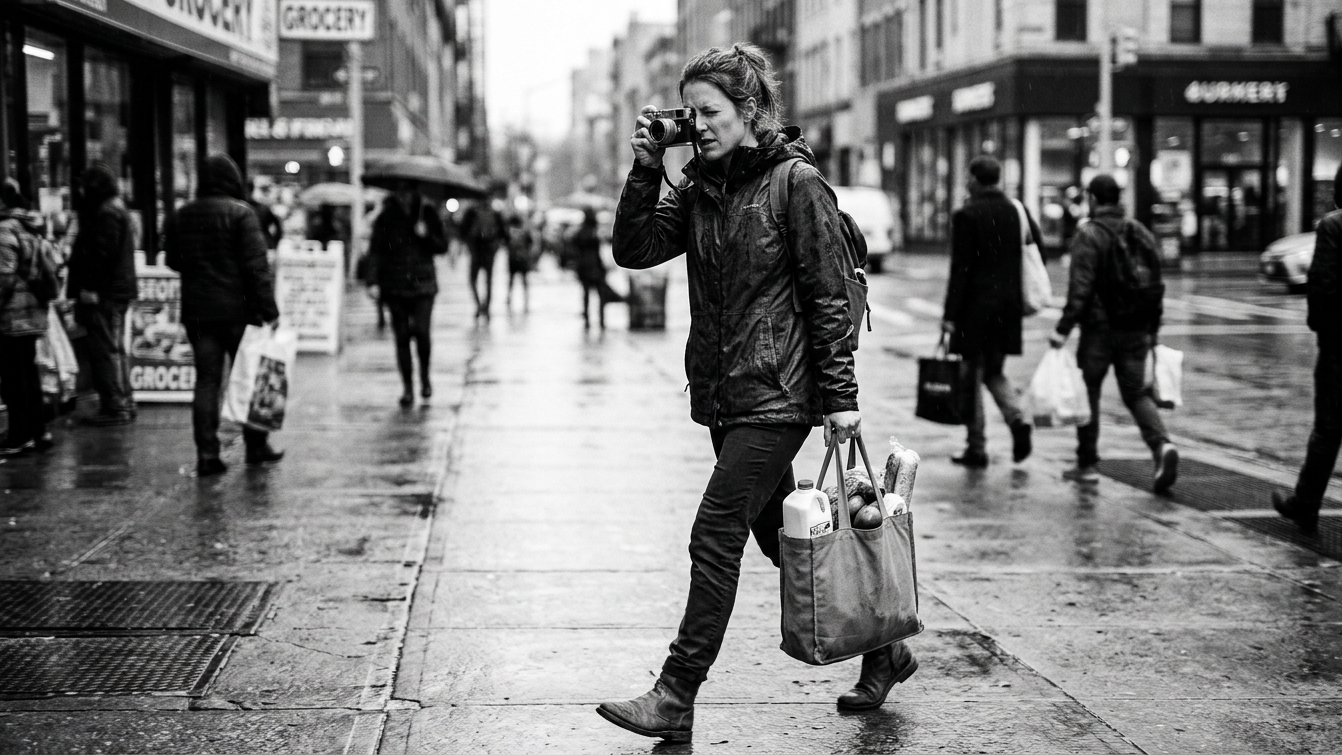
Then a few days later you're walking to the grocery store, camera over your shoulder mostly out of habit, not because today is a shooting day. And there it is. A moment, a face, a shaft of light falling across something you weren't looking for. You raise the camera almost without deciding to. And it's one of the strongest frames you've made in months.
This isn't bad luck. It's something specific about how pressure works against seeing, and once you understand it, it changes how you think about the camera you carry every day, not just the ones you bring on dedicated outings.
What the planned shoot actually does to you
When you go out specifically to shoot, you carry an expectation into the experience whether you mean to or not. This trip needs to produce something. That need does something strange to attention. Instead of looking at what's actually in front of you, you start scanning for what looks "photographable." You're hunting for the result before you've let the moment happen on its own terms.
That scanning feels productive while you're doing it. You're paying attention, you're working the scene, you're doing everything a serious photographer is supposed to do. But it's a narrower kind of attention than it feels like from the inside. You're filtering the world through the question "is this worth a photograph" before you've actually let yourself see what's there. And that filter, useful as it sometimes is, can also be exactly what stands between you and the thing you're trying to find.
What the unplanned moment gives you instead
When you're on your way to somewhere else, none of that pressure is attached to the camera being there. You're not evaluating every scene for its potential. You're just existing in the world, doing an errand, walking a route you've walked a hundred times, and your attention is free to land on things rather than scan past them looking for something worthy of the trip.
Counterintuitively, the absence of intention is what lets you actually notice something real. You're not trying to justify the outing. There's no outing to justify. You're just there, and being just there turns out to be most of what a good photograph actually requires.
This is about presence, not luck
It's tempting to write this off as randomness, sometimes you get lucky, sometimes you don't. But there's something more specific happening, and it has to do with presence rather than chance.
A dedicated shoot often comes loaded with quiet self-consciousness. Am I doing this right. Is this trip going to be worth it. Will I have anything to show for the effort. None of that is loud or obvious, but it sits underneath the experience and pulls a little bit of your attention away from the world and toward the outcome. An unplanned moment doesn't carry any of that. There's nothing to prove and nothing riding on it, so all of your attention is free to go exactly where it's needed, which is on whatever is actually happening in front of you.
The best photographs tend to come from photographers who are fully where they are rather than half-thinking about whether the trip is paying off. Presence isn't a mood you can manufacture by trying harder. It's often easier to find by accident, when nothing is asking you to perform it.
What this doesn't mean
This isn't an argument against planning shoots, scouting locations, or going out with intention. Deliberate practice still matters enormously, learning to see light, learning to wait, learning to recognize a strong frame before you press the shutter, all of that develops through the kind of dedicated outings that sometimes come home empty. The empty outings aren't wasted. They're part of how the eye gets built.
The point isn't to stop trying. It's to notice that trying and forcing aren't the same thing, and that some of your best work will come when the forcing stops, even briefly, even by accident, on a Tuesday afternoon when you weren't shooting at all.
The only practical takeaway worth keeping
Always have the camera with you, even when you're not "out shooting." Not because you need to be constantly hunting for images. Because the best frame of the month might not come from the shoot you planned. It might come from the fifteen minutes you spent walking somewhere else entirely, paying attention to nothing in particular, with no outcome riding on whether anything happens at all.
That's usually exactly when something does.