A Photo Story: The Music Never Stops
He went to Coney Island to photograph the Mermaid Parade. He never really left the boardwalk again.
Kenneth Nelson went to Coney Island on June 26, 2004, to photograph a parade.
It was his first time at the Mermaid Parade, America's largest art parade, and he had gone in expecting exactly what the vaudevillian pull of the neighborhood promised. Kings and queens of the sea. Marching bands. A crowd built entirely out of costume and invention. The parade did not disappoint. Floats and foot marchers moved along the boardwalk for the better part of two and a half hours, and Kenneth was right there documenting it, camera in hand, the way he had come to do.
Then the parade ended, the mermaids scattered toward the amusement area to drink and unwind, and somewhere in the middle of all that, a rhythm reached him before he saw where it was coming from.
The sound found him first
Kenneth is a dance skater. Years spent at Central Park's famous skate circle had already taught him that music has its own gravitational pull, the kind that reaches you before you understand why your feet are already moving toward it. So when the beat drifted across the boardwalk that afternoon, he did not think twice. He walked straight into it.
What he found was a crowd, dancers of every background gathered just steps from where the parade marchers had been filing off the boardwalk minutes earlier, moving together to house music with a group calling themselves The Black Underground. Kenneth was, in his own words, placed right in his comfort zone. He spent the rest of that day photographing both things happening at once, a parade winding down on one side and a dance floor rising up on the other, the two events overlapping until the music finally stopped somewhere around eight that evening.
He did not know it yet, but he would be back.
Every year, for eighteen years
Kenneth returned to that boardwalk every year after that, consistently, until 2022, when the pandemic threw everything into disorder. Between 2004 and then, he counts more than six thousand scanned and digital photographs, and he suspects there are still negatives from those years he has not gotten around to scanning.
The Black Underground itself did not last nearly that long. Their events on the boardwalk had wound down by the end of the 2005 season. But the tradition they started did not disappear with them. Other DJs and production groups picked it up and kept going, and the scene kept evolving in ways that had nothing to do with the music itself. In the early years it was largely unregulated, DJs setting up whenever they liked, sometimes playing until midnight. By the 2010s the Parks Department had stepped in. DJs needed authorization. Complaints came in from residents and nearby businesses about noise. The hours that had once stretched from eleven in the morning to midnight eventually shrank down to a narrow window between two and six in the afternoon.
The boardwalk changed shape around the music. The music never really stopped.
Getting closer
The most significant shift in how Kenneth actually made these photographs came in 2015, and it had nothing to do with the dancers at all. For over a decade he had shot the series on a medium format camera loaded with black and white film, a wide 40mm equivalent lens that kept him at a certain distance almost by necessity, its closest focusing point nearly one meter away.
In 2015 he switched to a 28mm lens on a full frame digital sensor, and everything about how he worked the dance floor changed with it. The closest focusing distance dropped to under a meter. He got closer. Stood in the middle of the dancers rather than at the edge of them. Started shooting from the hip, camera held just inches above the boardwalk planks, feeling the vibe rather than observing it from a comfortable remove. Digital gave him room to experiment in a way film never had, though he settled quickly into a discipline about it, limiting how many from the hip frames he would actually take in any one sequence.
The distance closed. The photographs got closer to what he had been feeling on that boardwalk all along.
A face he has never spoken to
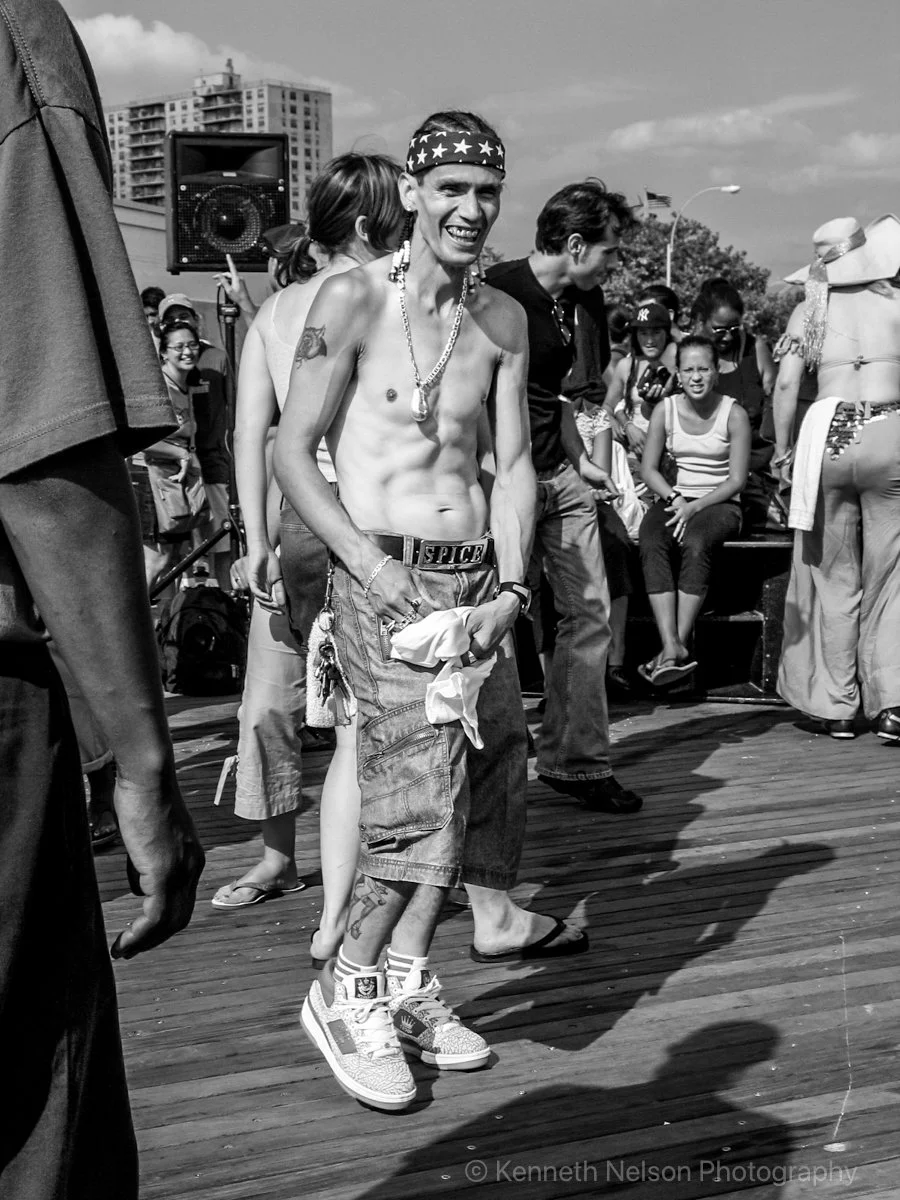
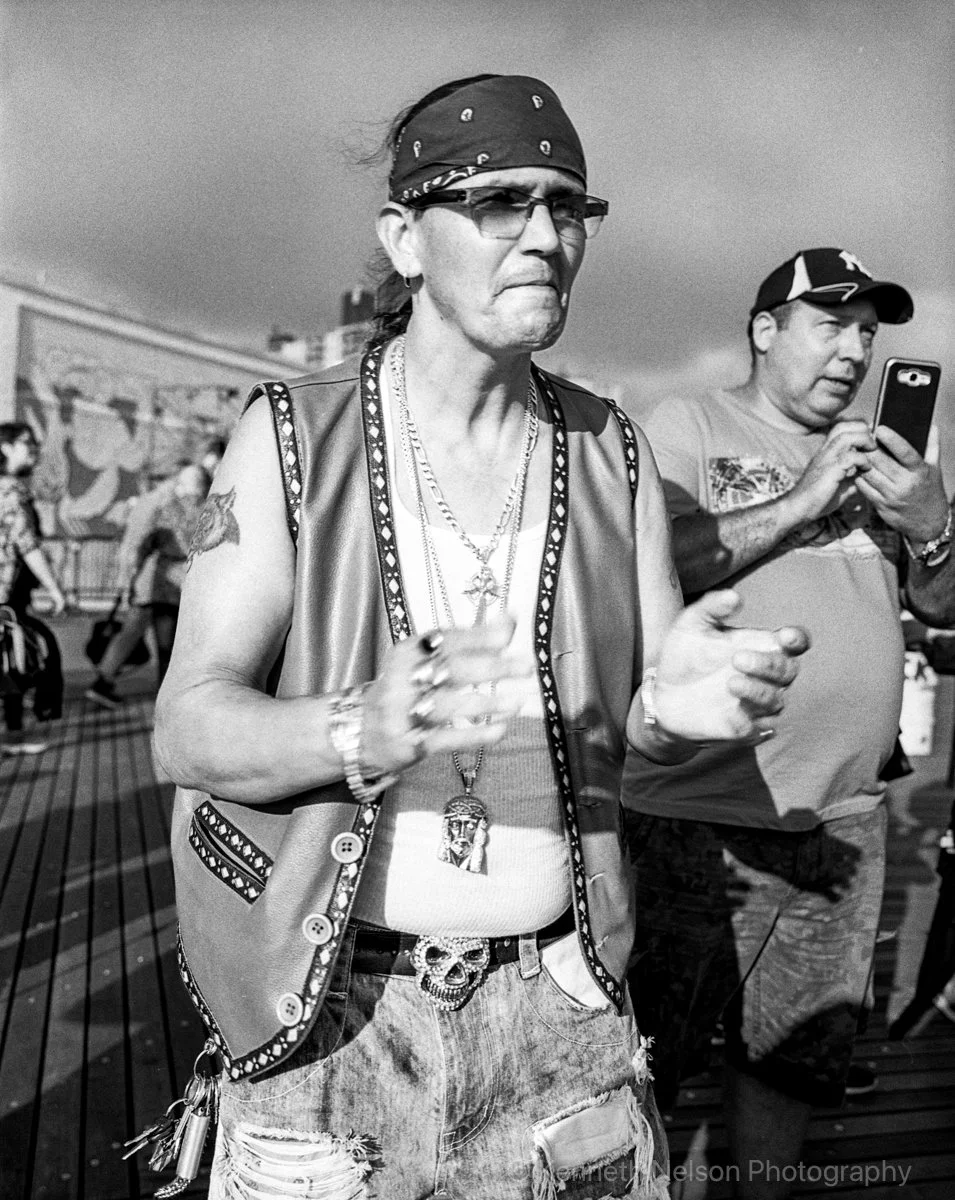
There is a man Kenneth has photographed since that very first day in 2004. He does not know his name. They have never spoken. What they have instead is a nod, sometimes a wink, an acknowledgment passed back and forth across nearly two decades of showing up in the same place. In one frame from 2004 the man is shirtless, wearing a name belt buckle Kenneth still cannot confirm actually belongs to him. In another from 2017, thirteen years later, he is wearing a vest, older, unmistakably the same person, still there.
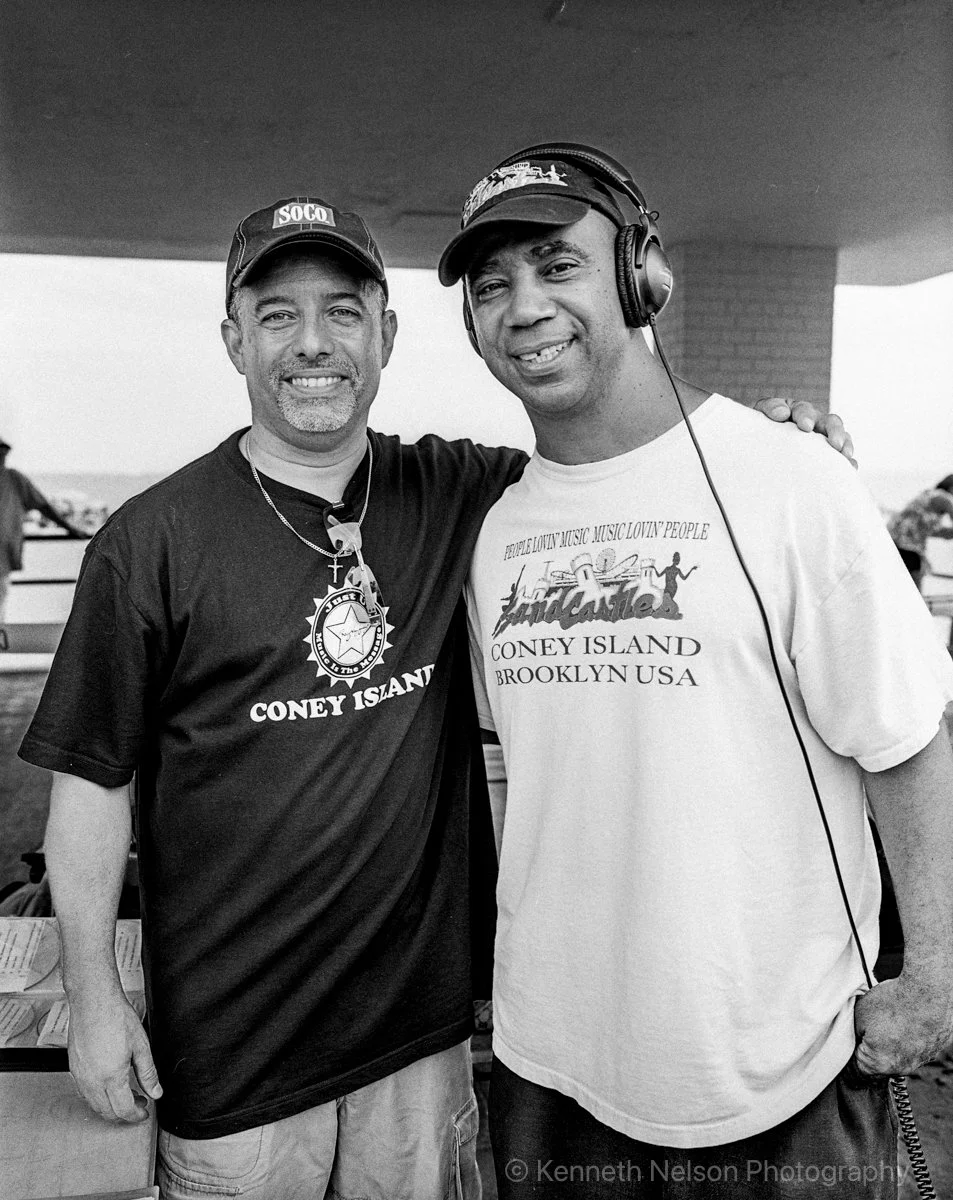
Kenneth is careful not to single out any one person as the heart of this project. There have been too many, hundreds of faces he has come to know by familiarity if not always by name, and the pain of that familiarity is that he has also watched some of them pass away over the years. DJ Preston Brown, one of the men who took up the boardwalk tradition after The Black Underground stopped, died in 2022. Kenneth photographed him more than a decade earlier, standing beside fellow DJ Ray Vazquez, both of them carrying forward something that had already outlived the group that started it.
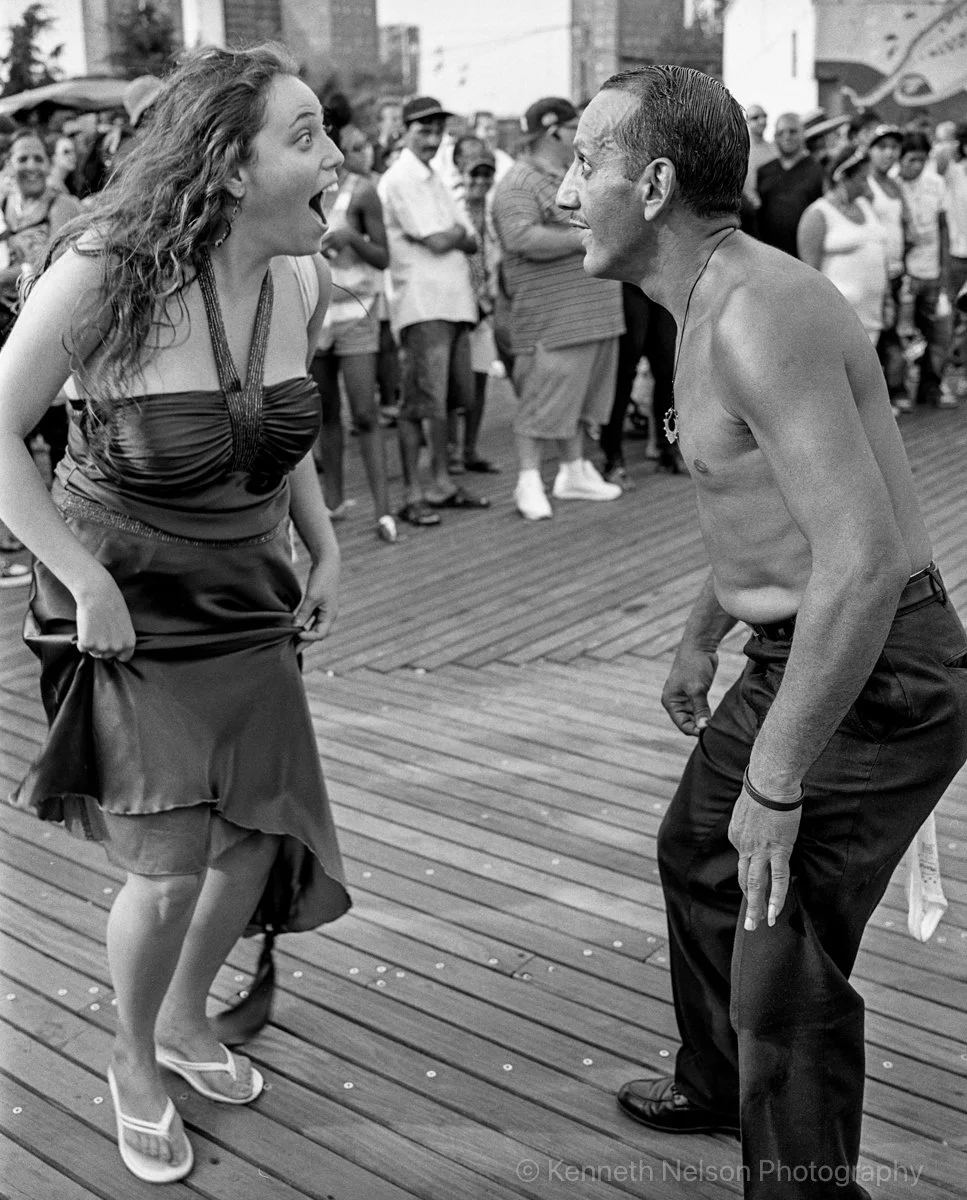
What ties all of it together, Kenneth says, is that nobody poses. He is not there to direct anyone. He is there to document movement, and the connection between one dancer and another, and over the years the regulars have come to understand that about him. When he points the camera in their direction mid dance, they simply keep dancing.
What the boardwalk itself is doing
None of this happens the way it happens anywhere else, and Kenneth is clear that the setting is not incidental. Coney Island carries a specific, layered strangeness that shapes everything that unfolds on it. People come expecting the Cyclone and the bumper cars and the beach, and instead they stumble onto a crowd of strangers from every background dancing together to music most of them never planned on hearing that day.
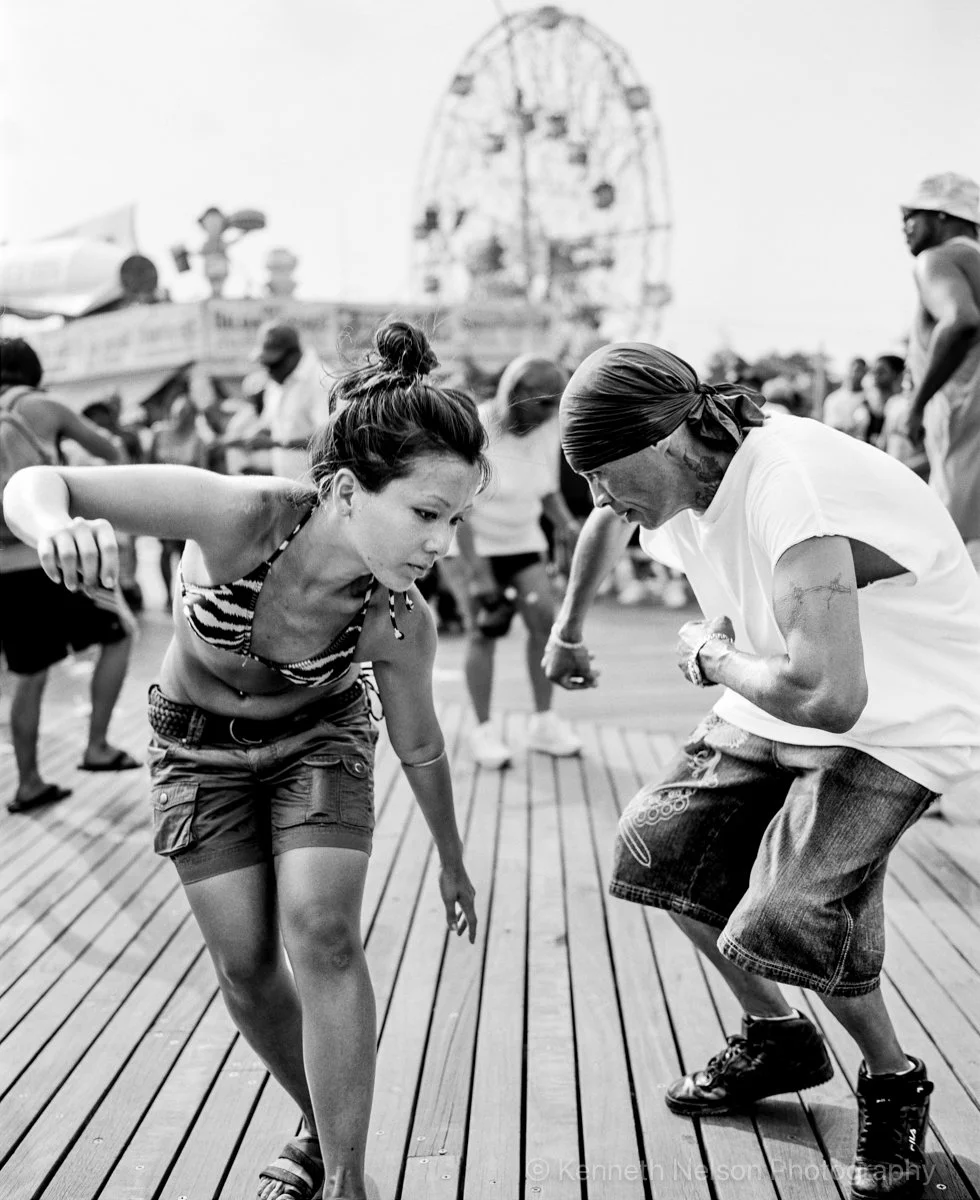
He remembers a moment in 2008, a man named Rongee dancing with a partner whose name he never learned, two people who had never met beginning to mirror each other's movements, back and forth, learning each other in real time on the boardwalk with Deno's Wonder Wheel turning in the distance behind them. He has used that photograph again and again as something close to emblematic of the whole series, the amusement park and the dance floor bound together in a single frame.
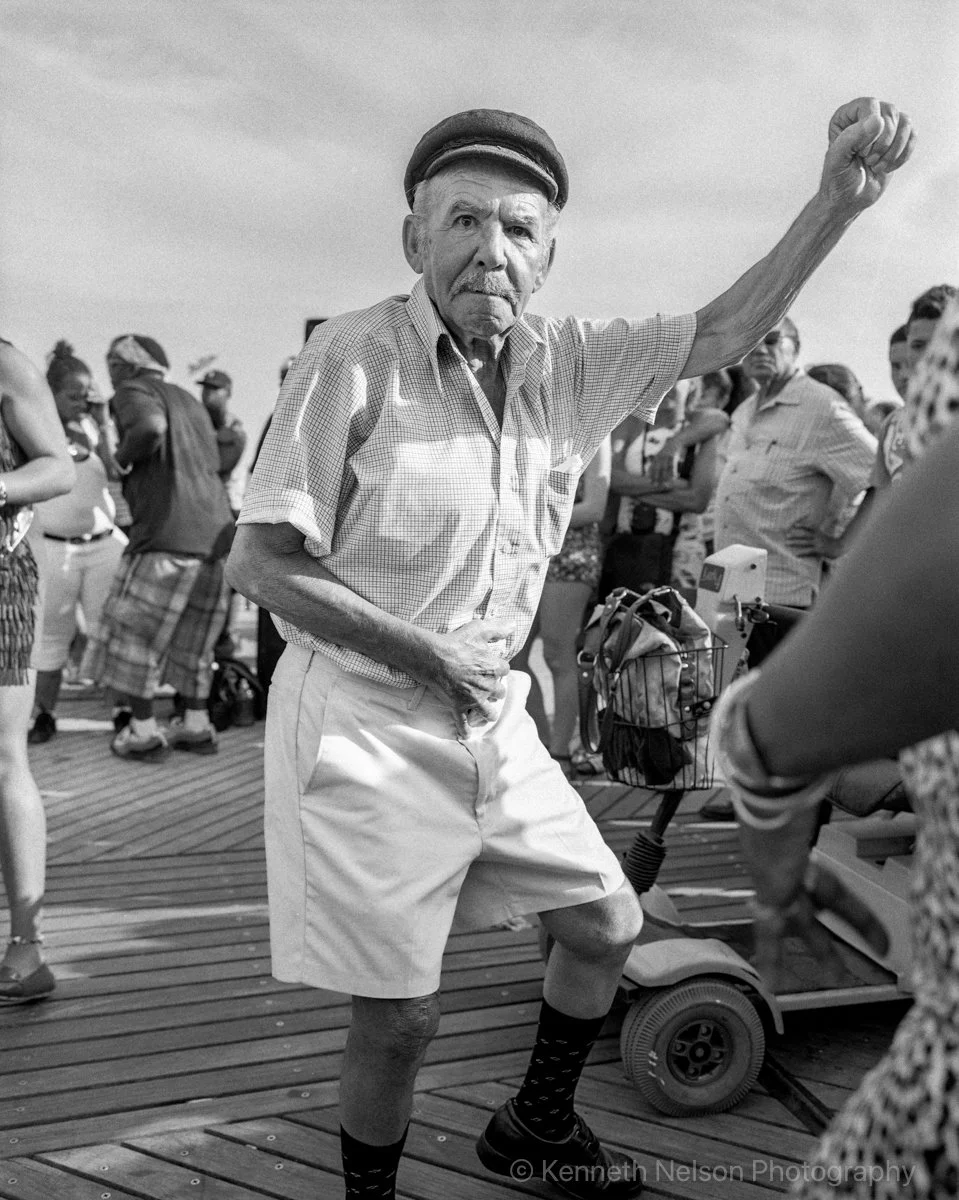
There is another image, from 2009, that he keeps returning to as well. A man mid hustle, caught in a moment of what Kenneth calls unadulterated joy, palpable enough that you do not need to know anything about house music to feel what it is doing to him. Within the circle of dancers around him, someone will tap in every few minutes to take his place, no embarrassment in it, men and women and every pairing in between, young dancers and elderly ones, everybody welcomed onto the floor without exception.
What it means now
Kenneth never set out to build a defined project. The idea only started taking shape around 2008, four years and countless visits after that first afternoon, once he had accumulated enough of a visual sense of what the vibe actually was and how it held together. It grew the way the best long term work usually grows, serendipitously, one return visit at a time, without a fixed beginning or a planned end.
He still cannot pick a single photograph to represent the whole thing. Some days one face feels emblematic of everything he has been trying to capture. Other days he finds an older frame he has not looked at in years and feels the same certainty all over again. Six thousand photographs in, he has stopped expecting that question to have one answer.
What he wants, more than any single image landing perfectly, is for someone who has never stood on that boardwalk to simply feel something. Not the whole story. Just enough curiosity or empathy to recognize the human connection happening in the frame. Coney Island is famous enough that most people already think they know what it is, the rides, the beach, the boardwalk itself as a backdrop for something else. What happens there every summer weekend, a community built entirely out of music and welcome and strangers becoming familiar faces over twenty years, is the part most people never hear about at all.
Kenneth has been showing up long enough now that he has become one of those familiar faces himself.
You can check out more of Kenneth’s work on foto @photokenarts or on his website KennethNelsonPhotography.com
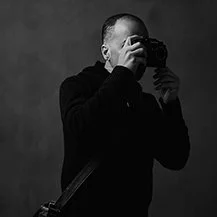
Kenneth Nelson is a Brooklyn NY based fine art photographer engaging stories rooted in the human spirit. His documentary project on Coney Island's boardwalk dance community spans 2004 to the present with more than six thousand photographs made across nearly two decades. His recent work from the series is shot in color.