What the Architect Already Knew Before You Got There
The architect designed forward from light. You are working backward from a finished building trying to understand what they already knew.
An architect and an architecture photographer are working on the same problem from opposite ends of it. The architect designs a building with a deep, sustained understanding of how light will move through it across a day and across seasons, an understanding baked directly into decisions about window placement, material, and orientation long before a single stone gets laid. The photographer arrives afterward, often with a single afternoon, and has to reverse engineer that same understanding from scratch, figuring out what the architect already knew before the building existed at all.
That gap is worth closing, and the fastest way to close it is to start thinking a little like the person who designed the space in the first place.
Orientation and the compass
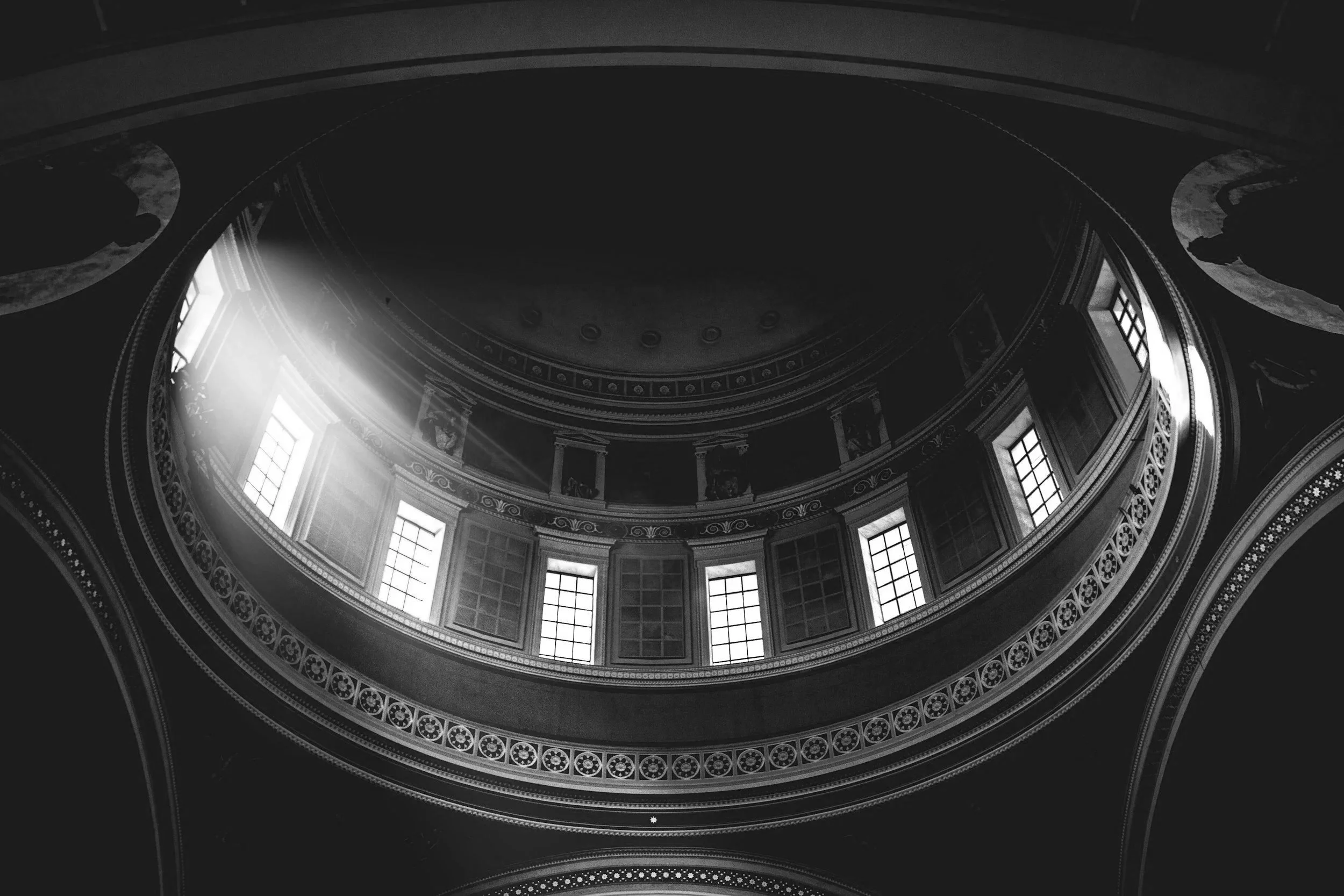
Architects design around cardinal direction with real deliberateness. A south facing wall in the northern hemisphere behaves completely differently across a day than a north facing one, and a building's most dramatic spaces are frequently oriented specifically to catch a particular quality of light at a particular hour. This is not incidental. It is one of the first and most fundamental decisions in the design of any serious structure.
A photographer who checks which direction a facade faces before showing up is no longer discovering when a building performs by accident. They are predicting it. Knowing that a lobby faces east means knowing, with real confidence, that morning is when it was likely designed to be seen at its best, the same way a portrait photographer learns to predict rather than stumble into good light on a person's face.
Material as a light instrument, not just a surface
Architects choose concrete, glass, stone, and wood partly for how each one behaves under different light conditions, not only for how each one looks in a rendering. Concrete absorbs and holds shadow in a way that gives it weight and density as the day goes on. Glass reflects and transmits light differently depending on the angle of the sun, sometimes disappearing into pure reflection, sometimes becoming almost invisible and revealing everything behind it. Stone catches raking light along its texture in a way that a smooth painted wall never will.
This is worth thinking about the same way we've talked about wood grain and skin texture in earlier posts, except here the material choice was made deliberately by someone thinking specifically about how it would behave across a full day of changing light. Understanding what a material is built to do under light lets you anticipate the moment it will actually reveal that quality, rather than discovering it by luck partway through a shoot.
Circulation, and the sequence nobody talks about
This is the least obvious idea here and probably the most useful one. Architects design the actual path a person walks through a building with real intention. A sequence of compression and release, a low, narrow entry that opens suddenly into a tall atrium, is a designed emotional experience, not an accident of floor plan efficiency. Good architecture is frequently built as a kind of narrative, moving a person through a deliberate rhythm of tight and open, dark and bright, low ceiling and soaring one.
A photographer who understands they are walking through a designed sequence, rather than photographing a series of unrelated rooms, can build a set of images that mirrors that same intended experience. Instead of treating each space as an isolated subject, you're documenting a story the architect already wrote, compression, then release, tension, then relief, and your sequence of photographs can carry that same arc rather than flattening it into a collection of disconnected, equally weighted rooms.
The Rembrandt connection
We wrote before about what a painter working three centuries before the camera existed can still teach a portrait photographer about light on a human face. This is the same underlying idea applied to a much larger, more complex, entirely non human subject. Understanding light before you understand the visual result it produces. The discipline transfers completely, even though the subject could not be more different.
Before you go
Two questions worth answering before you photograph a significant building, the same way an architect would already know the answers before it was ever built. Which direction does the main facade actually face. And what time of day was a specific space most likely designed to be experienced, morning light pouring through an east-facing lobby, late afternoon light raking across a west-facing stone wall.
Answering those two questions turns a shoot from arrive and hope into arrive with a hypothesis worth testing. The building already has an answer. The architect built it in. Your job is simply to go find it.