Bring The Viewer With You
There is a difference between looking at a photograph and feeling like you were standing right there when it happened.
Most photographs are looked at from the outside. The viewer sees a scene the way they might look through a window, aware they are separate from whatever is happening on the other side of the glass. It is a perfectly normal way to experience an image, and most photographs never try to be anything else.
Some photographs do something different. They collapse that distance entirely. The viewer does not feel like they are looking at your experience. They feel like they are having it, standing right there beside you at the exact moment the shutter went down. That feeling is not an accident, and it is not one single trick. It comes from a combination of specific, learnable choices.
Get close and get low
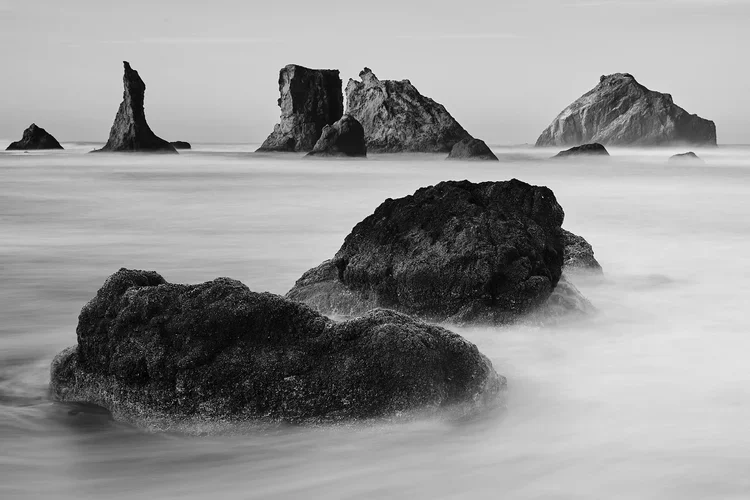
The single most reliable tool for this feeling is proximity. Standing close to your subject or your scene, rather than shooting from a comfortable, safe distance, is what starts to collapse the space between the viewer and the moment. Eye level matters just as much. A landscape shot from a scenic overlook, camera at standing height, looking down at everything from a polite distance, feels like a postcard. The same landscape shot from down inside it, boots in the mud, camera near the ground, low enough that the foreground grass is close and immediate, feels like a place the viewer could actually be standing in.
This is the same principle we have talked about before with portraiture. Closeness builds intimacy. It works exactly the same way with a place as it does with a person.
Use a wide lens the honest way
A wide angle lens used close to a subject does something specific to a photograph. Foreground elements loom large and immediate. The background recedes with real depth. That relationship mimics how your own eyes actually work when you are standing somewhere paying close attention to what is right in front of you.
This is different from using a wide lens simply to fit more into the frame from a distance. That approach produces the opposite effect, a flattened, disconnected view that feels more like looking at a map than standing in a place. The honest use of a wide lens means getting close enough that the width is doing something for the sense of presence, not just cramming more information into the same frame.
Include the details a viewer would actually notice
A photograph that strips a subject of all context can be powerful in its own way, but it is not the technique for this particular feeling. Bringing a viewer with you often means including the specific, sensory details that make a place feel real and inhabited. The texture of a wet street after rain. The exact quality of steam rising off a cup on a cold morning. The way light falls unevenly across a room instead of perfectly.
These small, specific details are what tell a viewer's brain this is a real place, not an idea of a place. A viewer cannot feel like they were standing somewhere generic. They can only feel present in somewhere specific, and specificity comes from exactly these kinds of details.
Give the eye a place to step in from
A deliberate foreground element gives the viewer a physical entry point into the frame, the way your own eye would naturally start close and move outward if you were actually standing there yourself. A hand at the edge of the frame. A doorway you are standing just inside of. An object close enough that it feels almost touchable.
Without something like this, an image tends to read as a flat wall of information rather than a space someone could actually step into. The foreground element is the invitation. It tells the viewer's eye where to start, the same way your own attention would naturally start close and work outward if you had actually been standing there.
Let a little imperfection in
A perfectly still, perfectly composed image can sometimes work against this feeling rather than for it. Too much control reminds a viewer they are looking at something constructed rather than something lived. A bit of genuine motion blur, an edge of the frame that is not quite perfectly balanced, something that feels like a real decision made in a real moment rather than a careful arrangement, can actually increase the sense of presence rather than reduce the technical polish.
This is not permission to be careless. It is a reminder that the goal here is not perfection. It is believability. A moment that feels too clean sometimes feels too far away.
The point of all of it
None of these ideas work in isolation, and none of them are a formula to apply mechanically every time. What they share is a single underlying goal. Closing the distance between the viewer and the moment, so that looking at the photograph starts to feel less like looking through a window and more like standing right there, close enough to feel the weather, close enough to notice the details, close enough that the moment feels like it is still happening.
That is the whole difference between a photograph someone looks at and a photograph someone remembers being inside of.