A Photo Story: A Feud, a Friendship, and a Clock
The winner kept the name. The loser could no longer team. Two years later, everything came due at once.
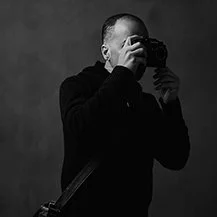
Ty Nelson got into photography because he was already a wrestling fan. That is the whole origin of it. He started going to local shows to shoot, and in the beginning his concerns were the ones every beginner has, getting the action sharp, learning his settings, figuring out how a camera actually works under bad arena lighting and constant motion. Wrestling taught him ISO and shutter speed the hard way, out of necessity, because a blurry action shot at a local show does not get a second chance.
Somewhere along the way that concern quietly became a different one. He stopped trying only to freeze motion and started trying to tell a story.
Rocket Pro Wrestling runs out of a banquet hall in Joliet, Illinois, seasonal, once a month from September through May, dark over the summer. They film every show and premiere it at a dine in movie theater before it goes up on YouTube, which tells you something about how seriously this company takes its own storytelling, long before Ty ever pointed a camera at it. This particular show was called Kicks on 66, the final show of the season, and it closed on a story that had been building for two years.
The story itself
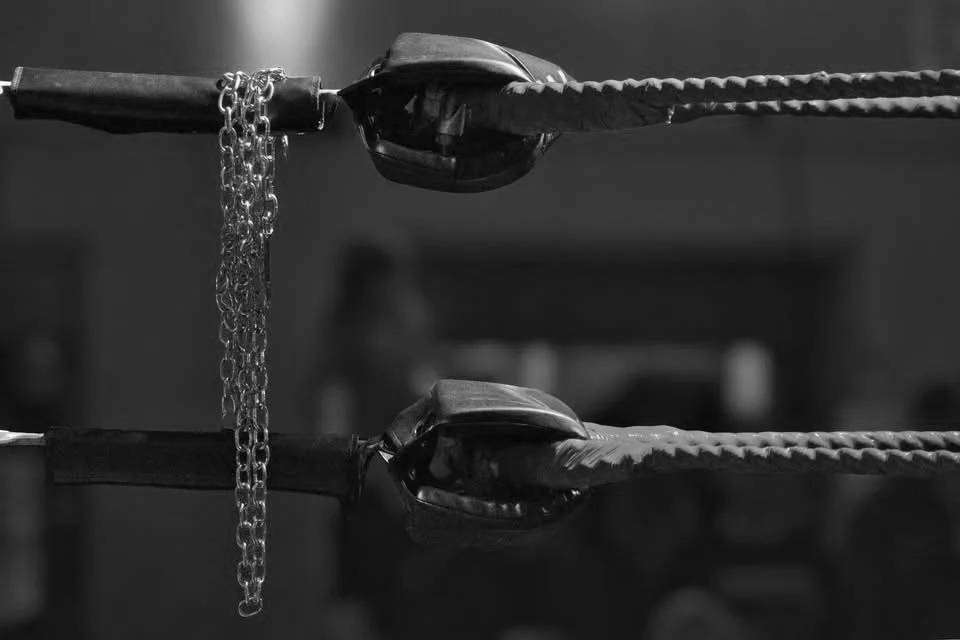
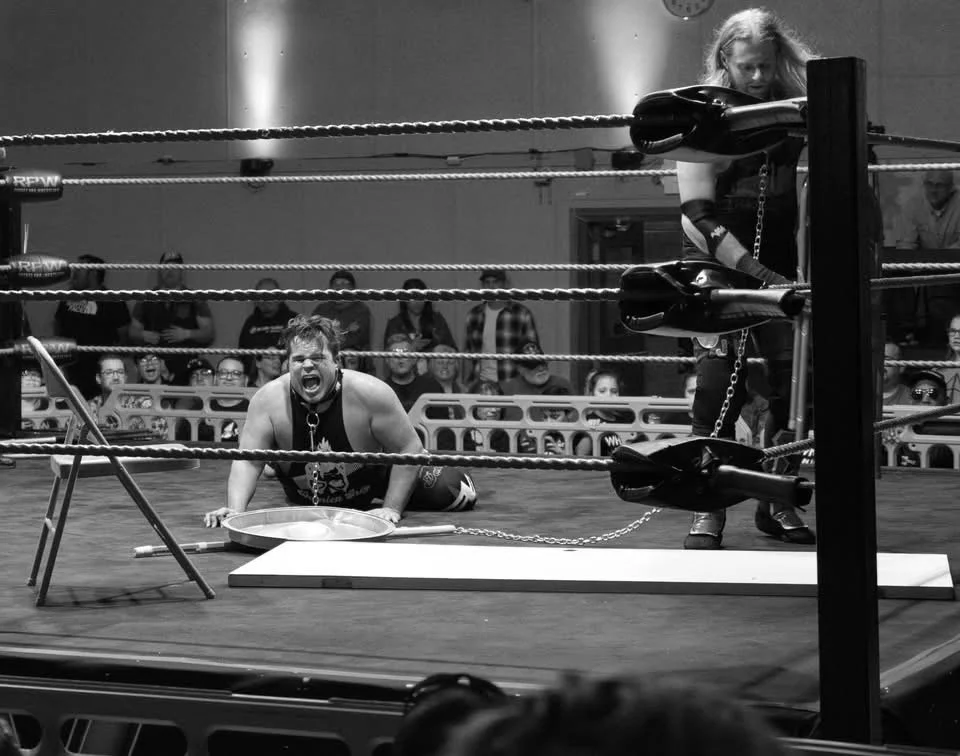
Johnny Nigh and Damien Grey were The Fabulous Idols, a villainous tag team that terrorized the company and held the RPW tag titles together. That partnership ended when Johnny did some soul searching and turned good, which put the two of them on opposite sides of a feud over who actually got to keep the Fabulous Idols name. It came down to a dog collar match, tag team stipulation, winner keeps the name, loser can never team again. Johnny's side won.
Two years later, Johnny captured his first singles championship, the RPW Outer Limits title, the kind of storyline wrestling fans call a feel good one, an aging veteran finally getting his moment. At the same time, Damien was stacking up wins of his own and earned his shot at Johnny's title.
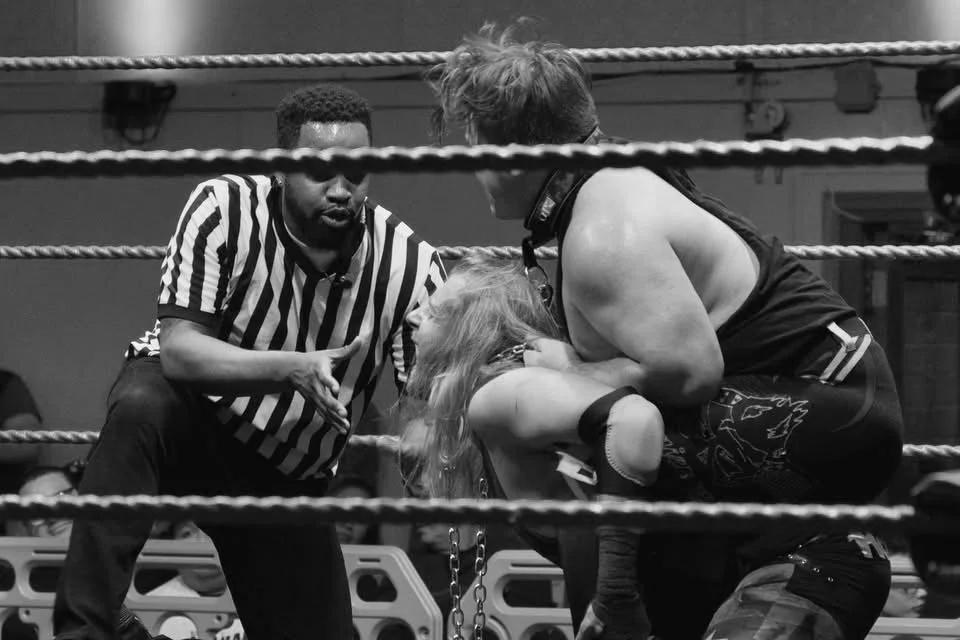
At the contract signing, Damien came apart emotionally, blaming Johnny for changing, for ending their friendship, for costing him everything that had mattered to him. The match became two out of three falls. Johnny added the stakes himself. A dog collar match again, a callback to the match that separated them two years earlier, and a second stipulation nobody asked for. If he lost, he would retire. He told Damien, on camera, in front of the crowd, that he had taught him everything he knew. Not everything Johnny knew.
The shot
Ty was in the crowd, roughly fifteen feet from the ring, shooting a Sony A6700 with a Tamron 20 to 200mm f2.8. Shooting wrestling from the crowd comes with a specific, constant obstacle, the ropes themselves, always in the way of a clean angle. The Joliet venue has two rows of bleachers, not much elevation, but enough to lift Ty just above the rope line and give him the clear sightline he needed.
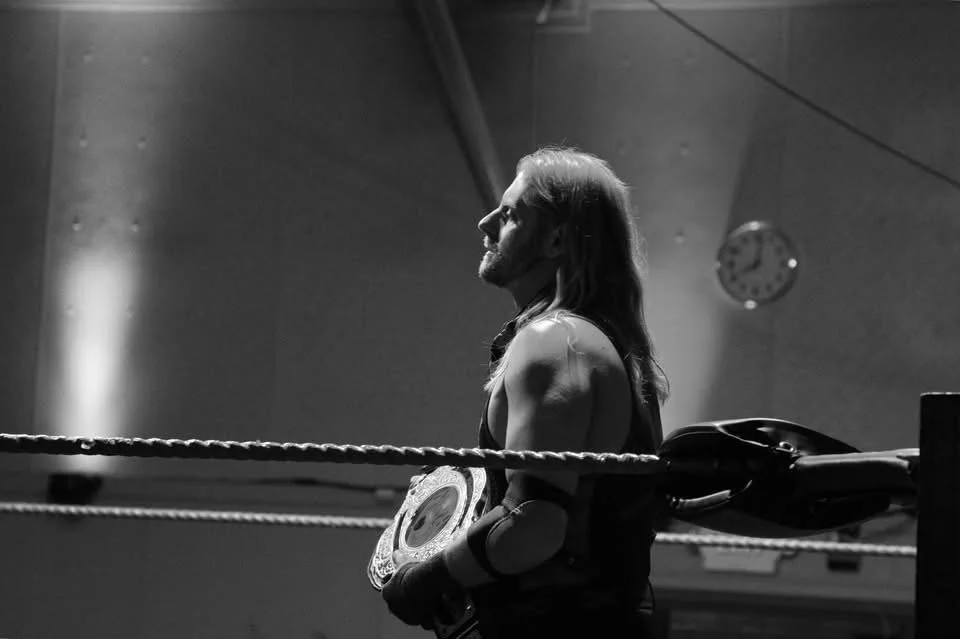
The image itself was made before the brutality of the match had really begun, Johnny standing in profile, title belt in hand, the arena's wall clock hanging directly behind him. Ty read that clock as time chasing all of us, and whether or not it was consciously staged by anyone in that moment, it reads as exactly that. A veteran wrestler standing still for one quiet second before stepping into the last match of his career, time visibly present in the frame with him.
What happened in the ring
The match itself was brutal and back and forth. Each man took a fall. Damien won the third, becoming the new champion. Johnny's career, by his own stipulation, was over.
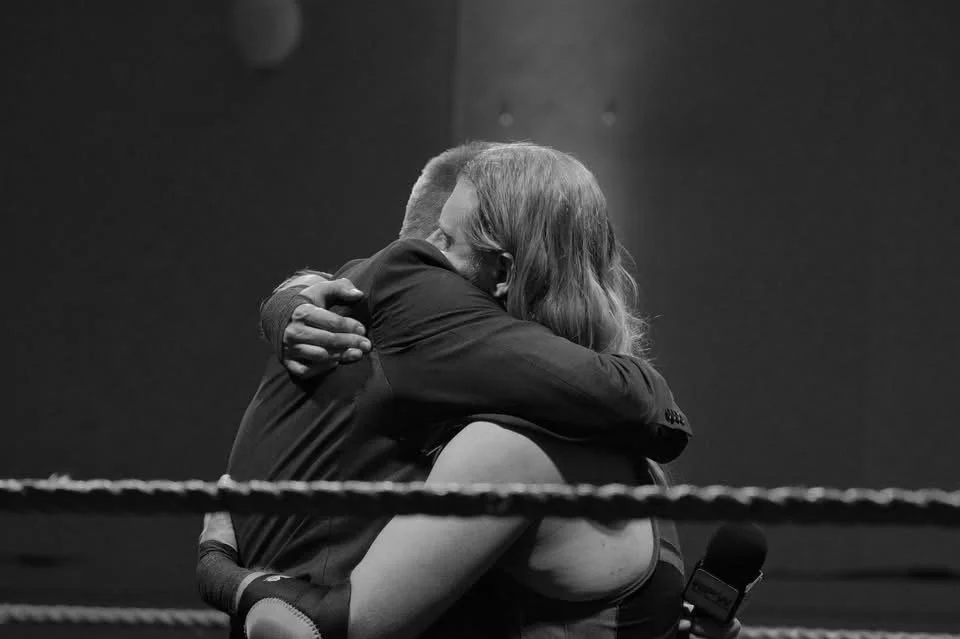
What happened next is the part Ty describes as pure cinema, and the photographs bear that out. The locker room emptied out to pay tribute to Johnny. His own brother, the promotion's ring announcer, came into the ring and held him. Johnny took off his boots, left them in the middle of the ring, and walked out through a crowd of a few hundred fans chanting his name.
Why Ty keeps coming back
Ty is honest about the fact that a lot of people roll their eyes at wrestling, and he does not entirely disagree, it can be genuinely cringeworthy. But he has also watched it be something else, moving, theatrical, athletic, and specifically at this level, unusually sincere. There is not much money in a promotion like Rocket Pro Wrestling. The people who do this are doing it because they love it, performers and audience both, and Ty says that atmosphere, the real love of the game underneath the theater, is what has kept pulling him back with a camera for years.
He still describes himself as developing his style. But somewhere between learning his exposure settings at ringside and photographing a veteran leaving his boots behind in a Joliet banquet hall, he found the thing he was actually after. Not the punch or the slam. The story underneath it, and the exact moment it comes due.
You can check out more of Ty’s work on foto @theuncontrolledframe or on his soon to be released website theuncontolledframe.com
Ty Nelson is a photographer who documents local professional wrestling, primarily Rocket Pro Wrestling in Joliet, Illinois. Follow his work on Foto.