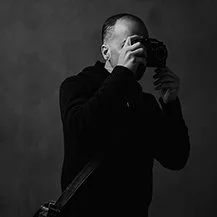
Photographer Spotlight: Matt Hodson
Matt Hodson lost both his parents. Then he picked up a camera and started photographing what is not there.
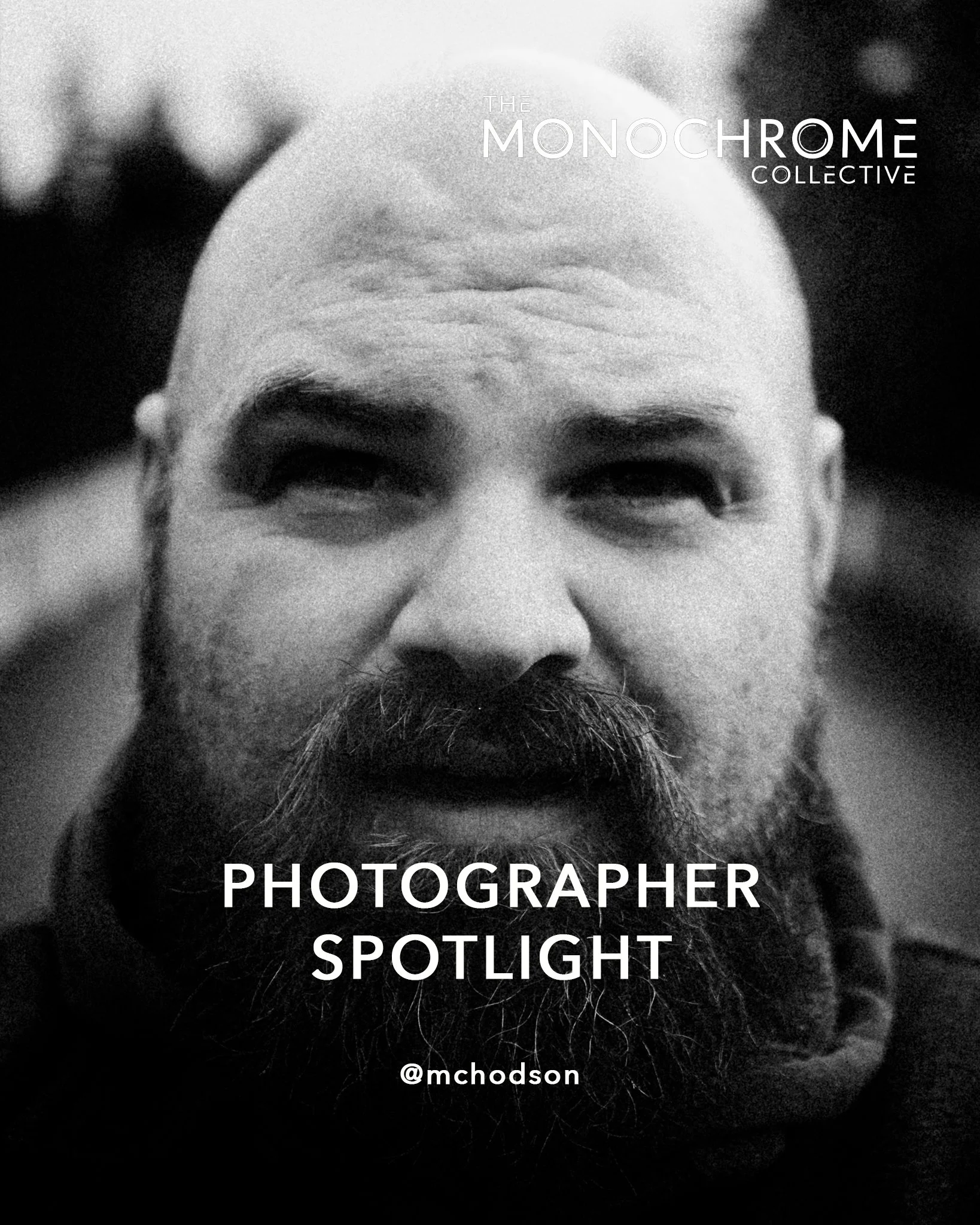
Matt Hodson is a Seattle based photographer with a distinctive and personal approach to street photography that he calls post-street. Where most street photographers chase the decisive moment, Hodson deliberately misses it. He is more interested in what the street looks like when nobody is there. His work is gritty, noir, and quietly unsettling in a way that takes a moment to place. There is clearly a philosophy behind it and a personal story driving it. We asked him about both.
Here is our interview:
Artistic Style
What draws you to photography?
I love the entire process. In addition to being a great mindfulness exercise, I get dopamine from the shutter click and when shooting digital, seeing what I shot. I love the way light and shadow interact with the 3d world and capturing it gives me a deep satisfaction.
How would you describe your style in three words?
Gritty, Noir, Post-Street.
What subjects or scenes are you most drawn to?
I am drawn to light as the subject primarily, which makes the entire world, wherever I am, a happy hunting ground. When I’m shooting street, I like to go against expectation and “miss” the “decisive moment.” I want to capture human absence as the subject, so I call it “post-street.”
Is there a story behind your favorite photo?
One of my favorite photos is from early on in my “serious hobbyist” days. I saw a piece of plexiglass in an entryway in downtown Seattle and shot it from the inside (of the entryway) looking out to the street. It’s not particularly great or anything, but my dad had died recently of a heart attack and it just struck me deep, the way the plexiglass was fractured.
What emotions do you try to capture in your work?
I like Freud’s concept of “the uncanny” which he described as something that is familiar and strange at the same time, creating a persistent but subtle unease. Empty public spaces at night fits this bill perfectly for me. The deep dark shadows, the blinding artificial light, and the lack of human presence makes a real twilight zone kind of feel.
Creative Process
What gear do you shoot with?
I have a Fujifilm x-t2 currently and I love using the xf 50mm f/2 lens on it. I love the way the 50mm (full frame equivalent 75mm) compresses space and it’s also easier to fill a tight frame. For domestic shooting (family, etc) I use the xf 27mm f/2.8. For film I use an Olympus 35RC and a Minolta X-700 given to me by my uncle, making it a family heirloom.
How much do you plan vs. shoot spontaneously?
I carry one of my cameras and lenses on me all day, so I’m more of a spontaneous shooter. I lack the executive functioning ability to plan very far ahead.
What’s one editing tool or trick that you use?
I always shoot raw+jpeg and just keep the raw as a digital negative for later use. I primarily rely on JPEGs (the entire reason I like Fujifilm) and apply a slight s-curve to them in Lightroom and that’s pretty much all the editing I do. I used to do a lot more editing. Now I’m too lazy (thanks Fuji).
Film or digital — and why?
Depending on the day, my answer will be different. One thing I love about photography is that it has helped me learn to not try to be 100% one or the other but kinda just roll with what feels good each day.
What’s something you’re currently working on improving?
Fleshing out my “post-street” style. Currently it’s basically going against conventional street photography (which is not bad or wrong, I have tons of decisive moment shots in my catalogue), but I want to develop a more thorough philosophy behind it.
Inspiration
Who or what inspires your photography?
I’ve always been into photography, but it only really became a serious pursuit of mine after my dad died suddenly of a heart attack in January 2024. Having already lost my mom in 2008, grief became a central inspiration of my work, hence the absence-as-subject idea. But it’s not all grief, I love making photos of my wife and daughter. I used to feel awkward being the only parent around with more than a smartphone when out with my family, but I can rest assured knowing the photos I’m capturing are of the quality I want.
Any photographers or artists that influenced your style?
Daido Moriyama (gritty black and white), Saul Leiter (abstract), David Lynch (uncanny minimalism), Caravaggio (love that baroque renaissance chiaroscuro)
What’s one non-photography source that fuels your creativity?
Driving around at night listening to music with no destination. Just observing how light interacts with empty spaces—parking lots, sidewalks, buildings. That quiet, in-between time shapes most of what I’m drawn to photograph.
If you would like to see more of Matt’s work you can find him on foto @mchodson