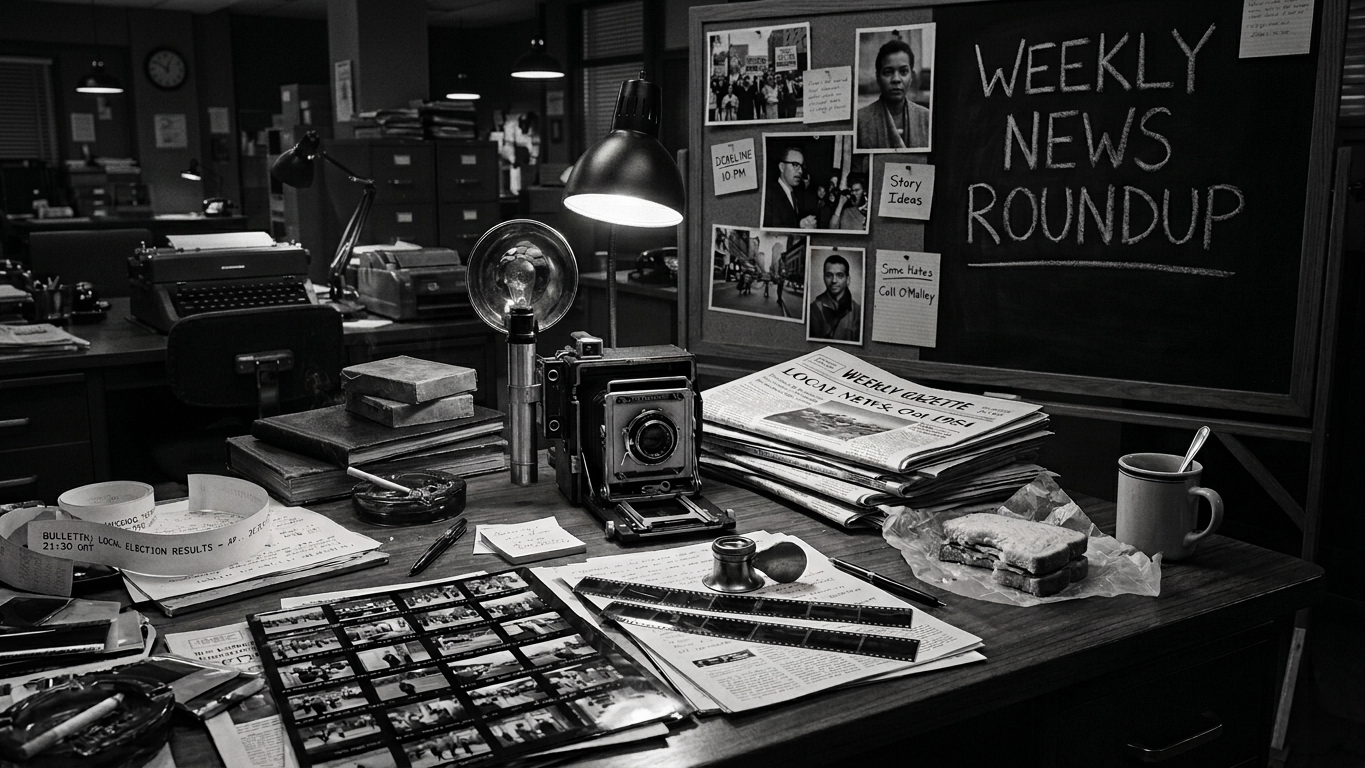
Weekly News Roundup
A Dorothea Lange archive opens to everyone, Leica Q3 owners get a meaningful update, and a wave of new lenses worth knowing about.
A quieter week on the big camera announcement front but plenty worth paying attention to. A nearly forgotten Dorothea Lange archive just went free online, Leica pushed a meaningful firmware update to the Q3 family, and several new lenses landed that are directly relevant to monochrome shooters.
3,200 Dorothea Lange Photographs From a Forgotten Project Go Free Online
This is the story of the week for anyone serious about the history of documentary photography. A nearly forgotten Dorothea Lange project documenting a California valley in the 1950s has been digitized and made freely available online. Over 3,200 photographs from the project are now accessible to anyone with an internet connection.
Lange is best known for Migrant Mother and her Depression era work for the Farm Security Administration but her output was vast and much of it has remained inaccessible in archives. This release gives photographers and students of the medium a rare opportunity to study a sustained body of work by one of the most significant documentary photographers of the twentieth century in its entirety rather than through the handful of images that tend to represent her publicly.
If you have not spent serious time with Lange's work this is the moment to start. Pull up the archive, set aside an hour, and look carefully. Not at the famous images but at the ones you have never seen before. That is where you will find what she was actually doing.
Leica Releases Firmware 4.1 for the Q3 Family
Leica has released Firmware Version 4.1 for the Q3, Q3 Monochrom, and Q3 43. The update introduces usability improvements, autofocus refinements, and bug fixes across all three bodies. Nothing revolutionary but a meaningful quality of life update for a camera that a significant number of photographers in the Collective shoot with regularly.
If you are running a Q3 body and have not updated yet it is worth doing. The autofocus refinements in particular are worth having for street and documentary work where reliable subject tracking makes a genuine difference. Update through the Leica FOTOS app or via SD card.
Brightin Star Announces AF 12mm f/2.8 Full-Frame Autofocus Ultra-Wide
Brightin Star has officially announced the AF 12mm f/2.8 for full-frame cameras, an autofocus ultra-wide prime that sits at a genuinely useful focal length for architectural and interior photography. An autofocus ultra-wide at f/2.8 from a third party manufacturer at a competitive price point is a meaningful addition to any full-frame system.
For black and white photographers shooting architecture, interiors, or large environmental scenes the 12mm focal length gives you the ability to include entire spaces in a single frame without the distortion of a fisheye. The f/2.8 aperture means you can work in lower light without pushing ISO into territory that costs you fine detail. Worth keeping an eye on as reviews start appearing.
Thypoch Announces 28mm Pancake Lens for Leica M Mount
Thypoch has announced a new 28mm pancake lens for Leica M cameras described as bringing 1950s design sensibility to the system. The lens is tiny, manual focus, and sits at a focal length that has a long and distinguished history in street photography.
For Leica M shooters in the Collective a compact 28mm pancake is a compelling proposition. It keeps the camera small and unobtrusive, which matters for street work, and the 28mm field of view gives you enough context around your subject to tell a story without going so wide that the scene becomes chaotic. The 1950s aesthetic is not just cosmetic. Pancake lenses of that era were designed around the principle that the best camera is the one you have with you and a tiny lens on an already compact body makes that argument compellingly.
Meike Goes APO With the 85mm f/1.4 II MIX
Meike is showing the new 85mm f/1.4 II MIX featuring an APO achromatic optical design. For monochrome photographers APO correction is not just a technical specification. It is a meaningful image quality consideration. APO lenses are designed to bring multiple wavelengths of light to the same focal point which means sharper rendering across the frame and better control of the chromatic issues that can muddy tonal transitions in black and white work.
The 85mm focal length is a portrait sweet spot that has produced some of the most iconic black and white photography ever made. At f/1.4 you get the subject to background separation that gives monochrome portraits their depth and presence. The combination of APO correction and f/1.4 at 85mm at Meike's price point is genuinely interesting. Watch for reviews as they emerge.
Yongnuo Brings VCM Autofocus and LCD Screens to New 35mm and 85mm Lenses
Yongnuo is unveiling both a 35mm and 85mm f/1.4 lens incorporating VCM voice coil autofocus technology alongside an LCD screen built directly into the lens body. The LCD displays shooting information without requiring you to look away from the viewfinder or the subject which is a practical workflow improvement for photographers who switch settings frequently.
For monochrome shooters the 35mm is the more immediately interesting of the two. That focal length sits in the sweet spot for street and environmental portrait work. Wide enough to include context. Not so wide that the scene becomes difficult to control. At f/1.4 you can work in the kind of low available light that produces the most compelling monochrome images without compromising shutter speed. The VCM autofocus is designed for both speed and silence which matters for candid and documentary work.
Laowa CF 4.5 to 10mm f/2.8 Zoom Fisheye
Laowa is showing the CF 4.5 to 10mm f/2.8 Zoom Fisheye, available for multiple mounts. Fisheye lenses might not be the first thing that comes to mind for serious black and white work but the extreme perspective and geometric distortion they produce can create genuinely compelling compositions when color is removed from the equation. Without color to carry the image the shapes and forms that a fisheye creates have to do all the work and in the right hands they do it very well.
The constant f/2.8 aperture across the entire zoom range is the practically useful feature here. It means consistent exposure as you compose across the focal length range which simplifies the technical side of working with an unusual lens and lets you focus on the more interesting question of what extreme perspective does to your subject.