Why Every Photographer Should Shoot Outside Their Genre
The ceiling you keep hitting in your photography probably has nothing to do with your genre and everything to do with staying in it.
Most photographers find their genre early and stay there. It makes sense. You develop instincts, you build a body of work, you get better. The street photographer gets faster and more fluid. The landscape photographer gets more patient and more precise. The portrait photographer gets better at the relationship between camera and subject. The lane you have chosen rewards the time you put into it and leaving it feels like wasted effort.
But there is a ceiling that most photographers eventually hit. And it is almost never a technical ceiling. It is a vision ceiling. You have learned everything your genre routinely teaches and you have stopped being genuinely challenged by the act of seeing. The photographs keep getting more polished and somehow less interesting at the same time. Something has gone flat and you cannot quite identify what.
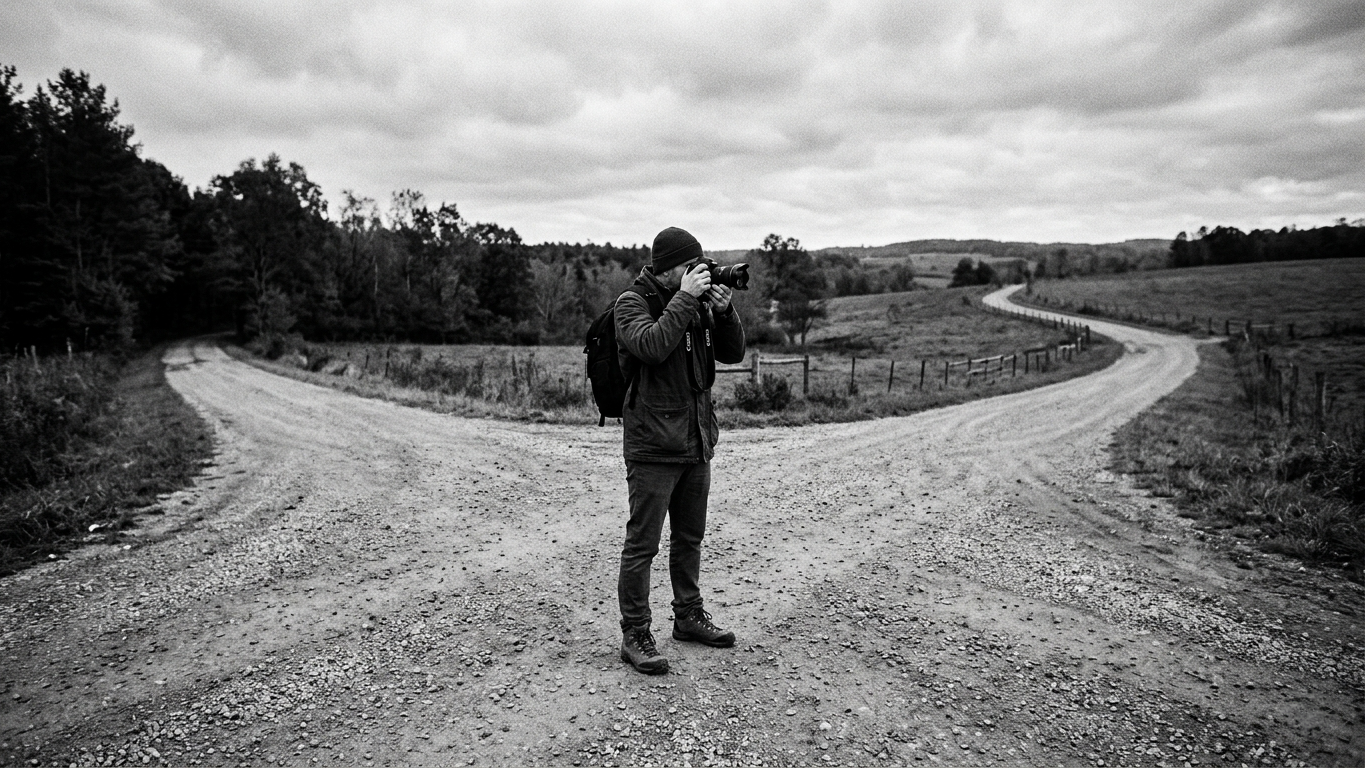
Going outside your genre is one of the most reliable ways to break through that ceiling. Not because the new genre will replace the one you love but because it will give you something your own genre stopped giving you a long time ago. The discomfort of not knowing what you are doing.
What each genre actually teaches
Every photographic genre is a specific visual discipline with its own demands and its own rewards. And each one teaches something that transfers directly to every other genre even if the connection is not immediately obvious.
Street photography teaches spontaneity. The instinct for the moment that is forming before it has fully formed. The ability to react without thinking and trust that the eye knows something the brain has not caught up to yet. It teaches you to be present in a way that planned photography never requires.
Landscape photography teaches patience. The willingness to return to the same location multiple times until the conditions are exactly right. The long wait at the edge of a field or the top of a hill, watching the light change, understanding that the photograph is not something you make but something you wait for and recognize when it arrives.
Portrait photography teaches relationship. The ability to make another person feel seen rather than photographed. The understanding that the best portraits are collaborations between photographer and subject and that what the subject brings to the frame is as important as anything the photographer controls.
Documentary photography teaches commitment. The understanding that the most powerful work comes from sustained attention to a single story over time rather than a collection of strong individual images. It teaches you that depth requires duration.
Abstract photography teaches pure seeing. The ability to look at form and light and texture independently of what things are. To find the composition in a wall or a shadow or a reflection without needing it to be about anything beyond itself.
These are not separate skills. They are aspects of a single visual intelligence and developing any one of them makes all of them stronger.
The discomfort is the point
The most useful thing about shooting outside your genre is not what you learn about the new genre. It is what the discomfort reveals about your own habits and assumptions.
When you are not in familiar territory you cannot rely on the instincts you have spent years building. You have to think consciously about decisions you normally make automatically. Where to stand. When to shoot. What to include and what to leave out. And that conscious thinking, uncomfortable as it is, shows you things about how you work that you could not see from inside your routine.
The street photographer who spends a morning shooting macro photography suddenly understands intimacy and detail in a way that changes how they look at faces and hands and the small revealing moments of city life. The landscape photographer who tries street photography for a day experiences the pressure of spontaneity and learns something about trust in their own instincts that the patient landscape practice never demanded. The portrait photographer who spends time shooting architecture learns what it means to build a relationship with a subject that cannot respond to you and that discipline changes how they think about presence and environment in their portrait work.
You are not learning new genres. You are borrowing their tools and taking them back to the work you actually care about.
What happens at the intersections
Some of the most interesting photography happens not within genres but at the edges where they overlap. The street photographer who brings landscape patience to a single location and waits for the right moment instead of moving constantly. The portrait photographer who brings documentary commitment to a long term project about a single subject over months or years. The landscape photographer who brings portrait intimacy to a tiny corner of a vast scene, finding the human scale within the geological one.
These intersections produce work that does not fit neatly into any category. Work that has the spontaneity of street photography and the patience of landscape work. Work that has the intimacy of portraiture and the scope of documentary. Work that is harder to describe and easier to remember.
The photographers whose work we find most distinctive and most difficult to place are almost always the ones who have practiced widely rather than narrowly. Their genre is their own because they have assembled it from multiple traditions rather than inheriting it from one.
Some specific things worth trying
If you shoot street photography spend a morning in a single location without moving. Compose the frame and wait for the right elements to move into it. The patience will be uncomfortable and the discomfort will teach you something.
If you shoot landscapes spend a day in a city shooting whatever catches your eye without planning any of it. The spontaneity will be uncomfortable and the discomfort will teach you something.
If you shoot portraits spend time photographing spaces without people. The absence of a subject who can respond to you will be uncomfortable and the discomfort will teach you something.
If you shoot documentary work spend an afternoon shooting pure abstracts. Forms and shadows and textures with no narrative purpose. The purposelessness will be uncomfortable and the discomfort will teach you something.
The pattern is consistent. Whatever your genre is the thing that will teach you the most is the thing it does not ask of you. Go find that thing and spend some time with it. You will come back to your own work with something you did not have before and you probably will not be able to name exactly what it is.
That is how it works. That is why it works.