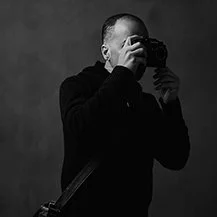
Is Noise Ruining Your Photographs?
You're probably assuming we mean Digital noise. We don't.
Is noise ruining your photographs?
You probably read that and assumed we meant sensor noise. Grain. High ISO. The thing you fight in post-processing or embrace deliberately depending on the look you're after.
We don't mean that kind of noise.
We mean the noise in your head. The unfinished argument from this morning. The email you still haven't answered. The mental list of everything else you should be doing instead of standing on a street corner waiting for something to happen. None of that shows up in the final image, but all of it shapes whether you were actually present enough to make one worth keeping.
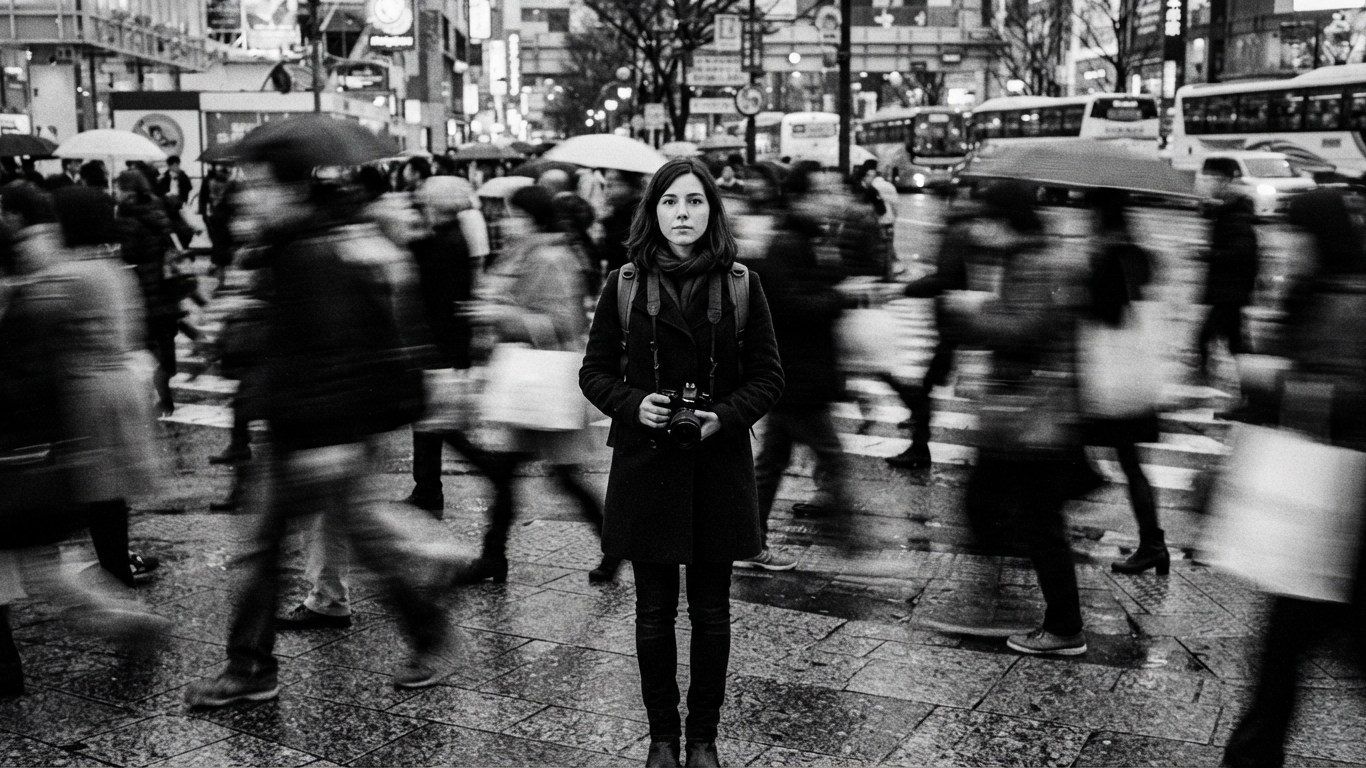
You can know everything and still see nothing
Here's the frustrating part. You can understand composition completely. You can read light correctly. You can know exactly what makes a strong frame and exactly what you're looking for. And you can still come home with nothing, not because your technical understanding failed, but because your head was too loud to actually notice what was in front of you.
Photography is unusual among creative practices in this specific way. A writer can draft something badly and revise it later. A musician can record a take and fix the mix afterward. A photographer has to perceive the moment accurately while it's happening, in real time, with no second pass. If your attention is split, half somewhere else, fragmented across the noise running in your head, you don't get to edit your way back to that moment. It's just gone. Whatever was there walked past you while you were busy thinking about something else entirely.
What the noise actually does to you
Mental noise doesn't make you see nothing. It's worse than that. It makes you see in a kind of tunnel. You're locked onto whatever loop is running in your head, glancing past everything else without really registering it. You can walk an entire city block in this state and arrive at the other end having seen nothing worth photographing, not because nothing was there, but because you weren't actually looking. Your eyes were open. Your attention wasn't.
There's a second effect too, and it's sneakier. When your head is loud, you tend to photograph the first obviously "photographable" thing that manages to break through the noise. The bright color. The dramatic gesture. The thing that's impossible to miss even when you're barely paying attention. A loud head produces obvious photographs. A quiet head produces specific ones, the kind that require actual stillness to notice in the first place.
Why this is the part nobody talks about
Most photography advice is entirely about the visual side of noise: clean your background, simplify your frame, remove distracting elements. All useful. None of it addresses the noise that exists before you've even raised the camera, the noise inside the person doing the looking.
This matters more than it gets credit for. The strongest photographs often come from photographers who are in an unusually quiet mental state in that exact moment, not calm in some generic, unbothered sense, but uncluttered. Present enough that the noise has gone quiet long enough for something real to register.
What you can actually do about it
This isn't about achieving some permanent state of zen before you're allowed to pick up a camera. That's not realistic and it's not the goal. A few things that actually help:
Name the noise before you go out. Not to eliminate it, that usually backfires and makes it louder, but to acknowledge specifically what's running in your head right now. A loop has less power over your attention once you've actually looked at it directly instead of letting it operate underneath your awareness.
Build in a deliberate transition before you start shooting. A few minutes of just standing still and looking, camera down, before you start actively hunting for anything. It feels like wasted time. It isn't. It's the gap where the noise gets a chance to quiet down before you ask your eyes to do anything.
Give yourself a narrow, specific task instead of a vague goal. "I'm going to find one frame with strong shadow today" quiets the noise far more effectively than "I'm going to take some good photos," because a specific task gives your mind something concrete to hold onto instead of letting it spin on whatever it was already spinning on.
And accept that some days the noise just won't quiet down. That's not a failure of discipline. It's a legitimate reason to put the camera away and try again tomorrow, rather than forcing frames that the noise was never going to let you see clearly anyway.
Sensor noise you can fix in post. The other kind doesn't show up in any histogram, and it's the one that's actually been costing you photographs all along.