Photographer Spotlight: Stephen Uhraney
Forty years of honest, unposed, documentary photography and he still does not feel like it is work.
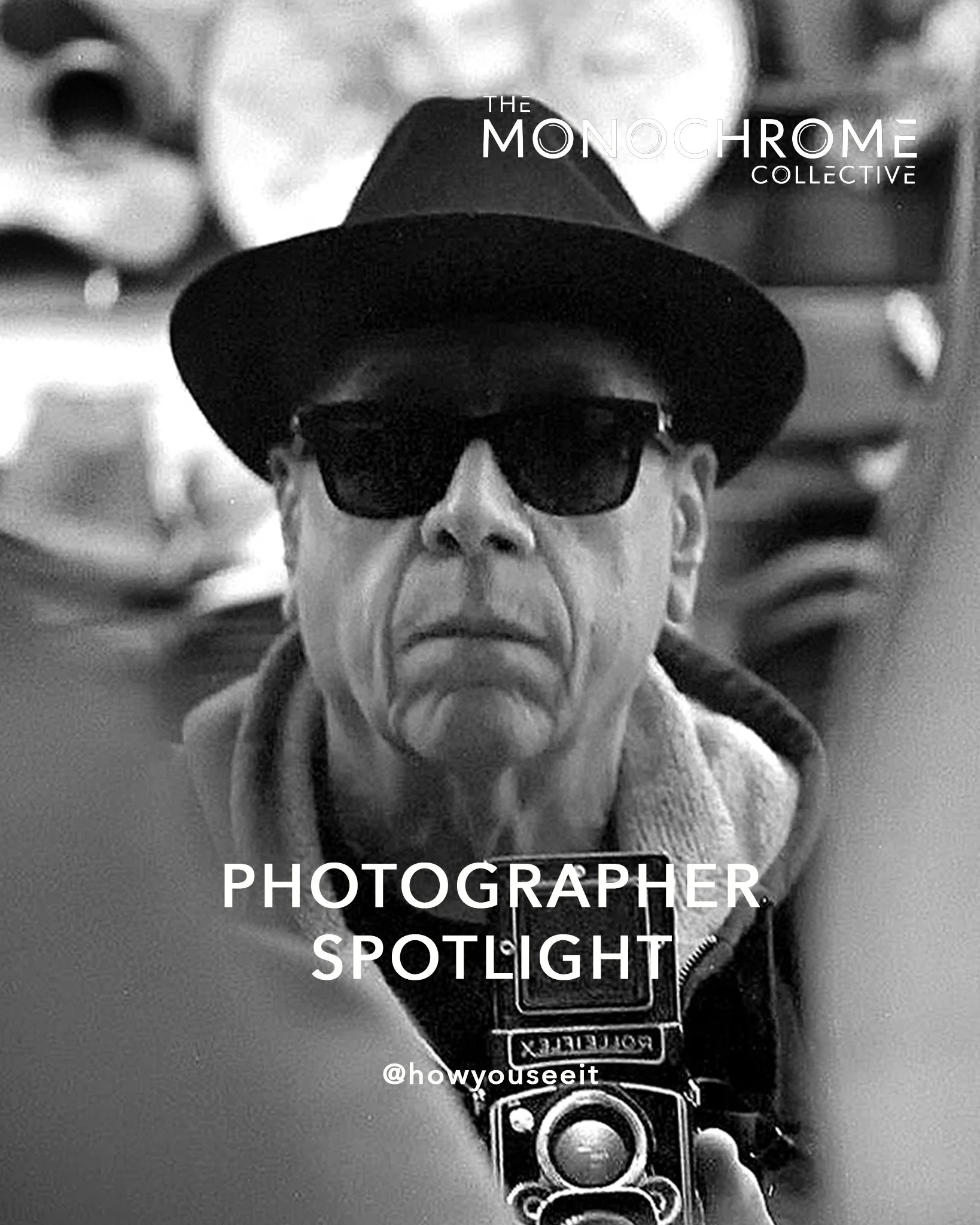
Stephen Uhraney has been a photographer for over 40 years and he will tell you with complete sincerity that he has never worked a day in his life. Based in Port Credit just outside Toronto, he is a documentary and street photographer whose work spans embedded assignments with firefighters and police units, quiet neighbourhood portraits, and the kind of street photography that finds the essential human moment in ordinary city life. He started with a Kodak box camera his grandfather brought back from the old country and he has never really stopped photographing since.
He shoots film and digital side by side, processes his own film, edits in Photoshop the way he would have worked in a wet darkroom, and carries a Rolleiflex when the situation calls for it. His black and white work has a weight and an honesty to it that takes years to develop. We asked him how he got there.
Here is our interview:
There's always a moment that pulls someone into photography for good. What was yours?
My first camera was a gift from my grandfather when he returned from the old country, a simple Kodak box camera that quietly set the direction of my life. As soon as it hit my hands, I ran outside to photograph my friends playing the most Canadian of games: street hockey. They weren’t action shots or posed smiles. I was ten years old. Even at ten, I was drawn to the story behind the moment, the view through the torn mesh of the net, the ragged tennis ball on cracked pavement, the battered sticks, scraped knees, and the quiet tension of a face-off between friends.I didn’t know it then, but I was already making documentary photographs: images about life as it was. That instinct to look past the surface and find the heart of a story has stayed with me ever since. My work has changed over the years, but the same curiosity and love for real, unposed life still drives everything I do. Photography has never just been about taking pictures, it’s about witnessing people, moments, and the fragile beauty of the everyday.
What subjects are the focus of your work and why?
My work focuses on people, communities, and the stories that often exist just outside the spotlight. I’m drawn to everyday life, the working class, first responders, the streets, small neighbourhood moments, and the quiet humanity that connects people. What interests me most is looking beyond the surface and documenting the essence of a person or a place. I’m not chasing perfection. I’m chasing truth, emotion, grit, resilience, and those fleeting moments that reveal something real about the human experience. Whether I’m embedding with firefighters, the Police Marine Unit, documenting life in Port Credit where I live, or photographing strangers on the street, the goal is always the same: to create honest images that preserve both story and feeling.
Your black and white work has a particular feeling to it. How did you arrive at that? Was it deliberate or did it emerge over time?
Black and white felt natural to me almost from the beginning, Also I could process it myself, but the deeper feeling behind the work definitely evolved over time. Early on, I realized colour could sometimes distract from what I was trying to say emotionally. By stripping an image down to light, shadow, texture, and expression, the photograph became more honest and timeless. I love that feeling of timelessness.
Over the years, that approach just became part of how I see the world. I’m drawn to grit, atmosphere, contrast, and human emotion, black and white allows those things to breathe without distraction. It wasn’t some calculated decision to create a “style.” It emerged naturally through years of photographing real moments and understanding that simplicity often carries the most weight.
Tell us the story behind one of your favorite photographs.
One of my favourite photographs shot on my Rolleiflex is the image of the food truck at City Hall, one of the first images I posted on foto, because it holds more weight than what’s immediately visible. On the surface it’s a simple street scene, but it opens up into something much quieter and more human the longer you sit with it. What really anchors the image for me is the woman’s exhaustion. That feeling doesn’t need to be explained, it’s right there on her face, in her posture and presence, and it sets the entire mood of the frame. It’s a reminder of how much of city life is carried in small, unspoken moments like that. In a broader sense, the photograph reflects how I like to work: observing rather than interrupting, waiting for moments where emotion and environment naturally align. When that happens, the image stops being just about a place or an event and becomes about something more universal; fatigue, routine, resilience, and the quiet weight of everyday life.
What is one thing that you are working to improve in your photography and how are you going about it?
One thing I’m always working on is slowing down a bit more and trusting my patience. In street and documentary work, there’s always that pull to react quickly, but I’ve learned the strongest frames usually come when I just wait and let things unfold properly. So instead of jumping in right away, I’ll hang back a little longer, watch the scene, and let the light, gesture, and emotion settle into place. It’s really about not forcing anything and letting the moment come to me. When I do that, the photographs end up feeling more honest and complete, they were allowed to happen, the way they were meant to.
How much do you plan vs. shoot spontaneously?
It’s a mix of both, but it definitely leans toward spontaneity. I don’t really go in trying to pre-visualize every frame , I put myself in the right environment/situations and stay open to whatever actually unfolds. That’s where the real work happens for me. At the same time, my assignment work gives me structure and access, which I really value. It’s the framework that lets me be out in the world consistently. But even when I’m on assignment, I’m always shooting for myself as well. I’m constantly looking for images that go beyond the brief moments, something that I can use in my own body of work that speak to something deeper or more personal. So the assignment gets me in the door, but once I’m there, I’m not just working for the task at hand. I’m working the scene for everything it’s offering, and a lot of the strongest images end up coming from that instinctive, in-between space.
What gear do you bring when you go out to shoot?
I tend to bring everything with me when I go out. I’m not really a one-system photographer. I shoot film and digital, and even on assignment I’ll do both side by side. It just depends on what the situation calls for in the moment. I started on film, and that’s really shaped how I see and work. Film teaches you discipline, you slow down, you think more carefully, and you learn to really see light and timing instead of just firing away. That mindset never leaves you, even when you switch to digital. For me, it’s less about choosing one tool over another and more about staying flexible. I might be working with a Rolleiflex one minute and a digital setup the next, but the approach is always the same, stay observant, stay intentional, and let the moment lead the gear, not the other way around.
What does your editing process look like? What tools do you use and how do you approach it?
My editing process is pretty simple and pretty old-school in spirit. I only use Photoshop, and I keep it very controlled, nothing I do there is anything I wouldn’t have been able to do in a wet darkroom. If I couldn’t have burned it, dodged it, or adjusted it in the traditional process, I don’t really feel the need to do it now. For me, it’s less about “fixing” images and more about finishing them. I’ll look at contrast, density, and tonality the same way I would have under an enlarger, just with a mouse instead of my hands in trays. And honestly, I still think of it as a kind of digital darkroom, just without the fixer smell and the cold water running. Same intent, same discipline… just a slightly cleaner sink. Though I do process my own film so the hands still do get wet.
Who are some photographers or artists that have influenced your style and why?
There are quite a few photographers and artists who’ve shaped how I see, but not in a way where I try to imitate them. It’s more that they’ve each reinforced different parts of how I already work.
Garry Winogrand: Really influenced my sense of timing and instinct. The way he trusted the chaos of the street, and just kept working until the frame revealed itself, really aligns with how I like to operate; being present, reactive, and unforced.
Diane Arbus: Pushed me to be more honest and unflinching. Her work isn’t about comfort, it’s about presence and looking directly at people as they are, without softening the edges. That kind of courage definitely seeps into how I approach documentary work.
Joel Meyerowitz: Brought in a different kind of sensitivity for me, especially around colour and light, even though I often work in black and white. His patience in the street and ability to layer complexity in seemingly simple scenes really resonates with how I build frames.
From the documentary world, Larry Towell: Has been a huge influence and also has become a friend. What I admire most is his long-form commitment to stories. He doesn’t just drop in, he lives with his subjects, and that depth of connection is something I deeply respect and try to bring into my own embedded documentary assignment work.
Sebastião Salgado: Influences me on a different scale altogether, the epic scope, the human dignity, the way he can make labour, migration, and hardship feel both monumental and deeply intimate at the same time.
And then there’s Elliott Erwitt: He reminds me not to take everything too seriously. His sense of humour and timing is so subtle but so precise, it’s a reminder that even in serious documentary work, there’s still room for irony, warmth, and humanity.
All of these photographers, MASTERS, in different ways reinforce what I already believe: that photography is about observation, patience, and honesty, and that the best images usually come when you’re not trying to force them into anything.
What would you tell yourself when you started in photography?
The thing nobody said to you that would have changed how you photographed?: If I could go back and talk to myself at the beginning, I’d probably say: relax… you’re not behind, and nobody actually knows exactly what they’re doing anyway. Most of it is just showing up, paying attention, and not overthinking the moment while it’s happening in front of you.
I’d also say don’t get caught up chasing gear or trends. The camera doesn’t make the photograph, your patience, your timing, and your ability to see does. And the sooner you stop trying to “figure it all out,” the sooner the work actually starts to feel like yours. And maybe the biggest thing I’d say is this: trust that you’re going to spend a long time doing this, in my case, over 40 years and counting, and somehow never feel like it’s actually work. I’ve been doing this long enough to realize I haven’t really worked a day in my life… which either means I’ve been very lucky or I’ve just been really bad at retirement planning. Probably both.
If you would like to see more of Stephens work you can find him on foto @howyouseeit or on his website www.stephenuhraney.com