
The Adapted Rabbit Hole
Modern lenses are technically flawless. But flawless isn't the same as soulful. Why pairing vintage glass with a modern sensor might be the best creative decision you make this year.
Adapting lenses is one of the most rewarding rabbit holes a photographer can fall into. It is the practice of taking a lens designed for one camera system and using it on another. Most often this involves taking vintage glass from the film era and mounting it onto a modern mirrorless body using a simple metal spacer called an adapter.
In an age where every new lens release is obsessed with clinical perfection and corner to corner sharpness, adapted lenses offer a different path. They offer character.
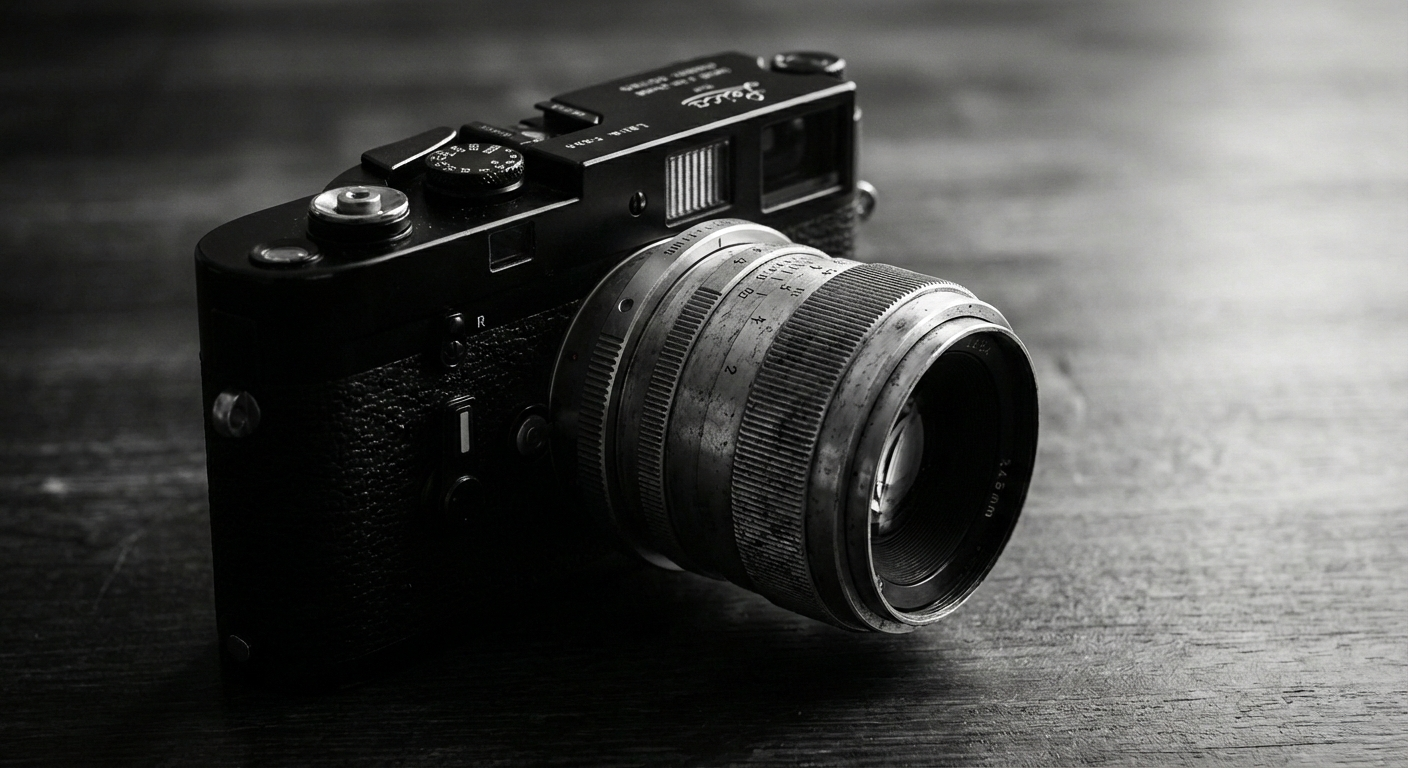
What it Means to Adapt
Modern mirrorless cameras have a very short distance between the lens mount and the sensor. This creates a physical space that allows us to insert an adapter. This adapter acts as a bridge. It ensures the lens sits at the exact distance it was originally designed for so it can focus properly.
When you adapt an old lens you are usually giving up autofocus and digital communication. You are stepping back into a world of manual focus and physical aperture rings. It is a slower and more deliberate way of working.
The Black and White Connection
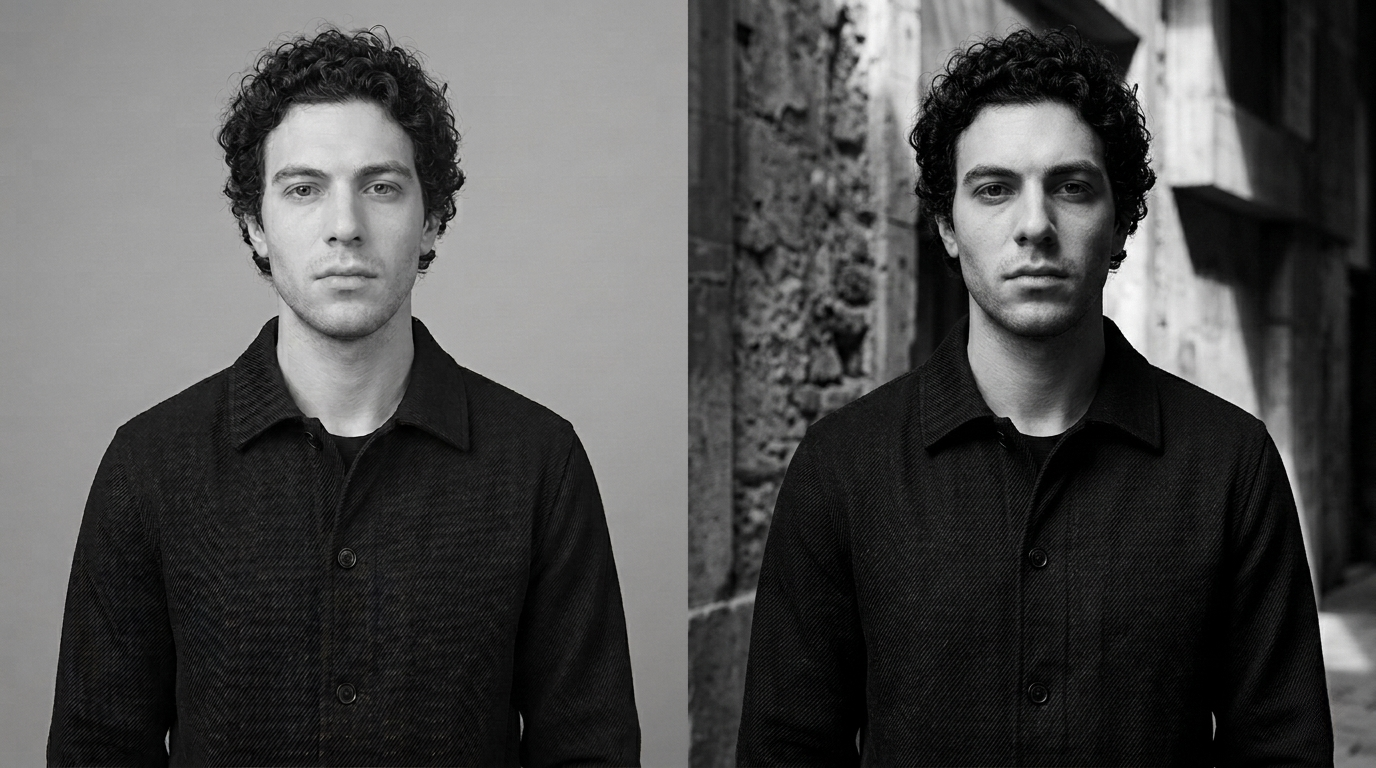
While these lenses can be beautiful in color they truly shine in monochrome. Black and white photography is already an abstraction of reality and adapted lenses lean into that abstraction in three specific ways.
The Drawing Style
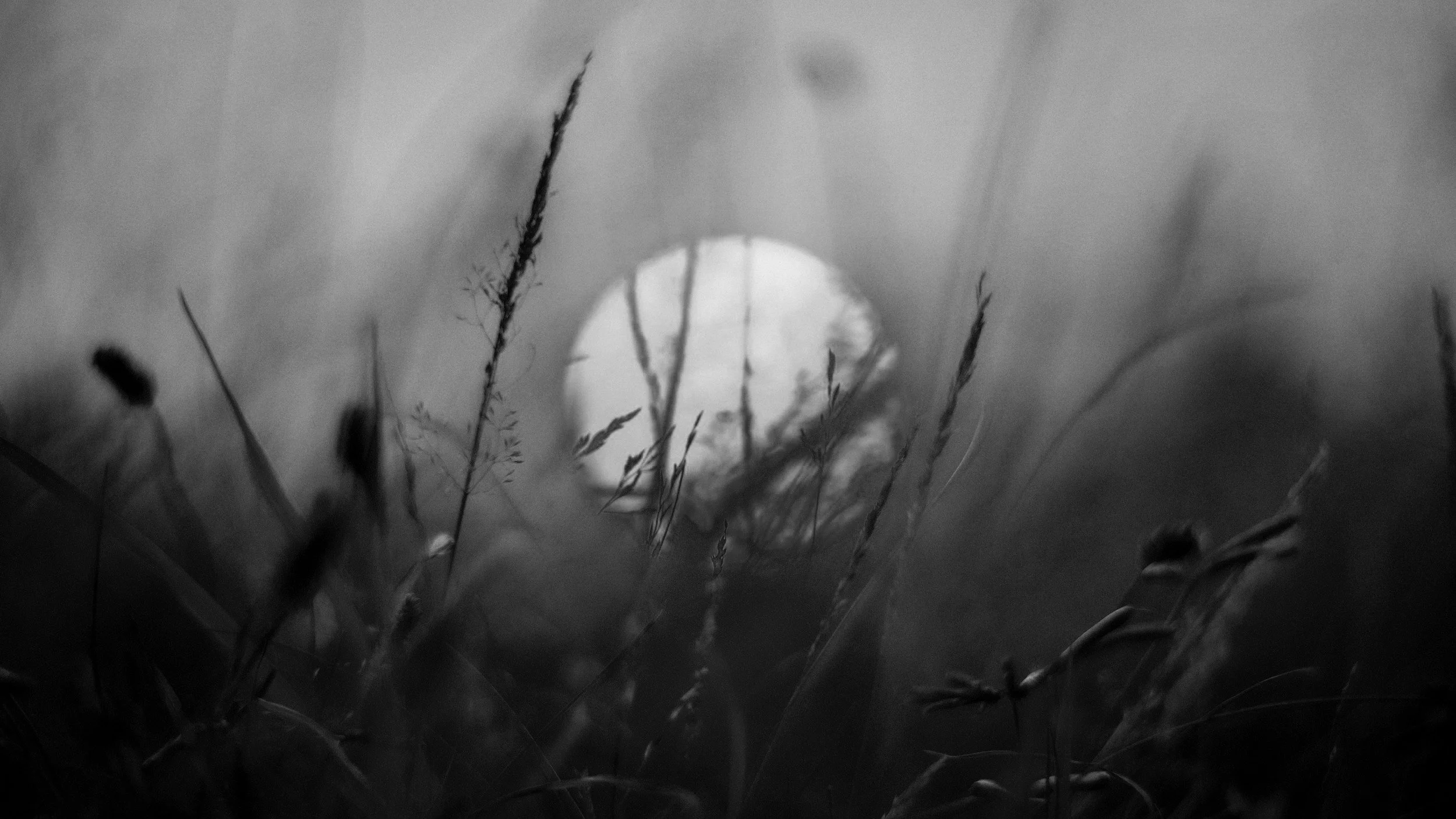
Every lens has a way it draws the world. Modern lenses are designed by computers to be as neutral as possible. Vintage lenses were often designed with a specific character. In black and white you notice the way a lens handles the transition from sharp to blurry much more clearly. Some lenses have a swirling effect while others have a soft and creamy falloff. Without color to distract the eye these patterns of light become a major part of your composition.
Micro contrast and Texture
Older glass often has a different type of contrast. While it might have less overall punch than a modern lens it frequently has incredible micro contrast. This is the ability to show fine transitions between shades of grey. This makes textures like skin, stone, or fabric feel much more tactile and three dimensional.
Embracing the Glow
Vintage lenses often suffer from something called spherical aberration. In the color world this can look like a mistake. In the black and white world it creates a beautiful glow around highlights. It adds a poetic and dreamlike quality to the image. It transforms a harsh digital file into something that feels like a charcoal sketch or a memory.
Finding the Soul of the Glass
Adapting lenses is about more than just saving money on cheap vintage gear. It is about finding a tool that has a unique voice. When you strip away the color and the autofocus you are left with a raw connection between your eye, the glass, and the light. You aren't just taking a picture; you are collaborating with a piece of history.
Three Options to get you started
The Helios 44 2 (58mm f/2)
Originally produced in the Soviet Union, this lens is famous for its "swirly" bokeh. It is based on an old German Zeiss design and is one of the most affordable vintage lenses you can buy. When you shoot it wide open, the background seems to spiral around your subject, creating a dreamlike and painterly effect.
The B&W Signature: It has lower native contrast which creates a beautiful, glowing transition between light and shadow. The center is sharp while the edges have a soft, vintage falloff.
The Pentax Super Takumar (50mm f/1.4)
Often called the "King of Micro Contrast," this Japanese lens is a masterclass in mechanical engineering. Many versions use a specific type of rare earth glass (Thorium) that can turn slightly yellow over time. While this tint might annoy color photographers, it acts like a built in yellow filter for monochrome, naturally darkening blue skies and increasing tonal separation.
The B&W Signature: This lens produces incredibly rich greys. It captures the texture of skin or fabric with a three dimensional quality that modern lenses often flatten out.
The Leica Summicron 35mm (f/2 Version 4)
Known by collectors as the "King of Bokeh," this is a premium option for those looking for the ultimate street photography lens. It is tiny, light, and produces a unique "fish scale" pattern in the out of focus areas. It represents the pinnacle of pre aspherical lens design, meaning it is sharp but still feels human and organic.
The B&W Signature: It provides a very smooth "roll off" from the focus point to the background. This creates a sense of depth that makes your subjects feel like they are standing in a real space rather than being pasted onto a blurry background.
Please share your experience with adapting lenses in the comments.
IF YOU WOULD LIKE TO IMPROVE YOUR BLACK AND WHITE PHOTOGRAPHY TRY THE LESSONS BELOW.
















A Beginners Guide To Black And White Photography