
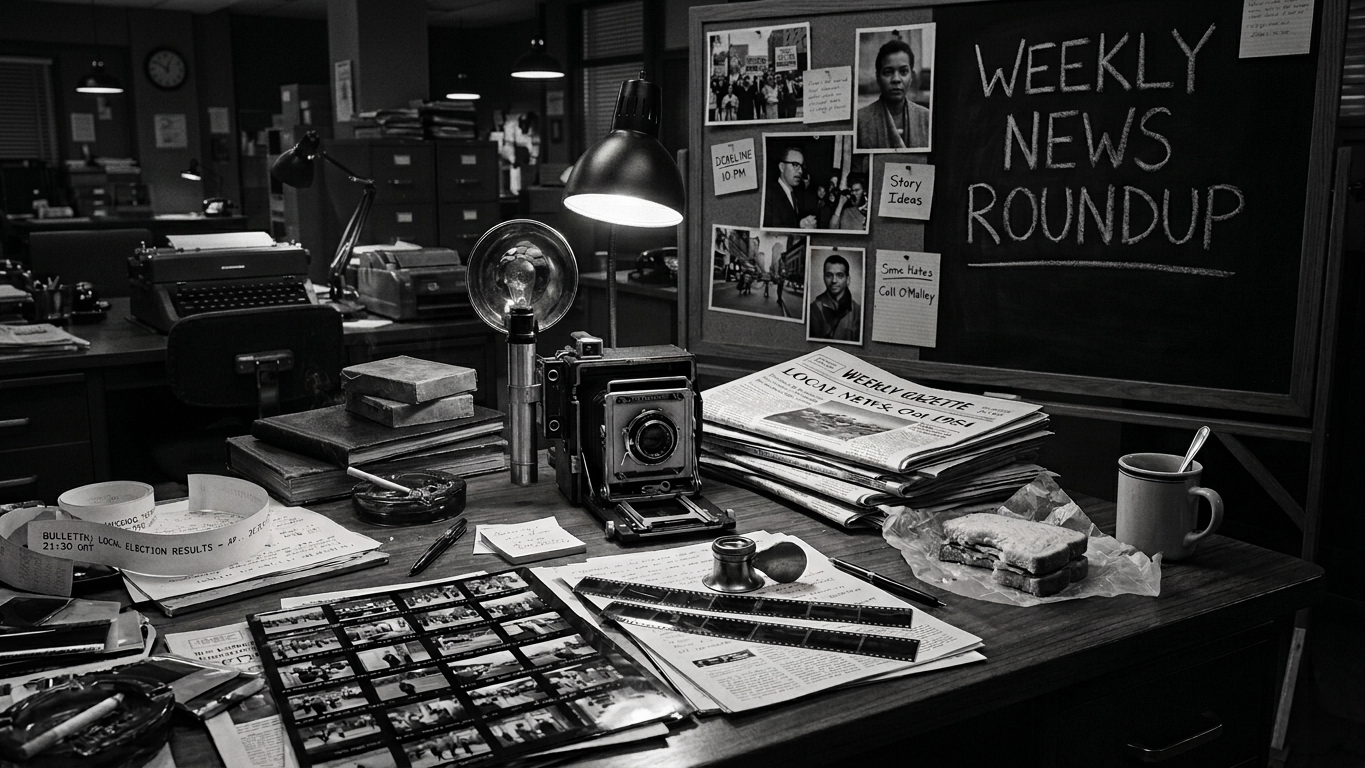
Weekly News Roundup
Leica breaks 60 years of tradition, Ricoh enters the dedicated monochrome sensor market, black and white film sales surge 89%, and Apple takes aim at Adobe a massive week for the community.
Welcome to your weekly dose of all things black and white. It’s been a massive week for the industry, and if your social feeds look anything like mine, you’ve probably seen the dust settling from some major announcements. Let’s sit down and chat about what actually matters for those of us who live in the shadows.
The New King of the Night
The headline that everyone is still buzzing about is the official arrival of the Leica Noctilux-M 35mm f/1.2 ASPH. For sixty years, the "Noctilux" name was reserved for longer focal lengths, but Leica finally brought that ultra-fast DNA to the 35mm world. It’s an engineering marvel that uses precision glass molding to stay surprisingly compact. For monochrome work, that f/1.2 aperture creates a kind of "velvet" separation that’s hard to describe until you see it. We took a deep dive into whether it’s worth the $9,650 price tag earlier this week, and the consensus seems to be that while it’s a luxury, it’s also the new "holy grail" for available-light street work.
A New Workflow Contender
In the software world, Apple finally threw a punch at Adobe with the launch of Apple Creator Studio. For $12.99 a month, you’re getting a suite that includes a very powerful, Apple-Silicon-optimized version of Pixelmator Pro. It’s incredibly fast, and the on-device AI handles things like "Semantic Relighting" with a level of privacy that Adobe’s cloud-based Firefly just can’t match. We’re still missing a true Lightroom-style library manager from Apple, but as an editing tool, it’s the first time in years that I’ve felt a real alternative to the "Adobe Tax" was actually viable.
The "Pocket Monochrom" is Finally Here
Looking beyond our own pages, the news that has street photographers scrambling is the official announcement of the Ricoh GR IV Monochrome. We’ve been asking for this since the Pentax monochrome DSLR dropped, and Ricoh finally delivered. They’ve stripped the color filter array off the sensor entirely to give us 25.7 megapixels of pure tonal range and micro-contrast. It’s essentially a "mini-Leica Monochrom" that you can fit in your jeans pocket. If you value that raw, gritty street aesthetic, this might be the most important camera of the year.
The Analog Boom is Breaking Records
If you think film is just a passing trend, the latest market data from Serrano Rey says otherwise. They just reported that black and white film sales have surged by a staggering 89% over the last few years. It’s being driven by a generation of "digital refugees" who are looking for the tactile, slow process of developing their own rolls. Seeing Kodak Tri-X 400 lead the charge proves that no matter how good the digital sensors get, there’s a certain "soul" in silver halide that we just aren't ready to let go of.
Art on the High Street
Finally, if you happen to be in the UK this month, keep your eyes peeled for the Portrait of Britain Vol. 8. It’s a massive public art project that’s currently taking over bus shelters and billboards. What’s striking about this year’s curation is the heavy reliance on black and white portraits to convey a sense of "quiet reflection" amidst the noise of the city. It’s a beautiful reminder that monochrome still has a unique power to stop people in their tracks in a way that color often doesn't.
Desocialized Media
Finally, a bit of creative introspection. The concept of desocialized media gained significant traction this week, highlighting a crucial shift in how platforms like Instagram and TikTok operate. Your feed is no longer primarily about who you follow, but what an algorithm predicts you'll engage with.
For black and white photographers, this is a vital reminder that a lack of "likes" or "reach" no longer correlates with the quality of your art. If your contemplative monochrome piece doesn't trigger instant algorithmic engagement, it might simply get buried. This underscores the importance of building genuine community off these platforms, and continuing to create for yourself and for the craft, not for the algorithm's approval. Your best work might be too "slow" or too "thought-provoking" for the current online landscape, and that's okay.
IF YOU WOULD LIKE TO IMPROVE YOUR BLACK AND WHITE PHOTOGRAPHY TRY THE LESSONS BELOW.





A Beginners Guide To Black And White Photography