Many Years in the making: The Monochrome Triangle
Why I spent a year building a framework for black and white photography and what I hope it does for your work.
Why do some black and white photographs stop you completely while others, technically accomplished, carefully processed, shot in beautiful light, leave you feeling nothing?
It is not equipment. It is not editing software. It is not even technical skill, though all of those things matter. It is something that operates at a deeper level. Something that is present in the photographs that endure and absent in the ones that are forgotten the moment you look away.
I have spent a long time trying to articulate what that something is. And about a year ago I finally found a way to describe it that felt true.
Every compelling black and white photograph shares three qualities. Light. Composition. Story. Not independently. Together. As a system. Change one and the others shift. Strengthen one and the others have more to work with. Let one fail and the whole image weakens no matter how strong the other two might be.
I called it the Monochrome Triangle.
What the book is
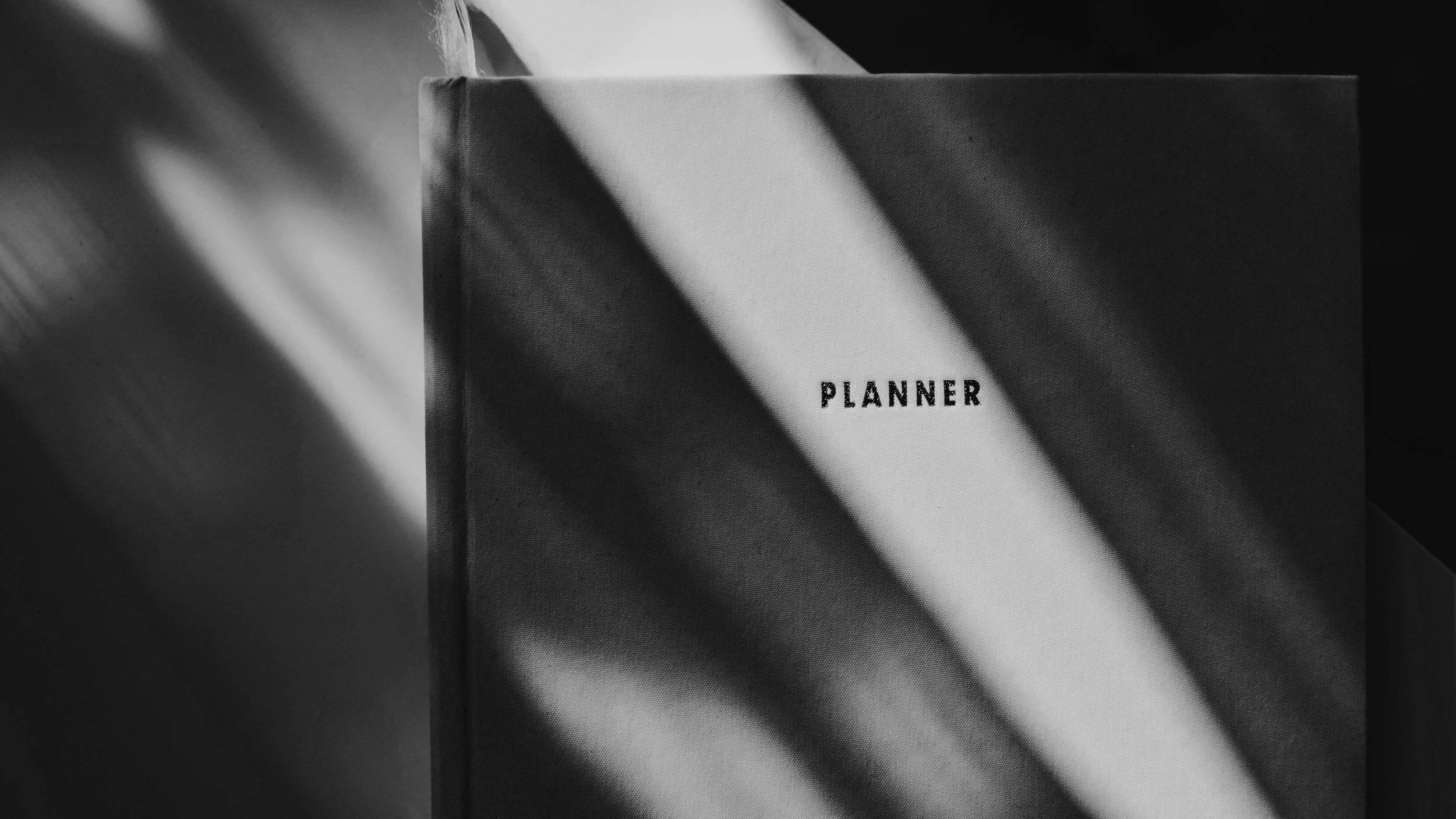
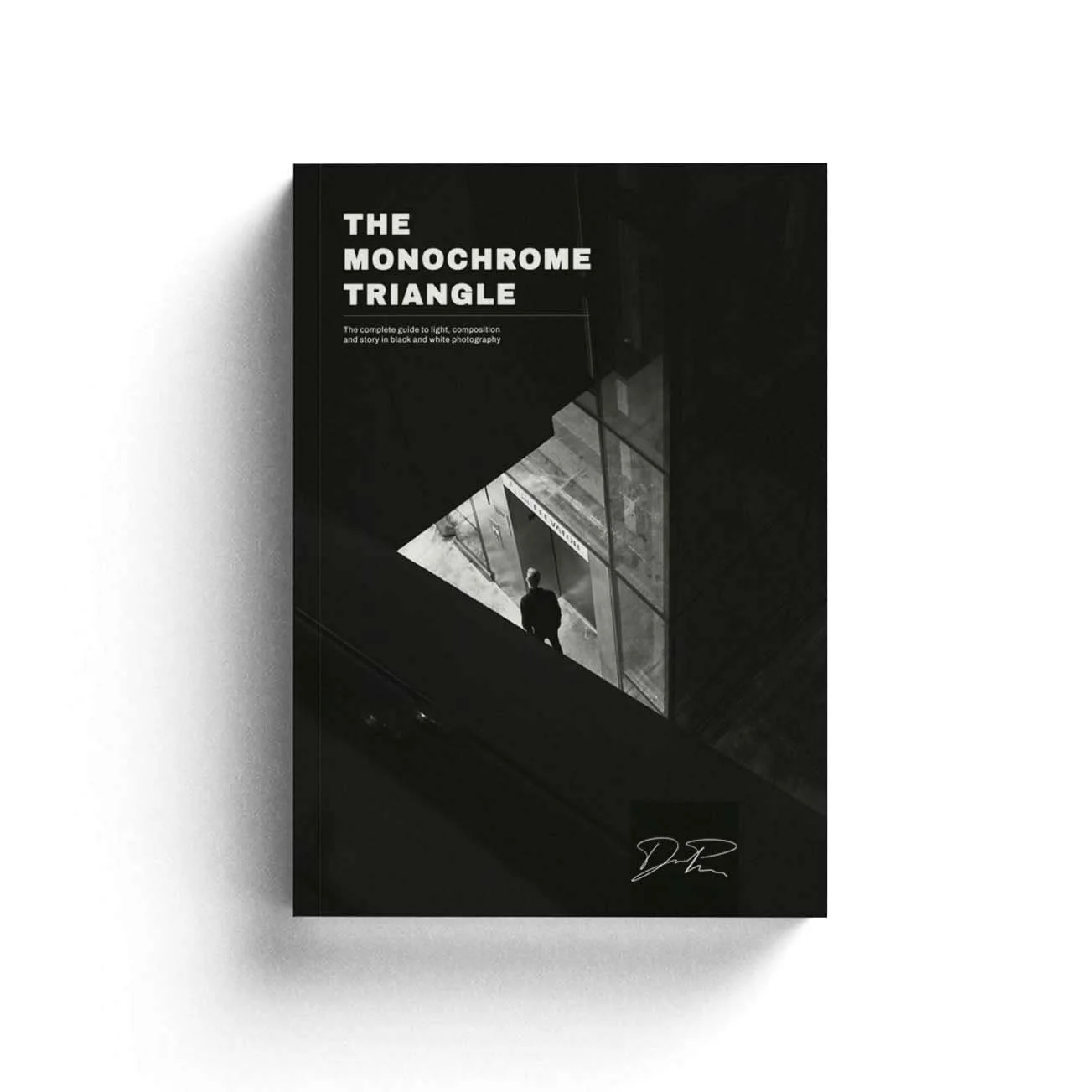
The Monochrome Triangle is a complete framework for black and white photography built around those three interconnected forces. It is the book I wished had existed when I was starting out. Not a collection of tips and tricks. Not a technical manual. A way of seeing and thinking about monochrome photography that applies to every subject, every situation, and every level of experience.
Across 28 chapters the book covers everything from understanding and choosing light before you raise the camera, to building compositions with intention, to finding the stories worth telling, to developing a complete editing workflow in Lightroom and Capture One. It also covers the technical foundation including camera settings, RAW capture, exposure for monochrome, and an introduction to the Zone System.
But the technical chapters come later in the book deliberately. Because before any of that matters you need a framework for seeing. That is what the Monochrome Triangle gives you.
Why I made it
The Monochrome Collective has always been about one thing. Helping photographers see better and make stronger work. That is why this community exists and it is what has driven everything we have built here over the last nine months.
This book is the most complete expression of that mission I have been able to put together. It is 153 pages and fully illustrated throughout with fine art black and white photography. It took a long time to write because I wanted to get it right. Not just technically right but right in the way it thinks about the subject and right in the way it speaks to the photographer holding it.
I made it for the photographers in this community. The ones who are past the beginner stage but feel like something is missing. The ones whose photographs are technically correct but not yet compelling. The ones who know they are capable of better work but cannot quite articulate what better looks like or how to get there.
If that sounds like you, this book was written for you.
What you will be able to do after reading it
You will be able to read light before you raise the camera rather than reacting to whatever is in front of you. You will be able to build compositions with intention rather than instinct alone. You will be able to find the story in a scene rather than hoping one appears in the frame. And you will be able to develop an editing style in Lightroom or Capture One that is consistent, deliberate, and unmistakably yours.
None of that happens overnight. But the triangle gives you a framework to keep coming back to. Something that makes every photograph you make from this point forward a more considered and deliberate act.
How to get it
The Monochrome Triangle is available in two formats.
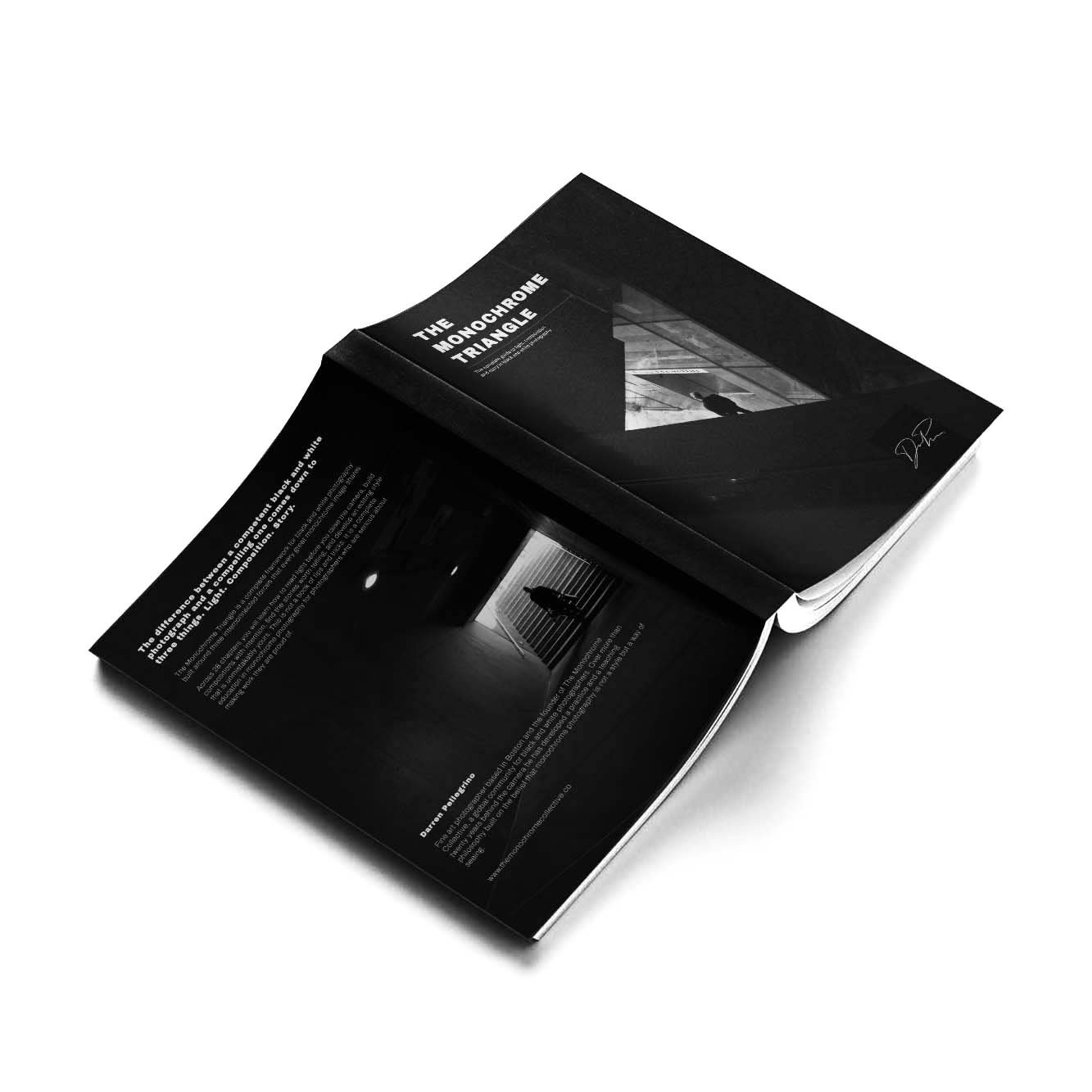
The ebook is available exclusively here on the Monochrome Collective website. It is a fully illustrated PDF, 153 pages, compatible with iPad, iPhone, Mac, PC, and any PDF reader.
The paperback is available on Amazon and Ingram Spark. Premium color printing, perfect bound, matte cover.
If you have any questions about the book feel free to reach out. And if you read it I would love to hear what you think.
The triangle is yours now. Use it.
Ready to see the world differently? The Monochrome Method is a complete video course with lessons and assignments designed to help you craft compelling black and white images and build a portfolio that's unmistakably yours. Start Learning Today.
IF YOU WOULD LIKE TO IMPROVE YOUR BLACK AND WHITE PHOTOGRAPHY TRY THE LESSONS BELOW.
Featured Articles
You spent real time with a subject. You understood something about it a viewer never will just from looking. Do you tell them, or do you let the image speak for itself and trust them to find their own way in.
Leighton Phillips describes his work as Urban Still Life, drawn to the mundane, the ignored, and the visually familiar rather than anything conventionally beautiful. His black and white style emerged gradually, shaped by a belief that removing color lets light and tone carry the emotional weight of a scene. We asked him about a dying potted plant that started an unexpected series, and why he decided to stop chasing new gear and other people's opinions.
A retired rabbi turned street photographer stumbled onto a Brooklyn Chabad camp trip on a ferry to Governors Island. What he found was less about religious difference and more about what a hundred kids look like on a field trip.
Stand in front of something that genuinely moves you and raise a camera. What comes out the other end rarely matches what you felt standing there. That gap is not a flaw in your camera. It is the entire creative problem photography exists to solve.
Flora van Wageningen took a solo weekend to the mountains during a genuinely low point in her life, expecting nothing more than dull, dreary weather. Walking the shoreline of Lake Minnewanka in falling snow, she found a diving platform still anchored out in the lake, alone in a sea of white. It mirrored exactly how she felt. This image has never performed well online. It remains one of her favorites anyway.
Meta wrongly disabled a sports photographer's Instagram account, Leica quietly removed a finalist from one of photography's most prestigious prizes, a team sent a camera to the edge of space to catch last week's eclipse, and new gear ranges from an unusual Sigma lens patent to a real telephoto lens for iPhone.
Every week we feature one photograph from the Collective and invite honest feedback from the community. No names attached, no backstory beyond what the photographer was trying to achieve. Just the image, open for genuine critique.
Not every corner of your photograph needs to be filled. Empty space is not leftover room where nothing happened to be. It is an active choice, and it changes how everything around it lands.
Rob Sutherland is a commercial and landscape photographer who has shot a photo a day for sixteen years. On a family trip to Iceland he had to figure out, in real time, how to be fully present as a father while still making meaningful photographs. Here is how he actually did it.
Flora van Wageningen picked up a camera in her late thirties, restless and bored with the city she had settled in, and gave herself five years to master the craft and see her surroundings differently. She keeps returning to landscape and abstract work, and lately she has been questioning whether astrophotography needs color at all, since what the eye actually sees under a dark sky is far more subtle than the saturated images most people share online. We asked her about a spontaneous night under the Milky Way with her cousin, and why she is trying to slow down rather than chase comparison.
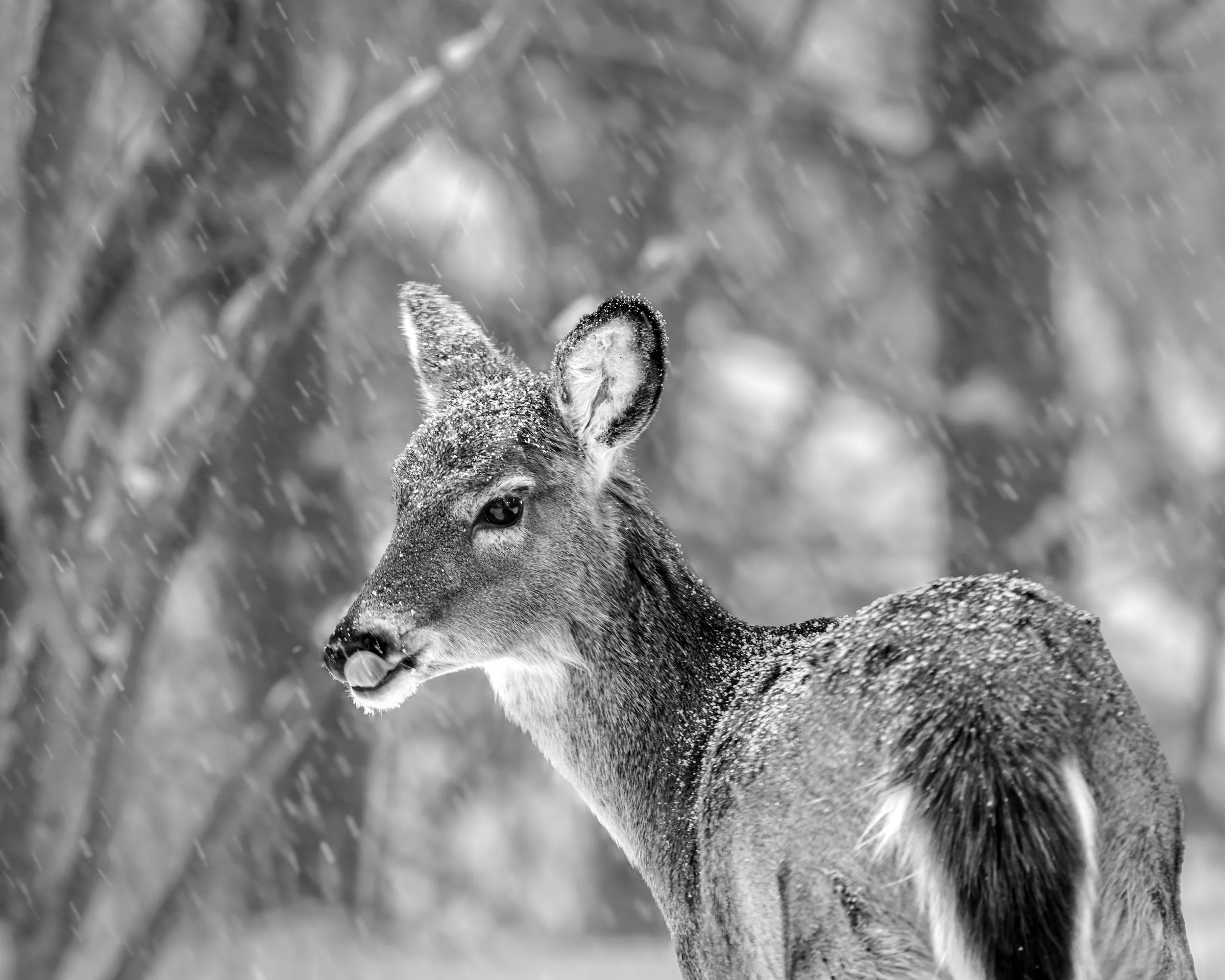
Mark Archibald bought six acres of fallow farmland twenty five years ago and spent decades planting trees, scattering acorns on walks, and letting the land slowly return to woods. Now deer come close enough to photograph from his own sunroom, camo netting hung over open sliding doors, waiting for a fawn to wander through the falling snow.
Roger Ballen did not become significant because he turned fifty. He became significant because fifty happened to be the point where decades of sustained, serious engagement with the craft finally caught up with him. Here is why compelling photography genuinely takes years to arrive, and why that is not discouraging news.
A genuinely varied week. VSCO had to clarify how photographers actually get paid for its ambitious billboard project, GoPro's latest earnings confirm the going concern warning from a few weeks ago was not overstated, the Sony FX5 slips another month, a legendary surf photographer has died, and a trail camera captured something that has never been documented in that part of the world before.
Ty Nelson picked up a camera because he loved wrestling, and started shooting the action the way most beginners do. What he found instead, over years of showing up to a banquet hall in Joliet, was something closer to a long running story he was quietly documenting one show at a time. This is the night that story ended.
Damian Ward is drawn to woodland and solitary trees, especially in winter when the branches are bare, in a landscape he describes as beautiful but not dramatic. He shoots almost entirely with vintage manual focus lenses, sets his camera to black and white before he ever presses the shutter, and rarely touches a RAW file. We asked him about flow, minimal editing, and the moment he stopped trying to make everything perfect.
You know the feeling. The photograph you spent real effort and real feeling on gets a quiet response, while something you almost did not post becomes the one everyone reacts to. Here is what that gap is actually telling you, and when it is worth listening to.
You know the feeling before you have even left the house. A quiet sense that today needs to produce something good. Wanting to make good work is not the problem. The invisible bar you are unconsciously measuring yourself against is.
A total solar eclipse crosses the Arctic, Iceland, and Spain on August 12, and a new app promises to let photographers actually watch it instead of hiding behind a viewfinder. Colorado wildlife photographers are pushing back hard on a proposed annual fee. A decade long documentary project reframes how we see women serving life sentences. And two new affordable lenses land for very different systems.
We spend a lot of time here talking about being deliberate, studying light, naming what you see, slowing down before you shoot. This is the other side of that coin. Does intuition have a place in photography, and if it does, where does it actually come from?
An architect spends years thinking about how light will move through a building before a single stone gets laid. A photographer usually gets an afternoon to figure that same thing out from scratch. Here is what architects already know that can close that gap.
Most photographs put the viewer on the outside, looking in, the way you might look through a window at something happening on the other side of the glass. Some photographs do something different. They collapse that distance completely. Here is how to make your images do that.
Edward Boches was pulled into photography by John Filo's 1970 image of a woman kneeling over Jeffrey Miller at Kent State, the entire story of a moment held in a single frame. He has spent his career chasing that same rawness, documenting amateur boxers, oyster farmers, Boston's homeless community, and neighborhoods in transition, always in collaboration with his subjects. We asked him about the Yankee fan who flipped him off, then handed him twenty dollars, and why he still hunts for moments instead of waiting for them.
The Milky Way never showed. Two nights of clouds over the Vermillion Cliffs erased the whole reason for the trip. A dinner table tip about a quieter canyon and one last morning before flying home turned the loss into the shot that actually mattered.
Rain starts, fog rolls in, or the snow finally begins, and most people pack up and head for the car. That instinct is costing you the best light of the day. Here is why the messiest part of the weather is worth staying for.
A heavier week than most, worth sitting with rather than skimming past. A retired tourist has spent three months behind bars for photographing a train, Sony has made a formal offer to acquire Tamron, a group of tourists sparked real backlash for a photo shoot at Auschwitz, and a wildlife photographer documented one of the rarest sights in the ocean, alongside a new exhibition and a fresh piece of lighting gear.
Every genre we've written about so far involves pointing a camera outward, at light, at strangers, at a place. Self portraiture reverses the entire relationship. Here is why that reversal is harder than it sounds, and why it might be worth taking seriously anyway.
Every week we feature one photograph from the Collective and invite honest feedback from the community. No names attached, no backstory beyond what the photographer was trying to achieve. Just the image, open for genuine critique.
Several of the strongest photo stories we have published here happened because a photographer had someone local vouching for them. A fixer is the formal version of that relationship, and it is far more accessible than most photographers assume.
We wrote before about why committing to a project produces depth that reactive shooting almost never reaches, and promised a follow up with somewhere to actually start. Here it is, along with a real look at how one photographer's project came together one visit at a time.
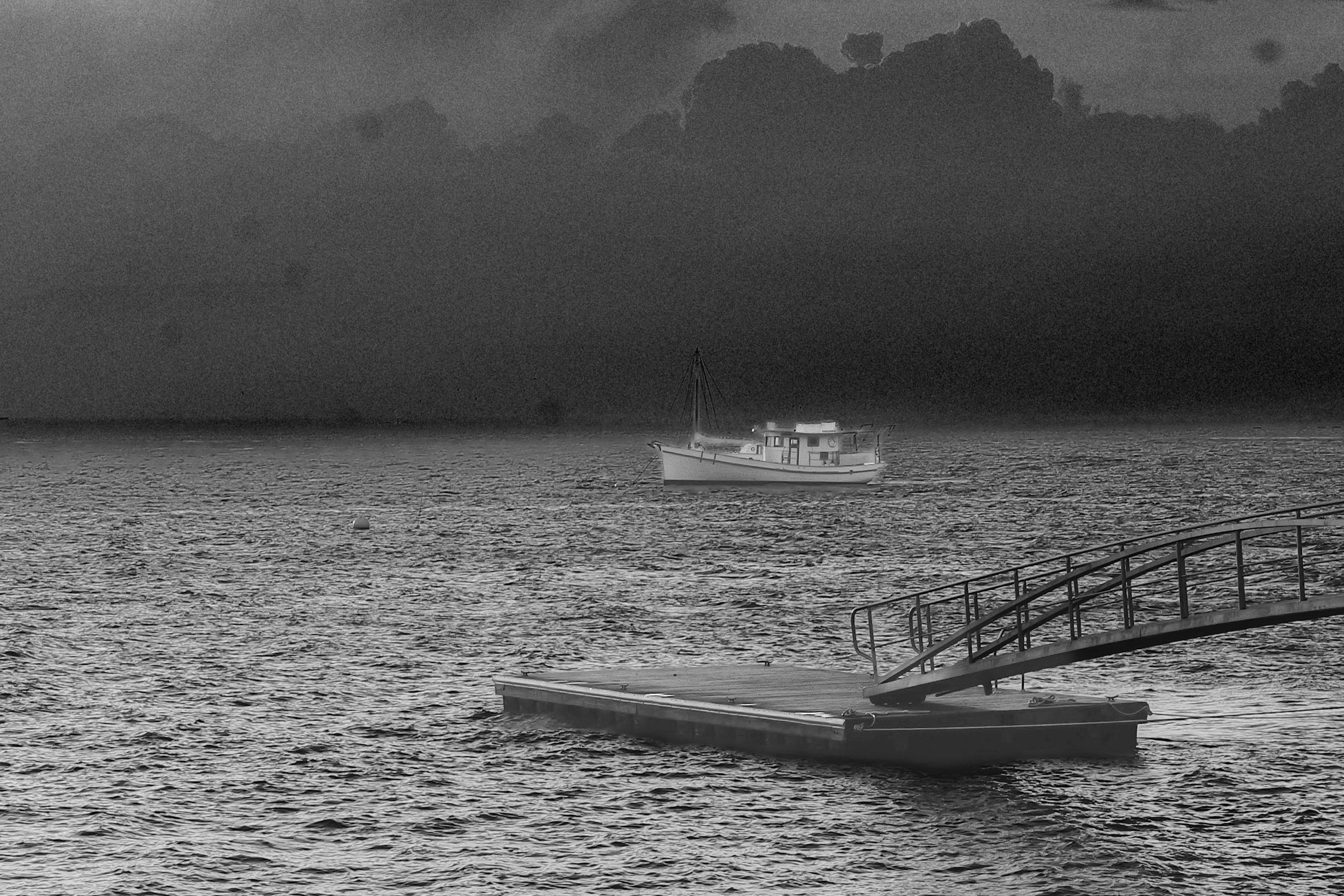
David Clark has a modest summer home on a small island in Maine, and he has spent years trying not to make the average tourist photo there. When fog rolled in over the water one day, his first instinct, a diffuse sun shot, didn't jazz him at all. It was the frame he almost dismissed, a white trawler moored beside a dock, that turned into something worth the work.
Darren Pellegrino is a working photographer and the founder of The Monochrome Collective. He believes that black and white photography is not a style, it is a discipline. One that forces you to see light, shadow, and composition with absolute clarity. The Monochrome Collective was built for photographers who share that obsession and who are ready to trade the algorithm for real creative connection.
A Beginners Guide To Black And White Photography