
A Photo Story: The Block
Most street photographers keep moving. Joe Moro stopped and stayed. Here is what happened when he did.
Most street photographers move. That is almost the defining characteristic of the practice. You walk, you look, you react, you move on. The street is defined by its flow and the photographer flows with it. The decisive moment is by definition a moving target.
Joe Moro had a different idea.
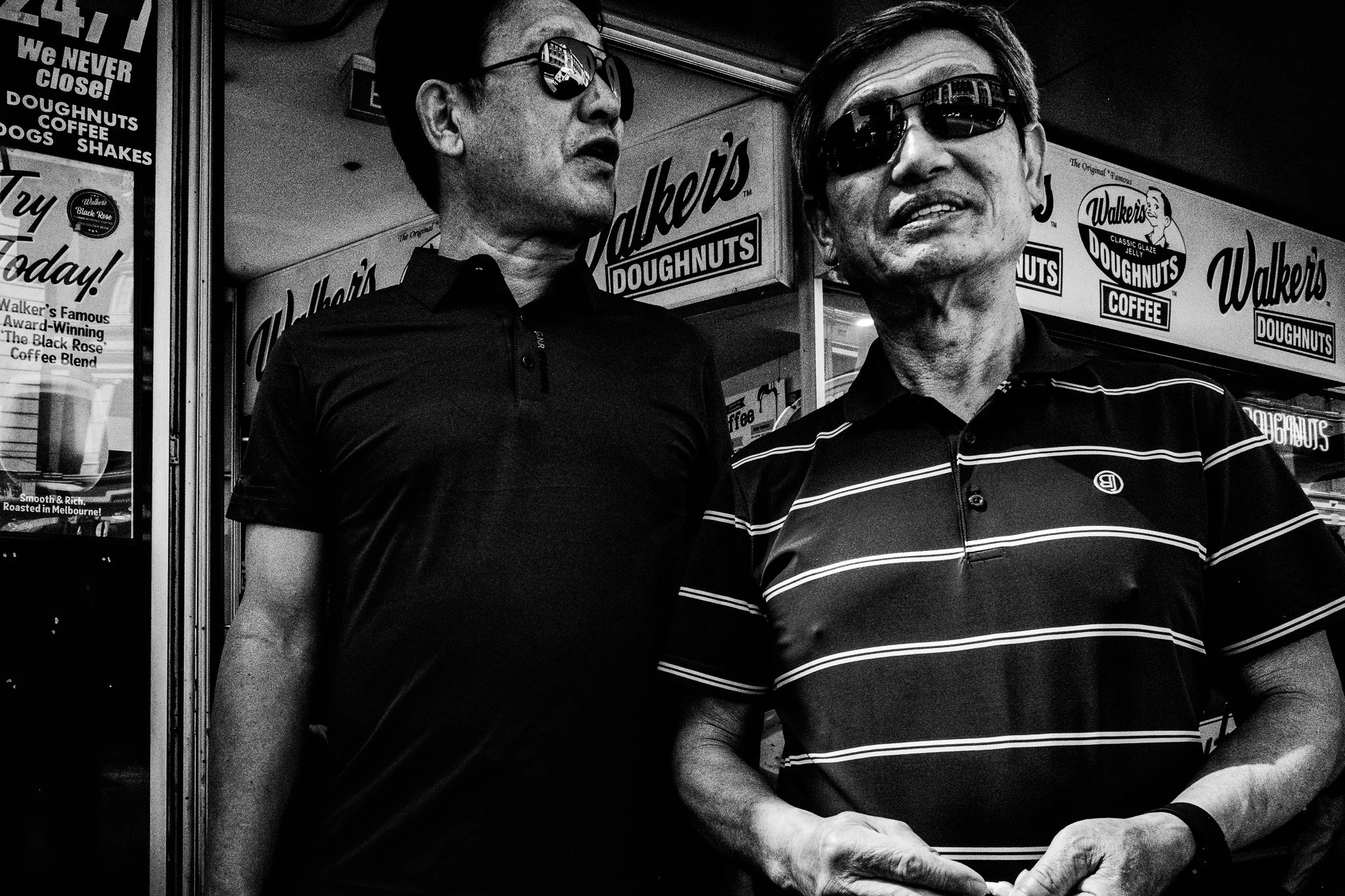
For the past several months the Melbourne-based photographer has been returning to the same corner of Elizabeth Street two or three times a week. The same stretch of footpath facing the side entrance of Flinders Street Station, the city's oldest railway terminus. The same mix of workers and tourists and shop owners and people living on the margins who pass through and inhabit this particular pocket of the city. He stays. He watches. He waits.
The series is called The Block.
The place
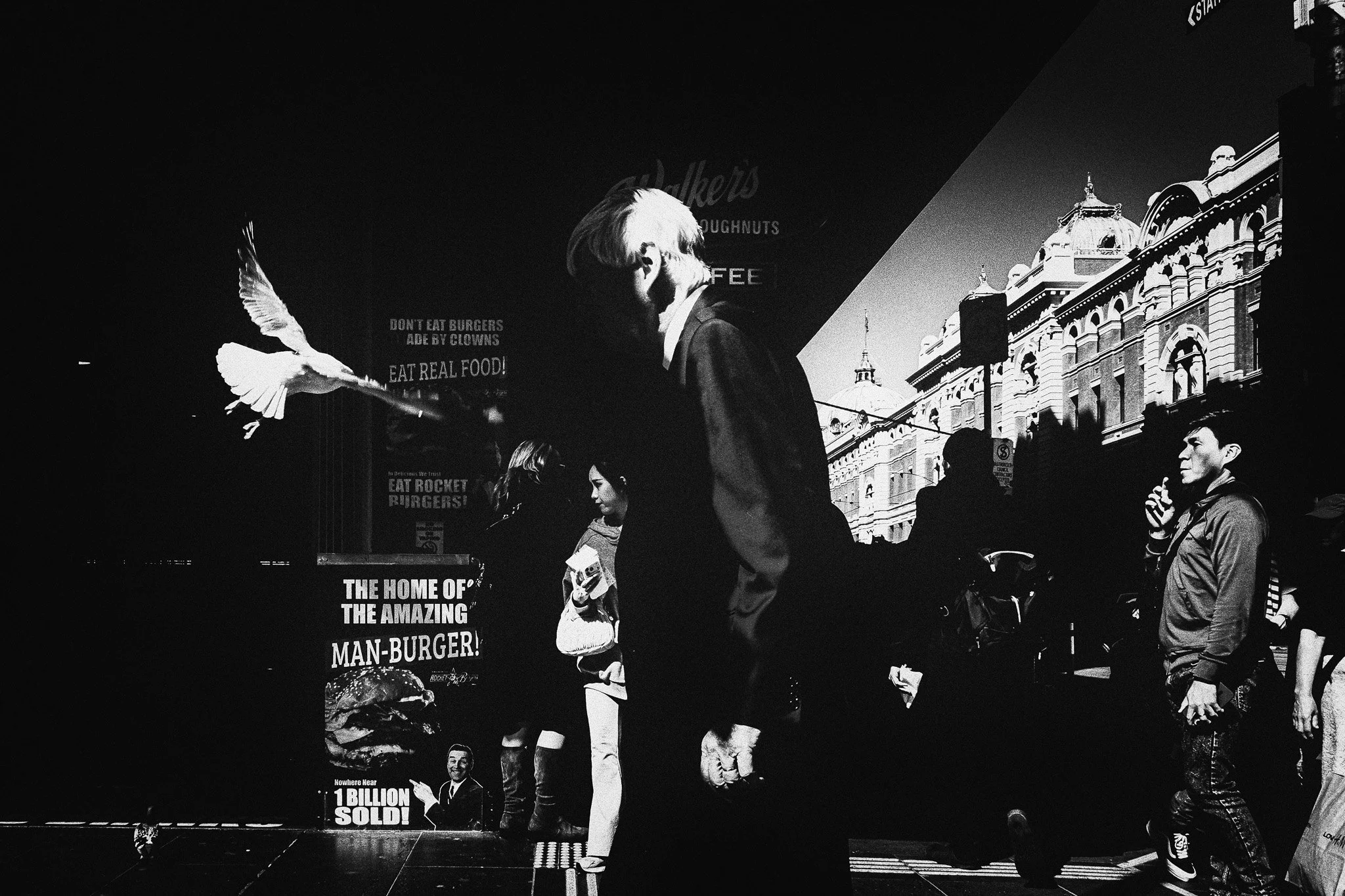
The block Joe photographs is a specific and layered piece of Melbourne geography. Elizabeth Street facing the side entrance of Flinders Street Station, bounded to the north by Flinders Lane. Takeaway shops, Asian eateries, fast food outlets, bars. A corner that carries what Joe describes as a certain roughness, gritty, sometimes volatile, its atmosphere shifting with the rhythms of the day.
He has watched those rhythms repeat enough times now to know them well. The frantic lunchtime crowds giving way to waves of tourists moving toward nearby sights. The late afternoon rush as workers hurry to catch trams and trains home. A brief lull before the evening draws out couples and younger crowds. And throughout all of it, a constant presence at the edges. People experiencing homelessness. Others who frequent the area daily at the margins of the city's official life. Quiet witnesses to the passing flow.
Joe sees the block as a metaphor for something larger. A contained space where different trajectories intersect. People arriving with purpose or drifting, pausing, disappearing. Each absorbed in their own concerns yet briefly sharing the same ground.
"Movement without apparent resolution," he says. "Proximity without real connection. An ongoing tension between visibility and anonymity."
It is a precise description of something most of us have felt in cities but rarely articulated. The block becomes, in his telling, a stage where existence reveals itself not as a grand narrative but as a series of fleeting encounters that resist being fully understood.
Why stay
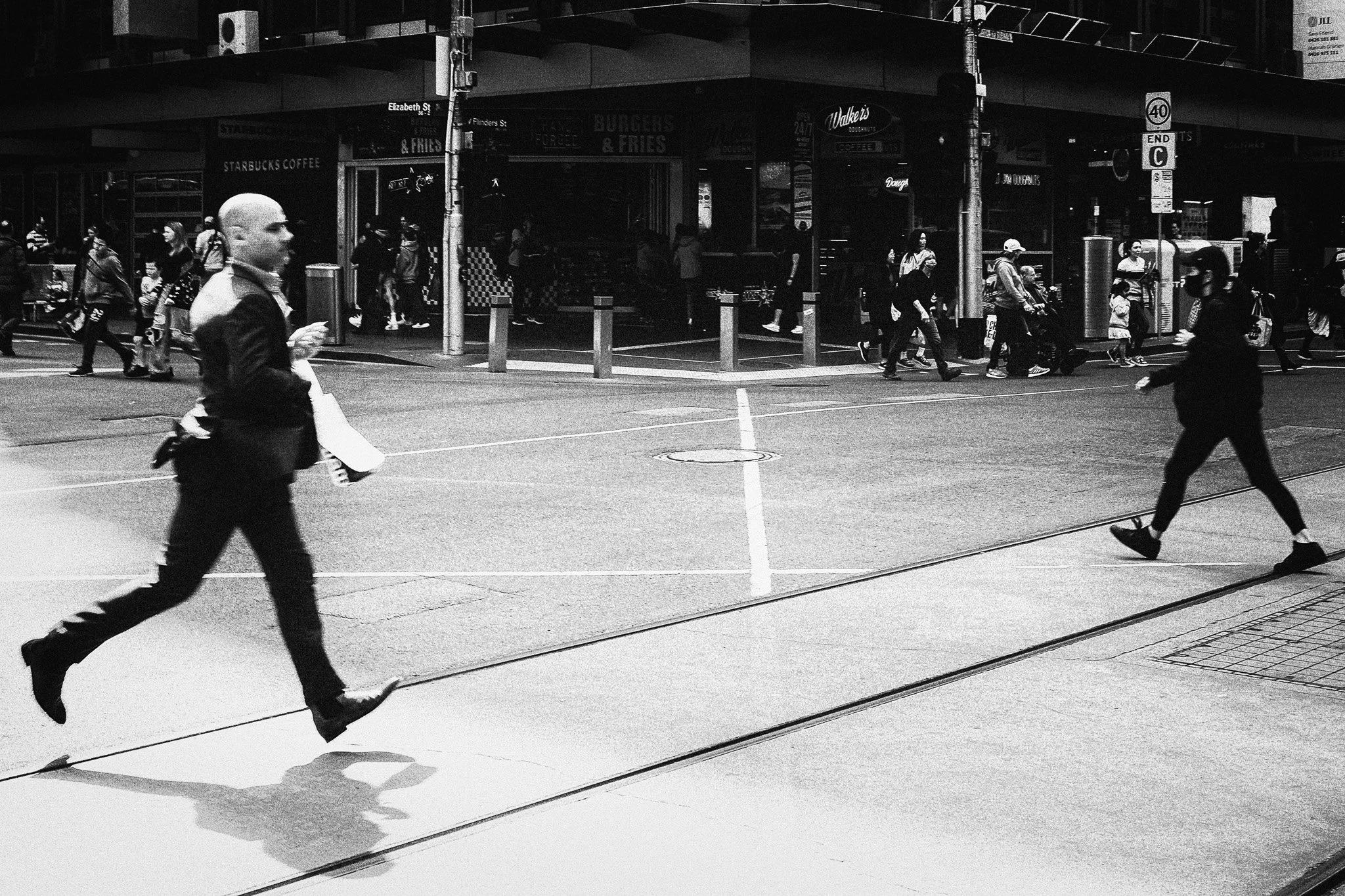
The decision to photograph the same location repeatedly rather than ranging across the city is a considered one. Joe is interested in what he calls phenomenological practice, using the camera not as a device for capturing and moving on but as a way of cultivating genuine presence. Of being in the world rather than passing through it.
This kind of attentiveness is harder than it sounds. The instinct in street photography is to keep moving, to hunt, to be in multiple places across a day in search of the decisive moment. Staying put feels counterintuitive. But staying put also means seeing things that a passing photographer never could. The patterns that repeat. The micro-dramas that unfold slowly over weeks. The way the light falls on the same corner at the same time on a Tuesday and how it is different on a Thursday. The faces that start to become familiar.
After two months of returning regularly many of the people who live and work in the area have become aware of Joe and what he is doing. That awareness changes the dynamic in ways that are subtle and important. He is no longer a stranger passing through. He is the photographer who comes back.
Why black and white
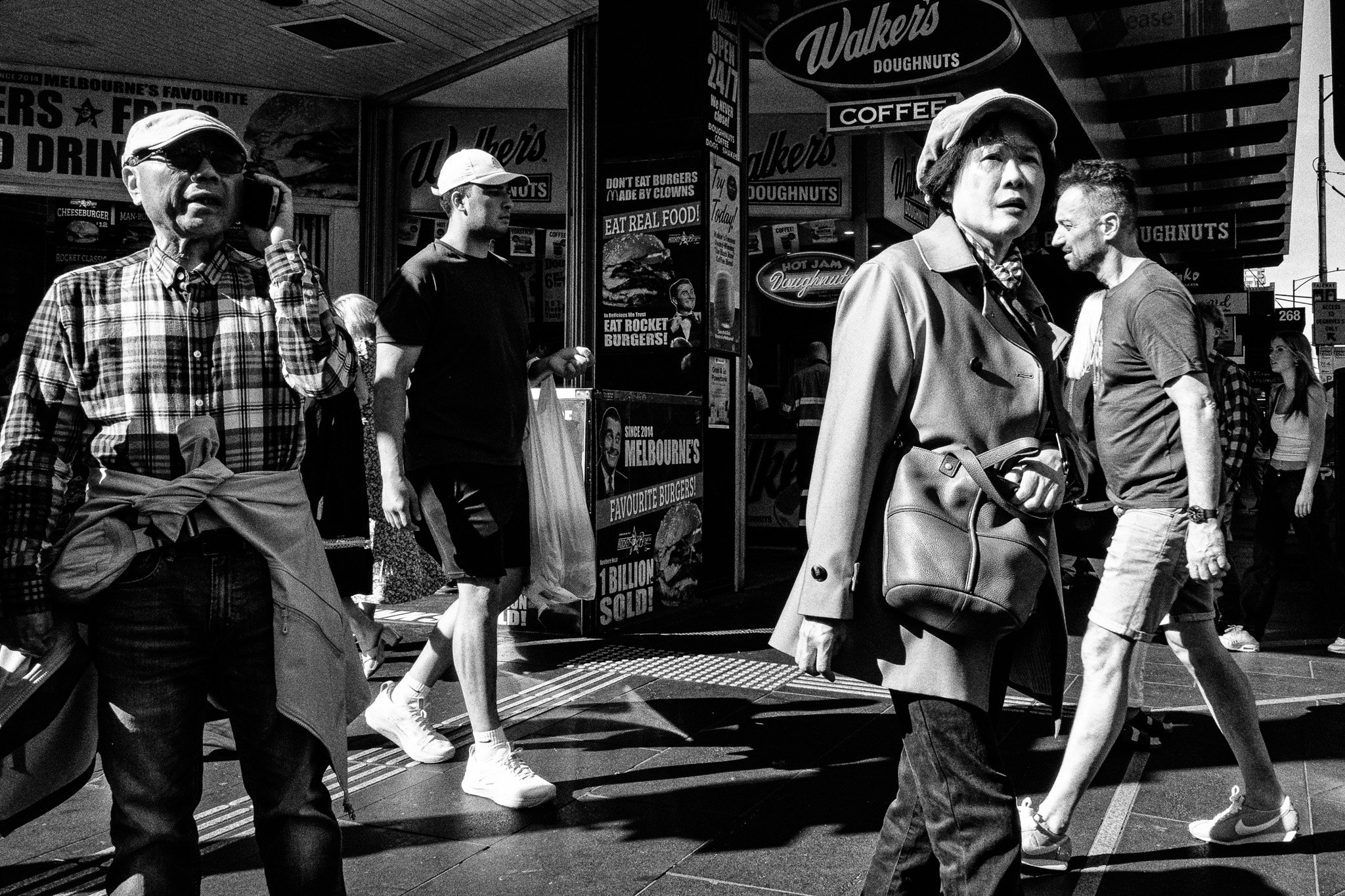
Joe's choice to work in monochrome is deliberate and clearly thought through. He talks about black and white as a way of stripping away the non-essentials, avoiding what he calls the theatrics of color, and getting at what remains when the surface spectacle is removed.
What remains, in his view, is gesture. Spacing. The quiet patterns of strangers moving through shared space. Black and white lays the moment bare. Not event or spectacle but a quiet accumulation of small meaningful fragments.
For a project whose subject is the texture of ordinary urban life rather than its dramatic highlights this is exactly the right choice. Color would pull attention toward the surface. Black and white pushes it toward the structure underneath. Toward the relationship between figures. Toward the way a posture or a glance or a particular arrangement of bodies on a footpath can gesture toward something that has nothing to do with the specifics of Melbourne or Elizabeth Street but everything to do with what it feels like to be a person moving through a world full of other people.
The photographer
Joe came back to photography the way a lot of people did. Through a box of old things found at the wrong time and the right time simultaneously. Just before the COVID lockdowns in Melbourne he moved house and found his old Nikon F3 at the bottom of a cardboard box where it had been sitting for over twenty years. When lockdown came and the daily walk became the only permitted excursion he took the camera with him.
That is how it started again.
He describes himself as not an especially good photographer, which is the kind of thing genuinely serious photographers tend to say about themselves. What he is clearly is a thoughtful one. His interest in continental philosophy sits in the background of the work, shaping not how he photographs but how he thinks about what the work might mean. The influence is a guiding intent rather than a visible style.
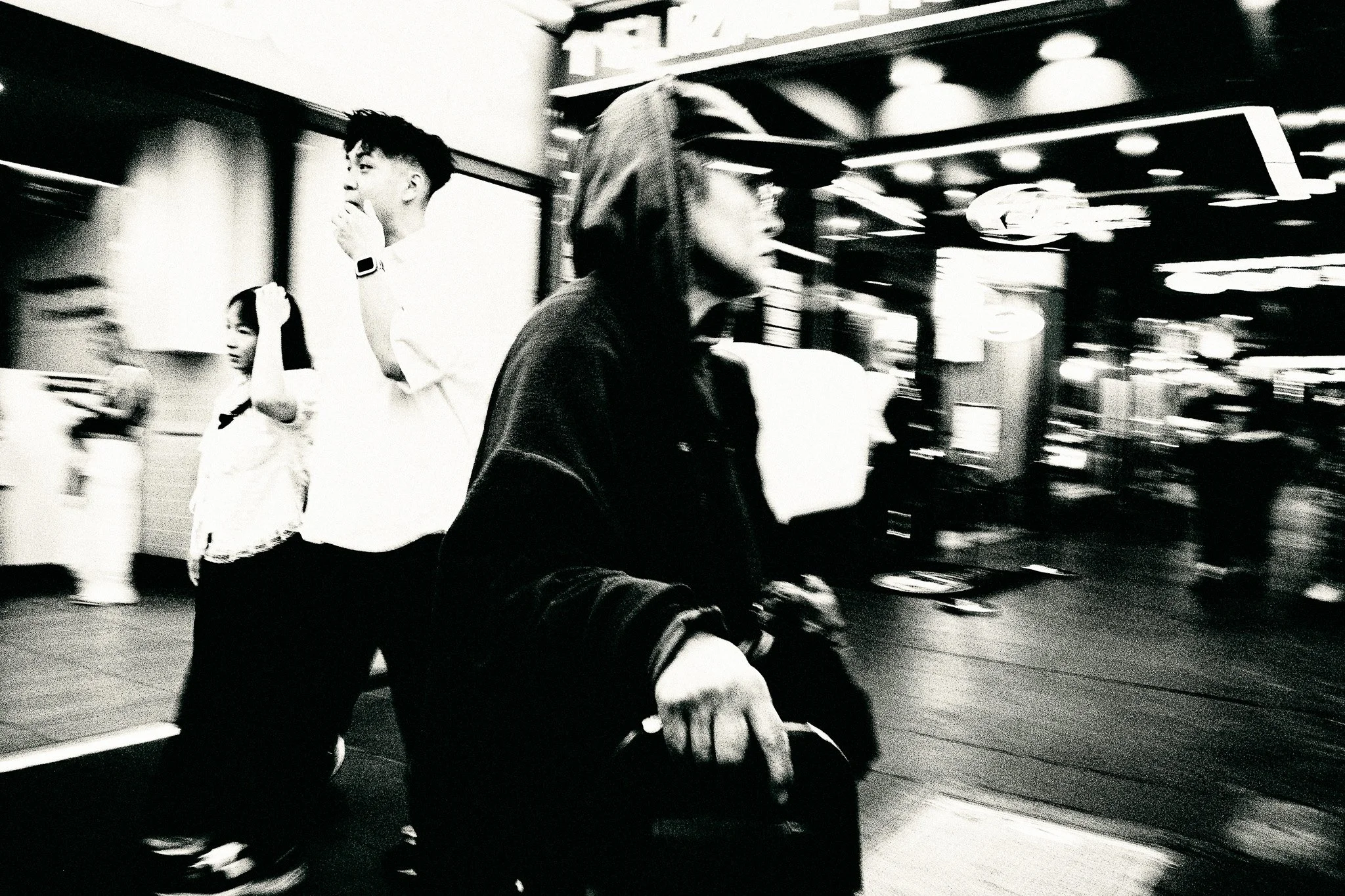
He is introverted by nature and finds the act of being out in public with a camera genuinely anxiety-inducing. He keeps interaction with his subjects to a minimum. Most of the people in his photographs are unaware they are being photographed. He works to remain unobtrusive, to not disrupt or influence the scene. The difficulty for him is not tied to any single image but to the ongoing act of showing up and being present in a space that does not always feel comfortable.
That discomfort is part of the work. He talks about the process as an exercise not just in photography but in confronting that discomfort and trying to move through it toward something more honest.
What comes next
The series is ongoing and the direction is still being discovered. Joe plans to spend the rest of 2026 continuing to photograph the same location and watching how the work evolves. He has shared some early sequences on Instagram as a way of testing how the images sit together. At this stage it is as much about finding the work as it is about presenting it.
That honesty about process is refreshing. The Block is not a finished statement. It is an investigation still in progress. The corner is still there. Joe keeps going back. The people keep moving through. The photographs keep accumulating.
There is something in that commitment, to a place, to a practice, to the patient accumulation of small meaningful fragments, that feels like the right way to make a project matter.
You can check out more of Joe’s work on foto @thestreetnegative
Joe Moro is a Melbourne based photographer working in street and documentary photography. His practice is grounded in close attention to shared public space and the quiet rhythms of everyday urban life. The Block is an ongoing series. Follow his work on Instagram for updates as the project develops.
Ready to see the world differently? The Monochrome Method is a complete video course with lessons and assignments designed to help you craft compelling black and white images and build a portfolio that's unmistakably yours. Start Learning Today.
IF YOU WOULD LIKE TO IMPROVE YOUR BLACK AND WHITE PHOTOGRAPHY TRY THE LESSONS BELOW.





A Beginners Guide To Black And White Photography