
A Photo Story: The Uneventful City
Inside every city there is another city. Quieter. Emptier. More honest. Remon Diaz has been photographing it.
There is a city most people never see. It exists inside the city everyone knows. Same streets. Same buildings. Same light. But emptied of its noise and its busyness and its surface spectacle. The city that remains when all of that is stripped away is quieter and stranger and in some ways more honest than the version most people inhabit.
Remon Diaz has been photographing it.
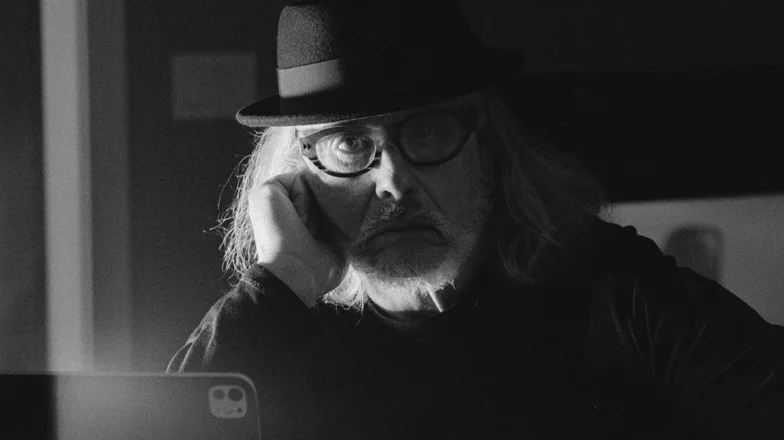
Diaz is a Cuban photographer currently based in Miami whose work sits at the intersection of poetry, architecture, and a sensory experience of the world that is entirely his own. He is deaf. And that fact, far from being incidental to his photography, is at the very center of it.
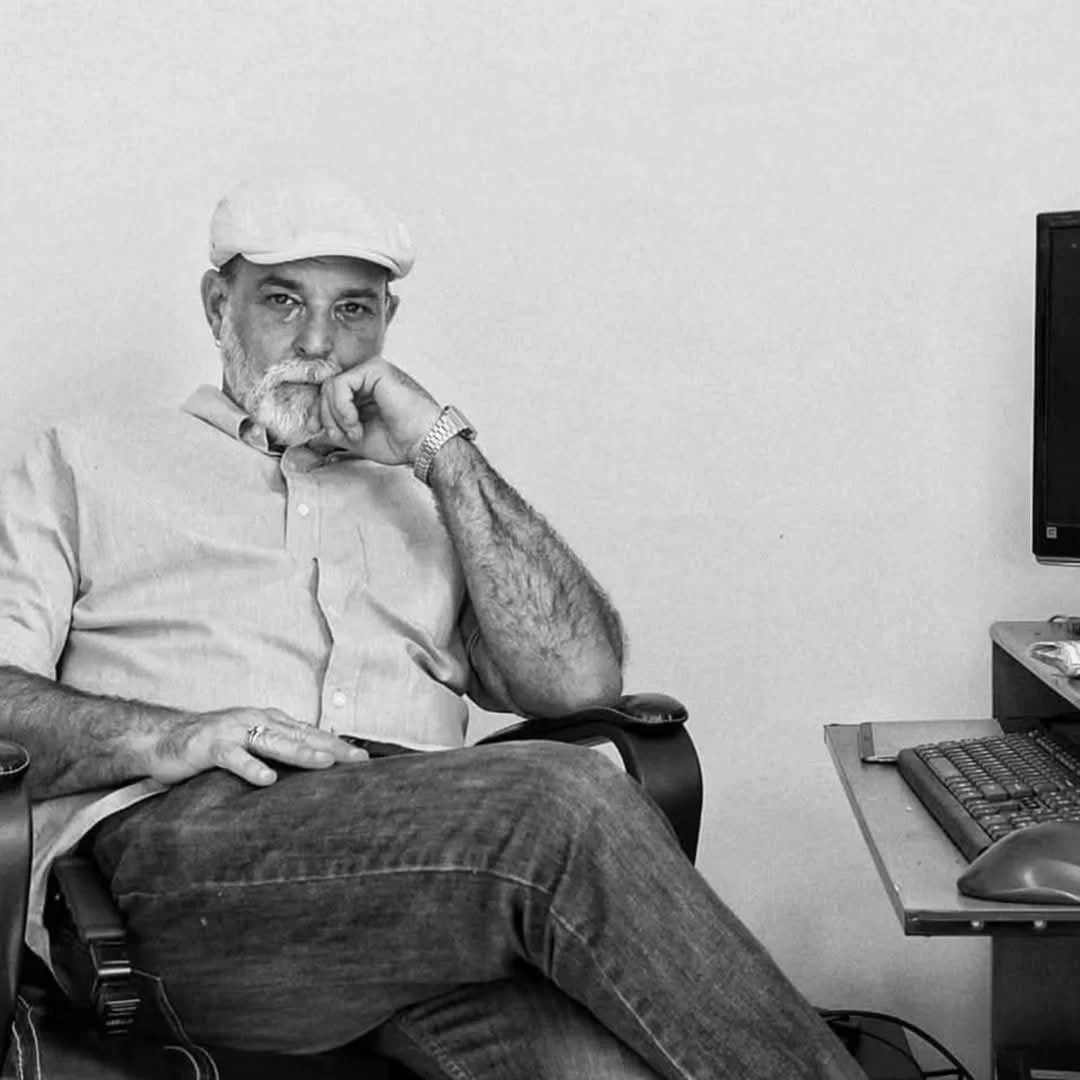
My gaze, he says, is fundamentally a consequence of my silences. As a deaf photographer, my perception of the environment is not defined by sound, but by a fragmented vision that seeks in the geometry of order what noise usually conceals.
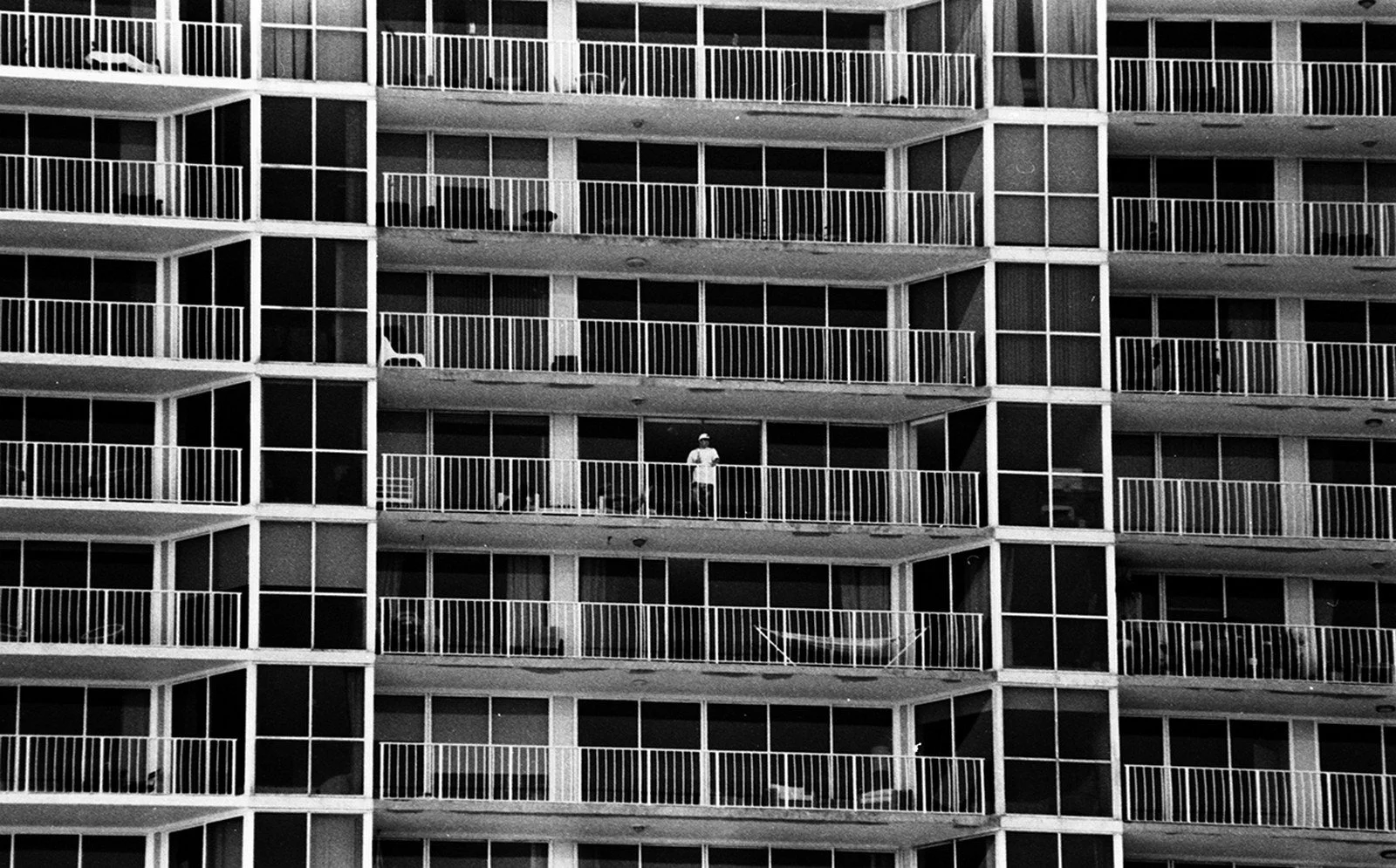
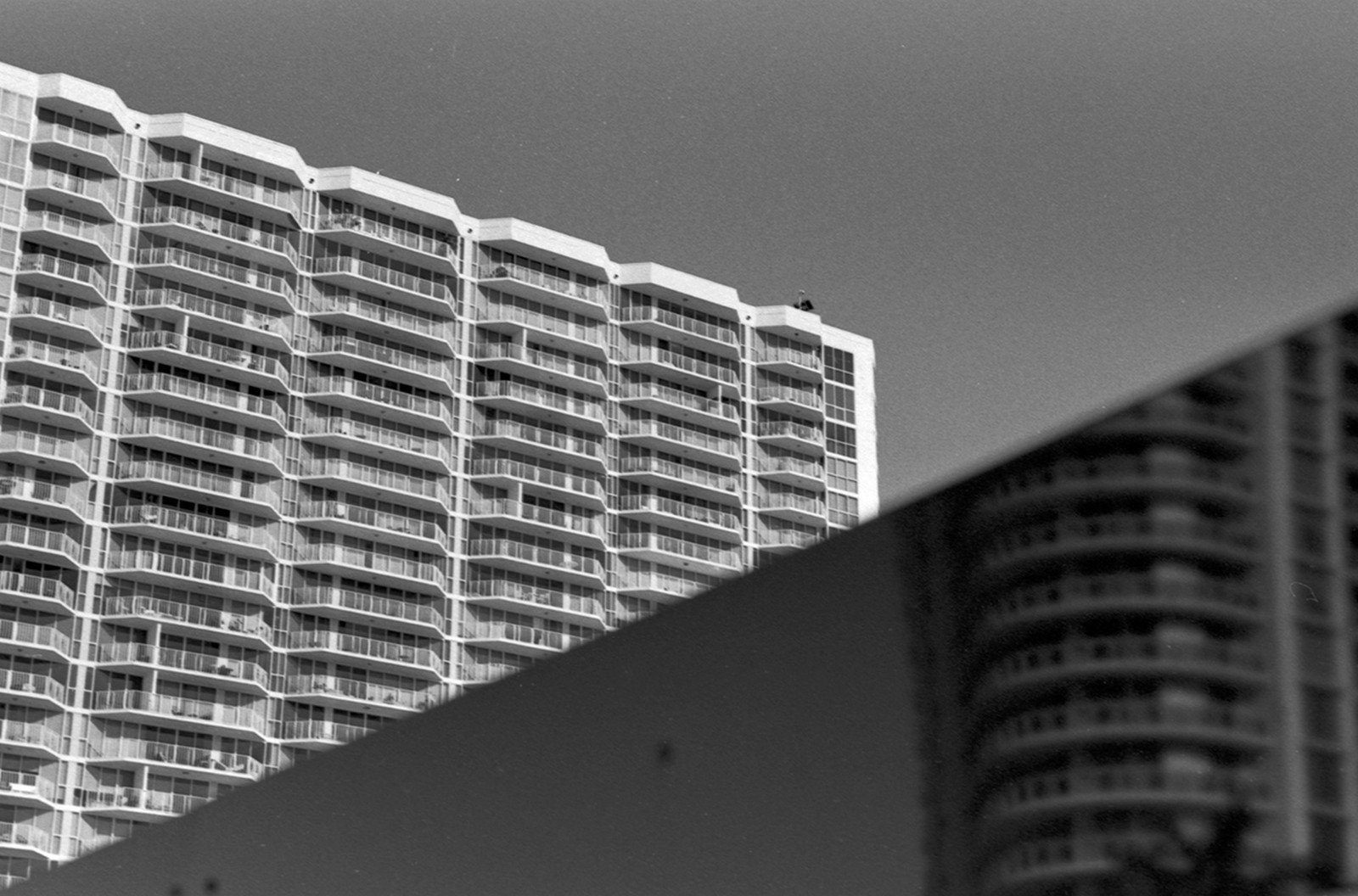
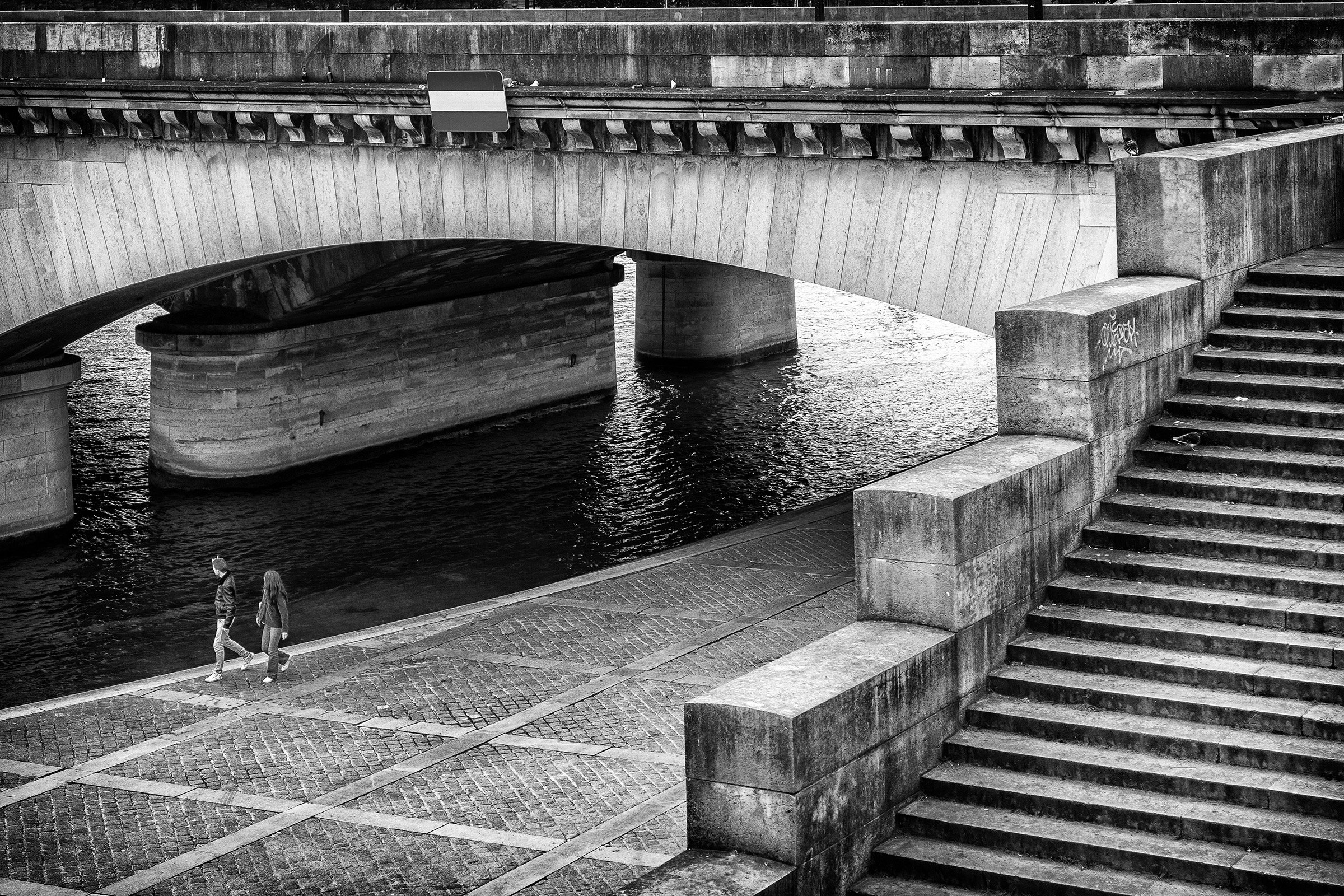
The Uneventful City is his 2026 analog project documenting Miami through that lens. Shot primarily on a Minolta 807si on black and white film, it is a study of the urban landscape stripped to its structural bones. No event. No decisive moment in the traditional sense. No drama. Just the city as a solid interlocutor of lines, shadows, textures, and the particular silence that lives inside architecture when you are paying the right kind of attention.
The silence within the silence
Diaz has been losing his hearing progressively since before he began photographing seriously. By the time he was living in Miami his hearing loss had become nearly total. Rather than describing this as a limitation he talks about it as a perceptual framework. A way of being in the world that heightens certain kinds of attention while removing others entirely.
Dispensing with sound, he says, leads to a total hierarchy of observation. There is no noise, no distraction. It is like a trance. A journey into which I immerse myself, forgetting everything else. There are no pauses, no lapses in attention. It is like a visual autopsy that I perform on whatever place I visit.
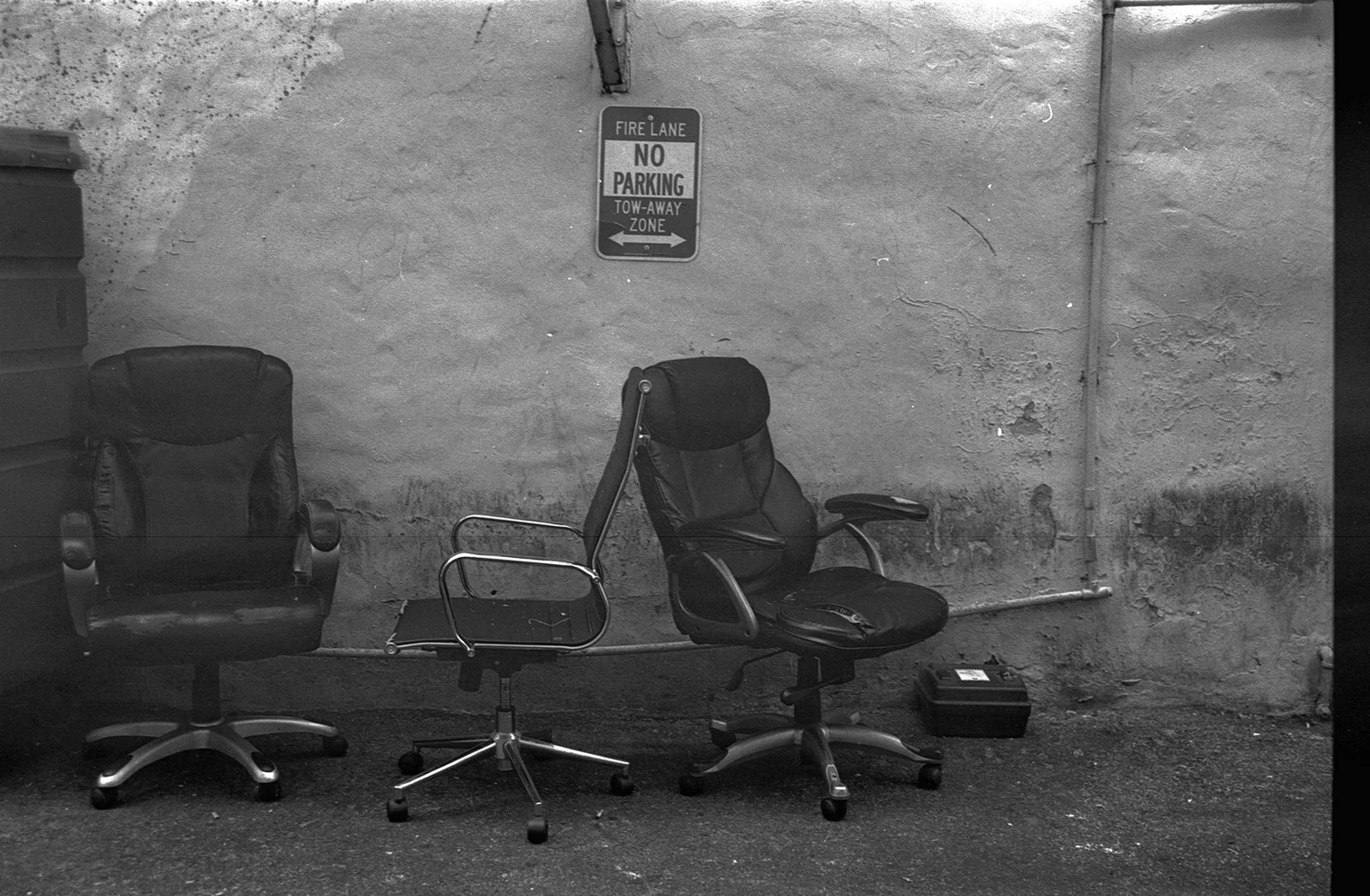
He describes his photography as a silence within another silence. The phrase is striking because it captures something the work itself communicates. These are not photographs of dramatic events. They are photographs of the space between events. The empty balconies of a high rise where hundreds of people live but nobody is visible. The abandoned office chairs against a weathered wall beneath a No Parking sign. The seagulls occupying the chairs of a waterfront restaurant as if they have been waiting for a meeting that nobody else showed up for. The lone figure on a balcony of an otherwise entirely unoccupied facade.
The city is present. The people are largely absent. And in that absence something becomes visible that the presence of people usually conceals.
Why analog
Diaz came to film photography partly by chance. A close friend pushed him toward it in 2020 and his existing interest in the great photographers of the pre-digital era did the rest. He started with digital in 2007 and spent more than a decade there before film captured him.
The choice for this specific project is deliberate. The analog process, he says, has an honest, unadorned immediacy that suits the thesis being addressed. The city laid bare. Devoid of ornamentation. The grain and the physicality of film align with the directness of the concept. There is no digital smoothing here. No computational enhancement. Just light on film and the city as it actually is.
He shoots with a Minolta 807si, a camera he values partly because its Alpha mount is compatible with the Sony A-mount lenses he has accumulated over years. The practical solution of using legacy lenses on a film body gives the project its own particular optical character without any deliberate affectation about it.
The Decisive Metaphor
To understand The Uneventful City you need to understand the visual grammar Diaz has been developing since 2016 which he calls The Decisive Metaphor. It is built on a specific premise. That photography is most alive when it stops documenting what is and begins to reveal what the visible world unknowingly carries.
The reference point is Henri Cartier-Bresson and Eliott Erwitt's art of observation as well as the visual poetics of André Kertész. Early Bresson, who established what Diaz calls the laws of the instant as a balanced structure of light, shadows, geometries, and decisive moments. But where Bresson was concerned with the external event Diaz shifts the focus toward something more interior. The construction of a metaphorical relationship between what the camera sees and what the viewer completes.
The framing opens a space, he says. What enters, leaves, or is incorporated and interpreted in that space belongs to the person in front of it.
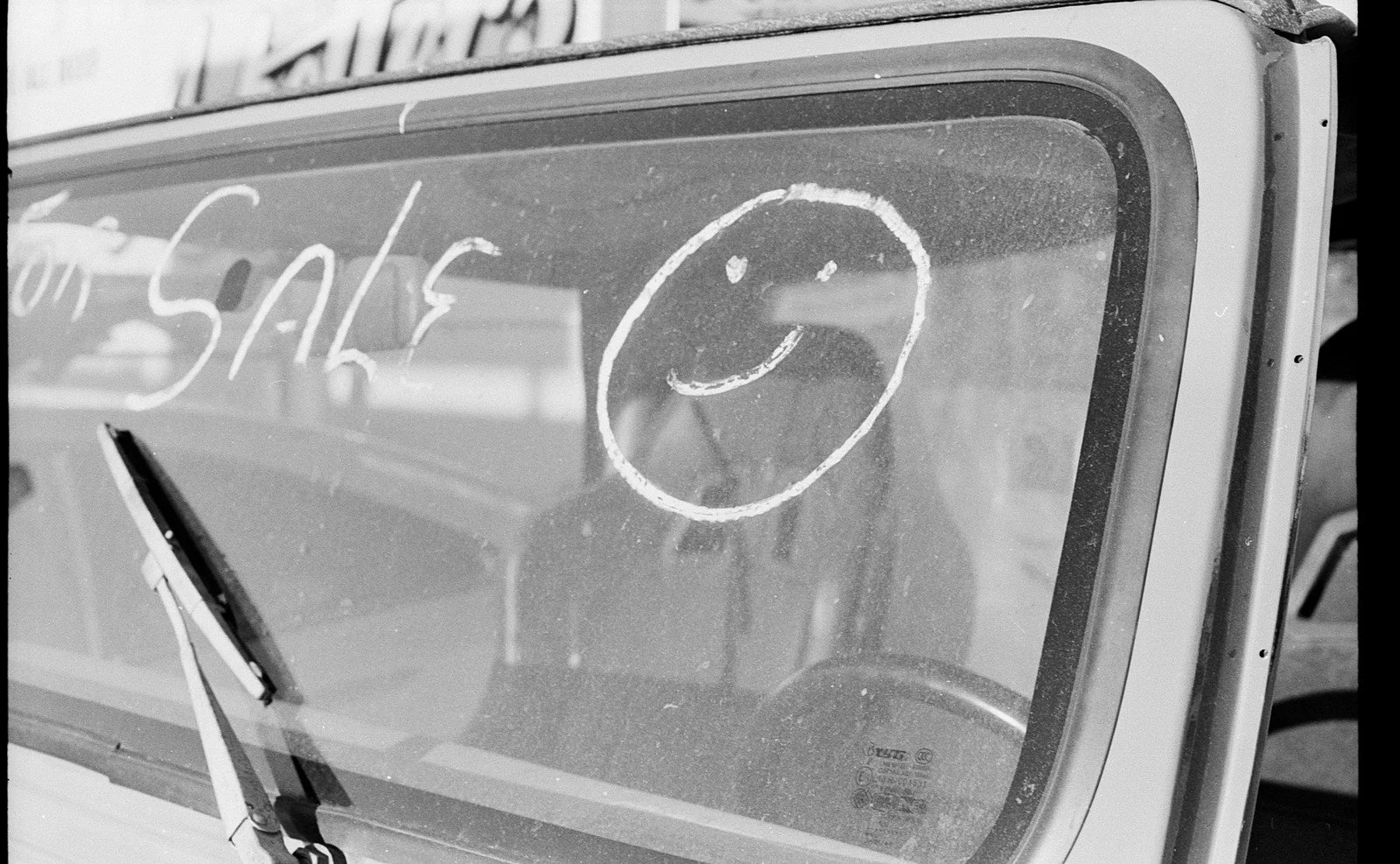
This is why the images in The Uneventful City feel genuinely open. The covered car on the suburban driveway. The wedding dress mannequin in a darkened window. The American flag folded on a car seat. The window covered in foil with posters of Paris and London visible through the glass. Each of these is a simple documentary observation. And each of them opens a space the viewer keeps returning to fill.
A poet with a camera
Diaz came to photography through poetry and cinema. He describes photography as a visual embrace of what he calls the alchemy of words. His background in hydraulic engineering shaped his sensitivity to volumes and forms. The progressive loss of hearing intensified his relationship with the structural geometry of the spaces he moves through. All of these things arrived together and became the work.
The Uneventful City is the most direct expression of that convergence to date. A Miami that most visitors never photograph and most residents have stopped seeing. The structural solitude and tense pause of urban life made visible by a photographer who perceives the city as nobody else quite does.
It is not anything more, he says, than a journey amidst the silences and the structural solitude of the city I inhabit. Intentional wanderings in which I search, observe, and decide. What I always strive for is that the other part of the story is whatever the viewer chooses to add.
You can check out more of Remons work on foto @remondiazart or on his website www.remondiaz.com
Remon Diaz was born in Cuba and left the island in 1996. From 2007 to 2015, his work developed throughout Europe, and has lived in Miami since 2015. He is a photographer, poet, and visual thinker whose practice is rooted in a concept he calls The Decisive Metaphor, a visual grammar developed since 2016 that seeks to reveal what the visible world unknowingly carries. Working primarily in analog black and white, he brings to his photography a background in hydraulic engineering, a lifelong engagement with poetry and cinema, and a sensory experience of the world shaped by progressive hearing loss that has made silence both his condition and his creative instrument. The Uneventful City is an ongoing project. Follow his work on Foto and Instagram.
Ready to see the world differently? The Monochrome Method is a complete video course with lessons and assignments designed to help you craft compelling black and white images and build a portfolio that's unmistakably yours. Start Learning Today.
IF YOU WOULD LIKE TO IMPROVE YOUR BLACK AND WHITE PHOTOGRAPHY TRY THE LESSONS BELOW.






A Beginners Guide To Black And White Photography