
The Enemy of Art Is the Absence of Limitations
Three photographers who made their greatest work with almost nothing. And what that means for the rest of us.
In the early 1980s filmmaker Henry Jaglom was talking with his close friend Orson Welles. Welles had spent his entire career fighting for money, working around restrictions he did not choose, finding solutions that comfortable productions never would have needed to find. He had made Citizen Kane at 25 with a first time film crew and a budget that required constant ingenuity. He had spent the decades since begging, borrowing, and improvising his way through projects that more powerful directors would have simply funded. Out of that experience came a line that Jaglom later quoted in print.
“The enemy of art is the absence of limitations”
Not the presence of limitations. The absence of them.
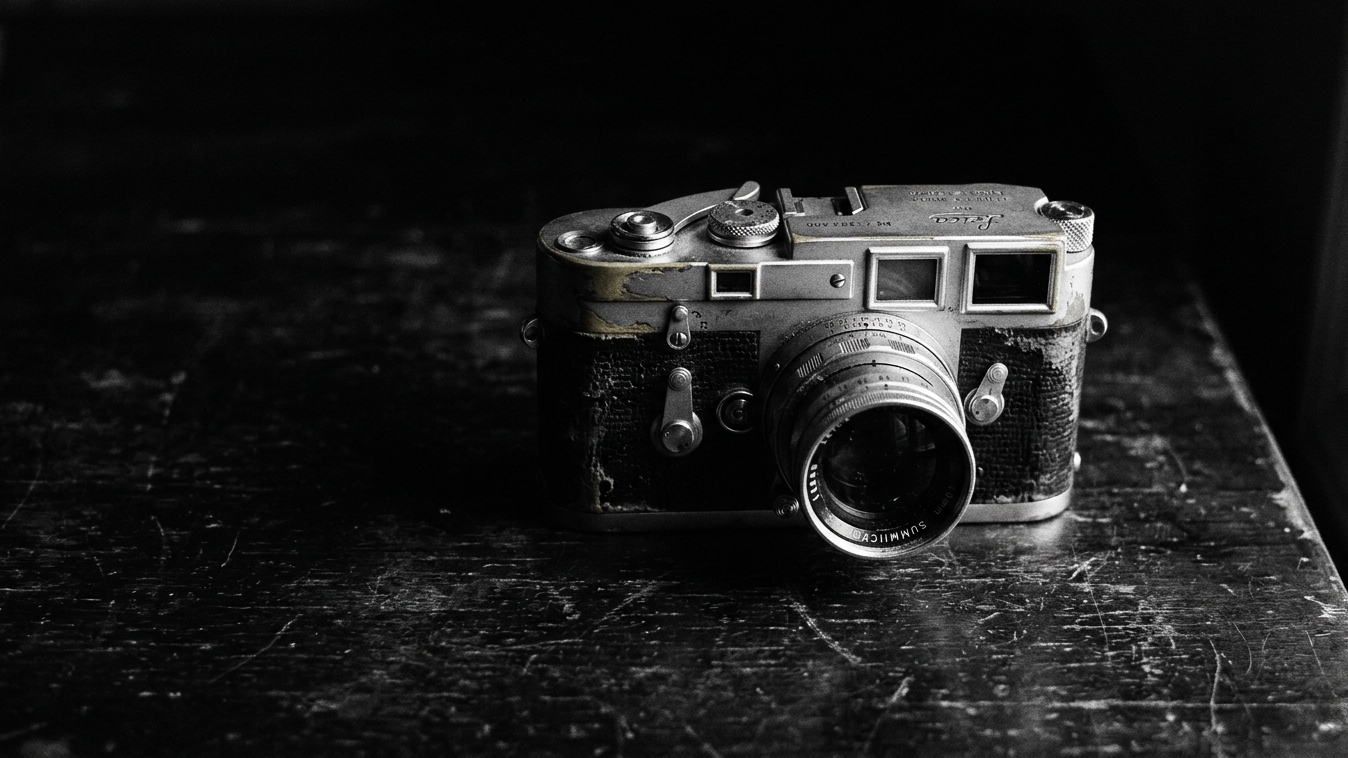
This is a genuinely counterintuitive idea and it is worth sitting with before accepting it. The instinct when we encounter a limitation is to treat it as a problem to be solved or removed. Not enough light. Wrong focal length. Limited time. Restricted access. We spend money and energy trying to eliminate these obstacles because we assume the work will be better without them. Welles is saying the opposite. He is saying that the constraint is not the obstacle to the work. In many cases it is the engine of it.
When everything is possible nothing is necessary. Unlimited options create unlimited indecision. The pressure to choose, to commit, to solve a specific problem with the specific tools available, is what forces the creative decision that gives the work its character. Remove the constraint and you remove the necessity of finding the solution. And the solution, very often, is where the art actually lives.
Three photographers understood this better than almost anyone.
Robert Frank and The Americans
In 1955 Robert Frank, a Swiss-born photographer living in New York, received a Guggenheim Fellowship. It gave him one year and enough money to travel. Not a large budget. Not unlimited access. One year to drive across America and make photographs of what he found there.
The constraints were significant. Frank was working alone, in a country that was not his own, with a 35mm Leica, available light, and black and white film. He had no assistants, no fixer, no advance team. He stopped where the road took him. He photographed what was there. Diners, jukeboxes, roadside funerals, segregated buses, political rallies, lonely hotel rooms, the flag appearing and reappearing in contexts that complicated its meaning.
The book he made from that year, published in 1958, contained 83 photographs selected from roughly 28,000 frames. It was rejected by American publishers and initially released in France. When it finally reached American audiences it changed photography permanently.
The constraints of the project were inseparable from what it became. The aloneness forced an intimacy. The limited budget forced Frank to stay in cheap motels in overlooked places rather than the obvious destinations. The single camera and single focal length gave the work a visual consistency that a more equipped photographer might have accidentally diluted. The time limit gave it urgency. He was not accumulating a lifetime archive. He was trying to say something specific in a specific window of time. That pressure is in every frame.
William Faulkner is supposed to have said that the best fiction comes from the writer's own yard. Frank proved the photographic equivalent. The limitation of one year in one country with one camera and not very much money produced a vision of America that no well-resourced commission has ever matched.
Vivian Maier and the rolls she never developed
Vivian Maier worked as a nanny in Chicago for most of her adult life. Photography was not her profession. It had no audience, no deadline, no commercial purpose, and frequently no budget. She shot on film and she often could not afford to develop what she had shot. Rolls of undeveloped film accumulated in storage. Thousands of images she made but never saw.
The constraints of Maier's practice were extreme by any measure. No darkroom. No regular access to developing. No publication, no exhibition, no feedback of any kind from any audience. She was making photographs entirely for herself, with money that was always tight, in the gaps between her working hours, on the streets of a city she moved through every day with the children she cared for.
What those constraints produced is one of the most significant bodies of street photography of the twentieth century. The images were discovered after her death when a box of her negatives was purchased at auction by a Chicago real estate agent named John Maloof who had no idea what he was buying. When the photographs were finally seen by the world they were immediately recognized as extraordinary.
The limitation of no audience is worth thinking about carefully. Maier never edited for approval. She never made photographs calculated to impress a viewer or perform for a community. There was no community. There was no viewer. There was only the street and the camera and whatever she found genuinely worth looking at. The absence of an audience removed the corruption that an audience inevitably introduces. She shot what she saw. The constraint of total obscurity produced a body of work of total honesty.
The undeveloped rolls are also worth noting. A photographer with access to a darkroom and a regular developing budget makes different decisions about what to shoot. When development is expensive and uncertain you do not fire frames speculatively. You commit. You wait. You press the shutter when you are sure rather than when you are hoping. The financial constraint of Maier's situation may have contributed directly to the quality of her decision-making in the field.
Daido Moriyama and the cheap compact camera
Daido Moriyama has been photographing the streets of Tokyo and other Japanese cities since the 1960s. His work is immediately recognizable. Grainy, high contrast, blurred, shot from uncomfortable angles and at unexpected moments. It looks nothing like the technically pristine street photography that wins awards and fills gallery walls. It looks like something that was made fast and close and with complete disregard for conventional photographic quality.
Much of it was made with cheap compact cameras. Not out of affectation or artistic statement, though it became both, but because Moriyama was drawn to the compact camera's specific qualities. Small enough to move without being noticed. Fast enough to shoot without deliberating. Cheap enough that the physical act of raising it did not carry the weight of an expensive instrument that needed to be protected and managed.
The grain in Moriyama's images is not a technical failure. It is what happens when you push cheap film in available light and print it with high contrast. The blur is not incompetence. It is what happens when you shoot fast and close and do not wait for the perfect moment because the imperfect moment is the honest one. The constraints of his gear did not limit what he could say. They became the language he said it in.
His most celebrated series, Farewell Photography, published in 1972, pushed these qualities to an extreme. Images so grainy and blurred and over-exposed that they sit at the edge of legibility. The constraint was taken to its logical conclusion and the result was a body of work that asked fundamental questions about what a photograph is and what it is required to show. Those questions could not have been asked with a technically perfect camera producing technically perfect images.
The cheap compact camera was not a compromise. It was the instrument of a specific and deliberate vision that a more capable camera would have made impossible.
What this means for your own practice
The three examples above are not arguments for shooting with bad equipment or working in poverty. They are arguments for taking your constraints seriously rather than fighting them.
The limitation of black and white is a constraint that focuses attention on what remains when color is removed. The limitation of a single fixed focal length forces a specific and personal relationship with distance and angle. The limitation of available light only forces an understanding of natural light that a photographer with a full lighting kit never develops in the same way. The limitation of a small camera forces a proximity and a speed of decision that a large camera with a complicated menu system actively discourages.
None of these limitations are failures to acquire the right gear. They are choices that force specific solutions. And the solutions, as Welles understood from a lifetime of finding them, are where the work actually comes from.
The next time you encounter a limitation in your practice, before you reach for the solution that removes it, ask what the limitation might be asking you to do instead. The answer might be more interesting than anything the removal of the constraint would have produced.
The enemy of art is the absence of limitations. Welles was right. Frank and Maier and Moriyama spent their careers proving it without ever having met each other or needing to.
Ready to see the world differently? The Monochrome Method is a complete video course with lessons and assignments designed to help you craft compelling black and white images and build a portfolio that's unmistakably yours. Start Learning Today.
IF YOU WOULD LIKE TO IMPROVE YOUR BLACK AND WHITE PHOTOGRAPHY TRY THE LESSONS BELOW.






A Beginners Guide To Black And White Photography