
The Problem With Portfolio Reviews
Twenty minutes with a stranger is not feedback. Here is what is.
The promise of the portfolio review is an appealing one. You bring your work. An expert looks at it. They tell you honestly what is working and what is not. You leave with clarity about where you are and where you need to go. For photographers who have been working in isolation, uncertain whether their images are actually any good, this sounds like exactly what they need.
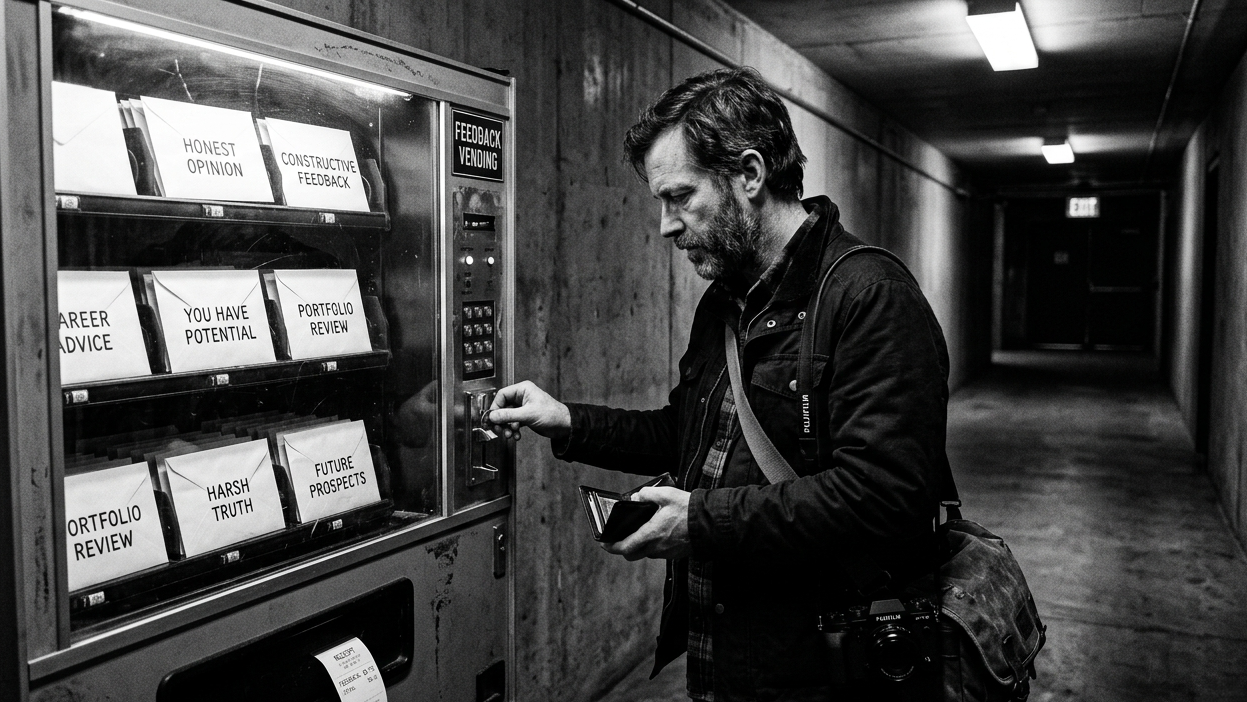
The problem is not the promise. The problem is the model.
Most portfolio reviews, particularly the kind offered at photography festivals and events where you pay a fee and book a twenty minute slot, are transactions. You arrive with your work. A stranger looks at it, often for the first time, with no prior knowledge of who you are, what you are trying to do, or where this work fits in the arc of your development. They offer observations shaped by their own taste, their own background, and the pressure of giving you something useful in the time available. Then the twenty minutes end and you move on and so do they.
This is not feedback in any meaningful sense. It is an opinion from a stranger about a small selection of images seen briefly in an artificial context. It might contain something useful. It might not. But even in the best case it is a snapshot taken from far away by someone who does not know the territory.
The transactional problem
The deepest issue with the portfolio review model is not the quality of the reviewers or even the brevity of the encounter. It is that a transaction is fundamentally the wrong structure for the thing you are actually trying to do.
Genuine feedback on creative work requires context. It requires knowing what a photographer has been working toward, what they have tried and abandoned, what fears are shaping their choices, what they are capable of when they are not being careful. None of that context exists in a twenty minute paid session with someone you have never met. The reviewer is working with a fraction of the information they would need to say something genuinely useful, and they know it, and you know it, even if neither of you says so out loud.
The transactional structure also subtly distorts the dynamic. You have paid for this. The reviewer is aware you have paid. The social pressure toward being encouraging, toward finding something positive to say, toward sending you away feeling the money was well spent, is real even when the reviewer is trying hard to be honest. The best reviewers resist this pressure. But the pressure is there regardless and it shapes the room in ways that are difficult to fully escape.
And then there is the question of whose taste you are being measured against. A reviewer brings their own aesthetic values, their own sense of what good photography looks like, their own blind spots and preferences. Feedback from a documentary photographer about a body of fine art work, or vice versa, is filtered through a sensibility that may have very little to do with what you are actually trying to make. Twenty minutes is not enough time to understand the difference.
What actually helps
The alternative to the portfolio review is not no feedback. It is the right kind of feedback, given in the right context, by people who actually know your work.
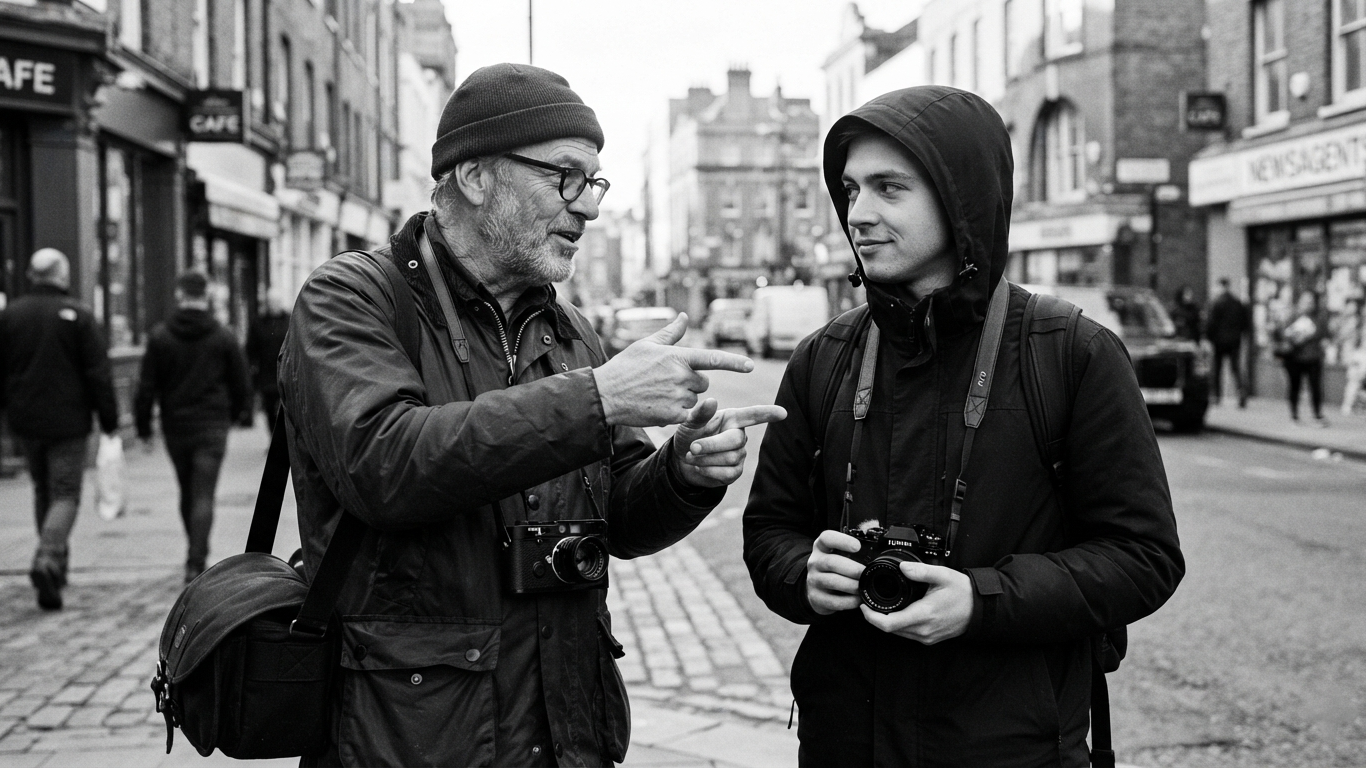
What actually helps photographers grow is honest relationships built over time within a community of people who are serious about the same things you are serious about. Not a transaction. Not a one-time encounter with a stranger. A sustained, evolving conversation with photographers who have watched your work develop, who can see when something has changed, who know the difference between you playing it safe and you taking a genuine risk, and who care enough to tell you the truth because the relationship is real.
This kind of feedback is harder to find than a festival booking form. It requires showing up consistently, engaging genuinely with other people's work, being willing to be vulnerable about your own, and building the kind of trust that only comes from time and honesty. It cannot be purchased for a fee and it cannot be delivered in twenty minutes.
But it is worth infinitely more than anything a transaction can provide. Because it is given by people who actually know you. Who have seen you struggle. Who remember what your work looked like six months ago and can measure what it looks like now against that real baseline. Who are invested in your growth not because they were paid to be but because the community they are part of takes growth seriously.
The community as the review
The Collective exists precisely for this reason. Five hundred photographers, all serious about black and white, all working in different places and at different stages, all sharing their work and engaging with each other's. That is not just a social network. It is a sustained critical environment of exactly the kind that actually produces growth.
The photographer who shows their work here consistently, who engages honestly with what others are making, who asks genuine questions and gives genuine responses, is getting something no festival portfolio review can offer. They are building relationships with people who will know their work well enough to say something true about it. Not in twenty minutes. Over months and years.
The next time you consider spending money on a portfolio review, ask yourself what you are actually hoping to get from it. If the answer is honest feedback that helps you grow, the Collective is a better place to find it than any transaction ever will be.
Show your work. Engage with others. Build the relationships. That is the review that actually matters.
Ready to see the world differently? The Monochrome Method is a complete video course with lessons and assignments designed to help you craft compelling black and white images and build a portfolio that's unmistakably yours. Start Learning Today.
IF YOU WOULD LIKE TO IMPROVE YOUR BLACK AND WHITE PHOTOGRAPHY TRY THE LESSONS BELOW.










A Beginners Guide To Black And White Photography