
What Your Worst Photos Are Trying to Tell You
The images that didn't work are the ones doing the most work.
We have a strange relationship with our bad photographs. We make them, we wince, and we delete them. We treat them as evidence of something we would rather not think about and we move on as quickly as possible. The good ones we keep. The bad ones disappear.
This is exactly backwards.
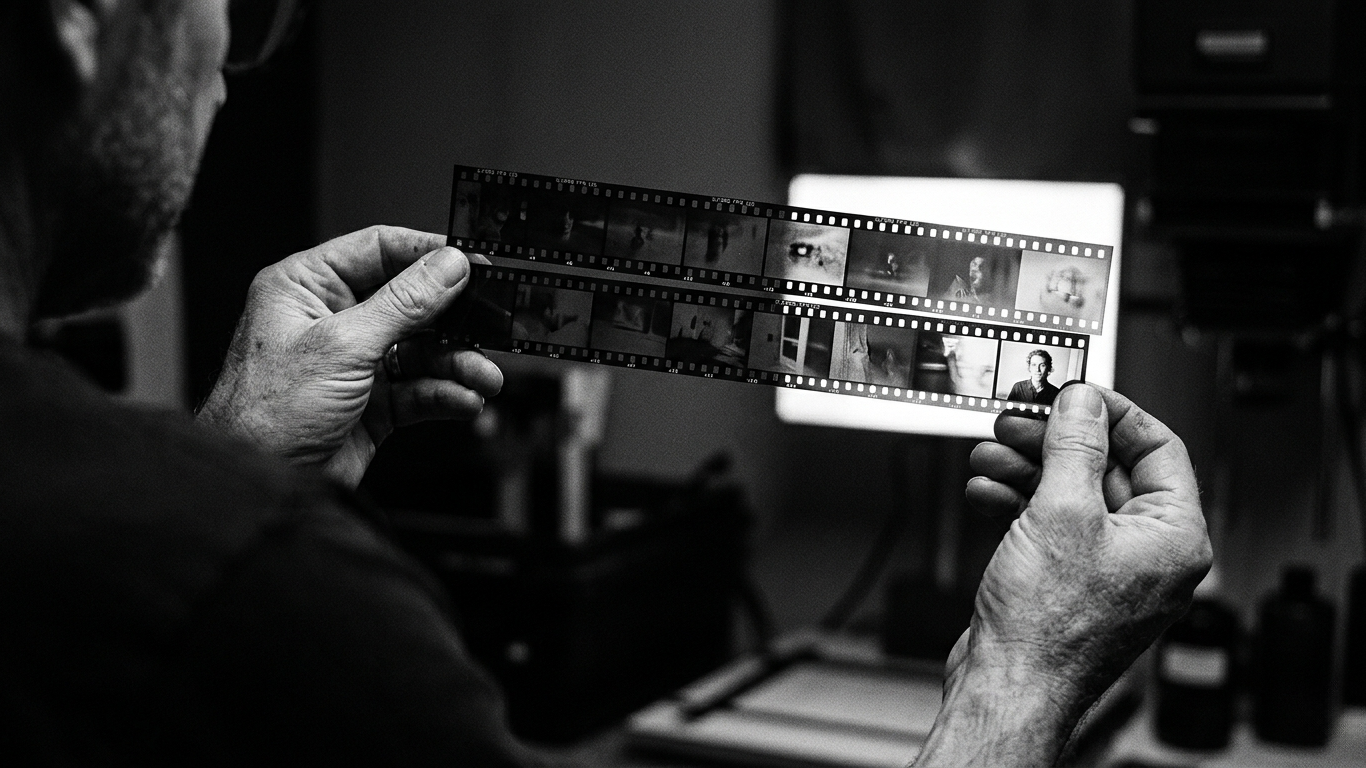
The photographs that did not work are the most useful images you will ever make. Not because they are secretly good, they are not. But because they contain information that your successful images will never give you. A photograph that works confirms what you already know. A photograph that fails shows you the edge of what you do not know yet. And that edge is precisely where growth happens.
Think about the last time you came home from a shoot disappointed. The light was wrong. The timing was off. The composition felt flat. The image you had in your head bore no resemblance to what ended up on the card. That feeling of disappointment is not a sign that you are not cut out for this. It is a sign that your eye is ahead of your execution. You can see what a good photograph looks like. You just have not yet developed the technical or instinctive ability to consistently produce one. The gap between what you can see and what you can make is not a flaw. It is the space where improvement lives.
The photographers who grow fastest are not the ones who make the fewest mistakes
They are the ones who make the most and pay the closest attention to them.
Think about learning to ride a bicycle. Nobody climbs on for the first time and rides perfectly. You fall. You correct. You fall again in a slightly different way. Each fall tells your body something that no amount of watching other people ride ever could. The balance you eventually find is built entirely from the accumulated memory of losing it. Photography works the same way. Every missed shot, every flat composition, every image that almost worked is your body and your eye learning to correct. You cannot shortcut that process. You can only go through it.
This applies at every level of the craft. The exposure that is half a stop off teaches you more about how your camera meters than a perfectly exposed frame ever will. The portrait where the subject's eyes are slightly out of focus teaches you more about depth of field than reading about it in a manual. The street photograph where you pressed the shutter a fraction too late teaches you more about anticipation than any tutorial. You cannot acquire that knowledge in the abstract. It has to be earned through the specific, personal experience of getting it wrong.
There is also something else that failure does that success cannot. It forces honesty. When a photograph works we tend to accept it and move on. When a photograph fails we are compelled to ask why. That question, asked seriously and repeatedly, is the engine of improvement. Why did this not work? Was it the light? The angle? The timing? Did I know what I wanted from this image before I made it, or was I just pointing the camera and hoping? Did I wait long enough? Did I get close enough? Was I paying attention or was I going through the motions?
Those questions are uncomfortable, That is exactly why they are valuable
The danger is that we use the discomfort as a reason to stop asking. We decide that some photographers have it and some do not, that talent is fixed and failure is confirmation of its absence, and we protect ourselves from further disappointment by shooting less, sharing less, caring less. This is the wrong response. It is understandable but it is wrong.
The right response is to look at the bad photograph for longer than feels comfortable. Not to torture yourself but to understand it. To treat it as a problem to be solved rather than a verdict to be accepted. To ask what you would do differently and then go out and try again.
Every photographer you admire has a hard drive full of images they will never show anyone. Every master of the craft has spent years making work they were not satisfied with. The difference between them and the photographer who gives up is not talent. It is the willingness to keep showing up, keep making mistakes, and keep paying attention to what those mistakes are trying to say.
Your worst photographs are not failures. They are lessons you have not finished learning yet.
Go back and look at them.
Ready to see the world differently? The Monochrome Method is a complete video course with lessons and assignments designed to help you craft compelling black and white images and build a portfolio that's unmistakably yours. Start Learning Today.
IF YOU WOULD LIKE TO IMPROVE YOUR BLACK AND WHITE PHOTOGRAPHY TRY THE LESSONS BELOW.






A Beginners Guide To Black And White Photography