
How to Think Like an Editor Of A Novel
Novelists cannot edit their own work. Neither can photographers. Here is how to develop the voice that does it for you.
Every serious novelist has an editor. Not because they cannot write but because they cannot see. When you are inside a piece of work, close to it, emotionally invested in it, you lose the ability to see it as a reader would. You know what you meant to say. You know what you were feeling when you wrote it. That knowledge fills in the gaps automatically. You read what you intended rather than what is actually on the page.
The editor is the person that reads what is actually there.
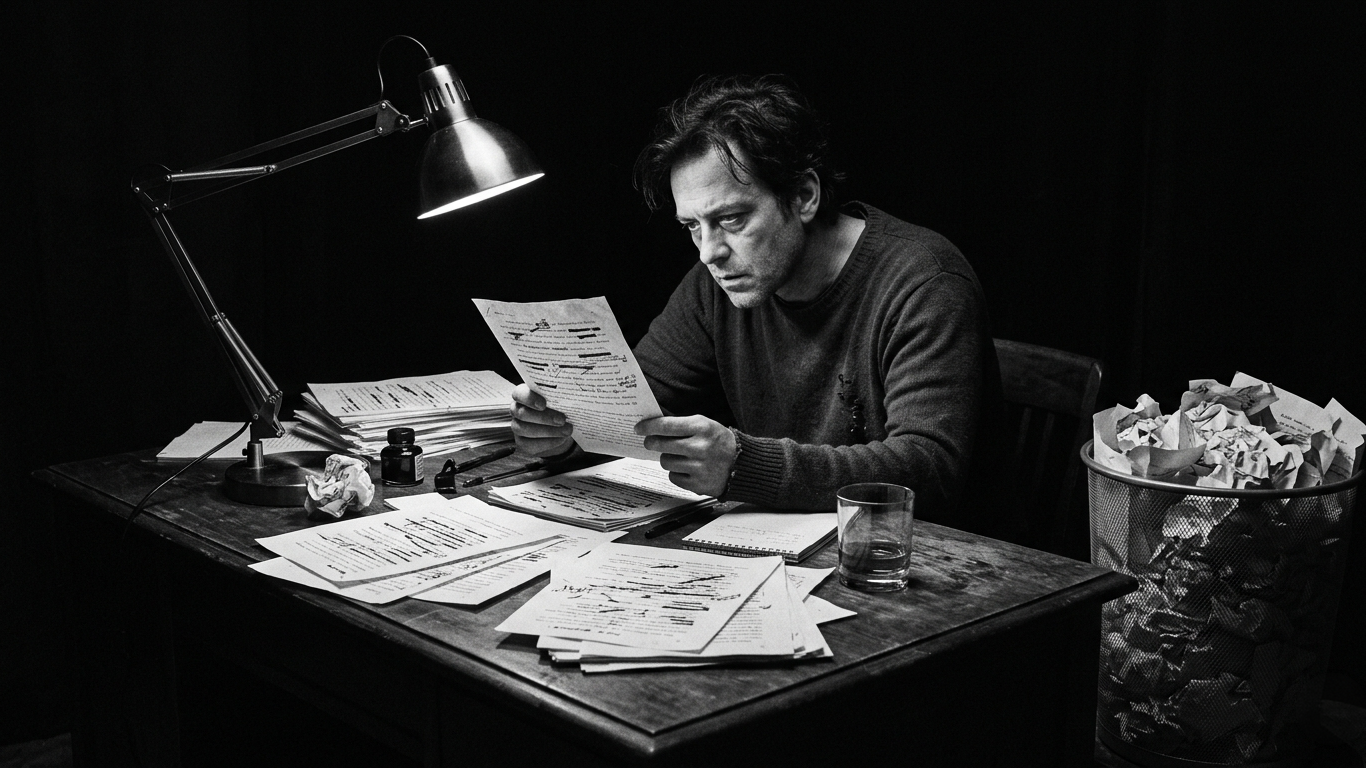
A good editor does not just fix grammar and spelling. That is the smallest part of the job. What they really do is ask a ruthless set of questions that the writer cannot ask themselves. Does this chapter do what you think it does. Is this character earning their place in the story or are they here because you are attached to them. Does this opening make someone want to keep reading. Is this the right ending or just the ending you arrived at. Does this scene move the story forward or is it here because you loved writing it.
The editor's job is to protect the work from the writer's blind spots. The best writers in the world have editors. The relationship between a writer and a good editor is one of the most important creative partnerships that exists. The editor is not the enemy of the work. They are the person who makes the work as good as it can be by seeing it clearly when the writer cannot.
Why photographers need editors too
Most of us shooting black and white photography are trying to do something similar to what a novelist does. We are trying to tell stories. To communicate something true about the world through a sequence of images. To make someone feel something they would not have felt without the photograph.
That ambition requires editorial thinking. Because the same blind spot that affects writers affects photographers completely. You know what the light felt like. You know how long you waited for that moment. You know what it cost you to get that shot, the cold, the distance, the patience. All of that emotional investment sits between you and the image every time you look at it. You are not seeing the photograph. You are seeing the experience of making it.
That is why we post images that other people scroll past. Not because we have bad taste but because we are too close to the work to see it clearly.
How to be your own editor
The goal is to create enough distance between you and the work that you can see it rather than just feel it. Here is how to do that.
Wait. The single most effective editorial tool available to any photographer is time. Import your images, do a basic review, then close the software and walk away for at least a day. Come back when the adrenaline of the shoot has worn off. The image you were certain about at midnight looks different at 9am. The ones that survive the cold read are the ones worth sharing. Editors call this putting the manuscript in a drawer. It works for photographs just as well as it works for prose.
Ask the stranger question. Before sharing any image ask what a complete stranger with no knowledge of where you were, who you were with, or how hard it was to get the shot would see in this image. Strip away every piece of context you are carrying and ask what is actually in the frame. This is the equivalent of the editor reading the manuscript without knowing anything about the writer's intentions. Only what is on the page. Only what is in the frame.
Apply the one sentence test. Ask yourself what this photograph is about and answer in one sentence. Not what it shows. What it is about. The subject and the story are different things. If you cannot answer that question in one sentence the image has not yet earned the right to be shared. Not because it is bad but because you have not yet understood it well enough to know whether it is saying something worth saying.
Look at your work as a whole. Before adding any image to your feed look at what is already there as a grid. Ask whether the new image adds something the others do not. Ask whether it raises or lowers the overall standard. Your feed is a body of work whether you think of it that way or not. Every image you add either strengthens or weakens the whole. A novelist does not add a chapter to a book just because they enjoyed writing it. It has to earn its place in the story. So does every image you post.
The editorial question underneath all the others
Every editorial technique comes back to the same underlying question. Is this image here because it is strong or because I am attached to it.
Attachment is not always wrong. Sometimes the images you are most attached to are also your strongest. But the attachment and the strength are separate things and it is worth knowing which one is doing the work.
The novelist who learns to ask that question honestly about every sentence becomes a better writer. The photographer who learns to ask it honestly about every image becomes a better photographer. Not because they make fewer images but because they share fewer of the wrong ones.
Develop the editorial voice. It is not the voice that says your work is not good enough. It is the voice that says this work could be even better. That is the voice worth listening to.
Ready to see the world differently? The Monochrome Method is a complete video course with lessons and assignments designed to help you craft compelling black and white images and build a portfolio that's unmistakably yours. Start Learning Today.
IF YOU WOULD LIKE TO IMPROVE YOUR BLACK AND WHITE PHOTOGRAPHY TRY THE LESSONS BELOW.




A Beginners Guide To Black And White Photography