
Nobody Told You Your Photography Would Change Like This
What you photograph now is not what you photographed ten years ago. That is not a coincidence.
Think about the music you loved at twenty. Really loved. The albums you played until you knew every word of every song. Now think about what you listen to now. Some of it has probably stayed. A lot of it has changed. Not because your taste got better or worse but because you changed. The music that speaks to who you are at fifty is different from the music that spoke to who you were at twenty because who you are is different. The music did not move. You did.
Photography works exactly the same way.
The subjects that pulled you toward the camera when you first picked it up seriously are probably not the same subjects that pull you now. The light you chased then is not the light you chase today. The images you felt compelled to make five years ago and the images you feel compelled to make now are telling different stories because you are a different person than you were then and you are looking at the world through a different set of experiences.
This is not decline. It is not loss of direction or loss of confidence or creative drift. It is one of the most natural and honest things that can happen to a photographer over time. The work is changing because you are changing. And the gap between your earliest serious photographs and your most recent ones is one of the most revealing things about you that exists anywhere.
What actually changes
The obvious answer is taste and subject matter. But underneath that something more fundamental is happening.
When you are young you photograph what excites you. When you are older you photograph what means something to you. Those are related but they are not the same thing. Excitement is immediate and surface level. Meaning is accumulated and deep. The shift from one to the other is not a decline. It is a development.
Early in a serious photography practice the work tends to be energetic and outward facing. You are drawn to the world and what is happening in it. You are learning to see and the excitement of seeing is the primary fuel. The image itself is often the point. Getting it right. Making something that looks the way you want it to look. There is enormous value in this phase. It is where the eye develops and where the technical relationship with the camera gets built.
But somewhere along the way something changes. Quietly and without announcement. The technical excitement fades not because the craft stops mattering but because it stops being the primary motivation. The photograph starts to matter less than the reason for making it. The subject starts to carry more weight than the image it produces. You find yourself caring less about whether the photograph is impressive and more about whether it is true.
The light changes
One of the most consistent patterns in how photographers develop over time is what happens to their relationship with light. Early on there is often a preference for the dramatic. The golden hour. The hard shadow. The theatrical shaft of light that makes something ordinary look extraordinary. This is beautiful light and it produces beautiful images and there is nothing wrong with loving it.
But a lot of photographers find over time that they are drawn increasingly to quieter light. The flat even grey of an overcast morning. The particular quality of winter light when the sun stays low all day. The soft diffused light before the sun has fully committed to anything. Not because the dramatic light has lost its beauty but because the quieter light feels more honest. And honesty, somewhere along the way, has become more important than drama.
The shift in the light you chase is often one of the first signals that something deeper is changing in your work.
The arc in practice
Look at how Josef Koudelka's work changed over his career. His early Gypsies series from the 1960s and 70s is urgent, close, intensely human. He was inside the communities he photographed. The energy is palpable. The images are full of motion and life and the photographer's physical presence in the scene.
His later panoramic landscape work is almost the opposite in feel. Vast. Slow. Contemplative. The human figure has retreated or disappeared entirely. The scale has expanded from the intimate to the geological. The urgency has been replaced by something that feels more like reckoning.
Neither body of work is better than the other. Both are completely right for where Koudelka was in his life when he made them. The arc between them is a map of a photographer who changed profoundly over decades and whose work changed with him honestly.
Henri Cartier Bresson gave up photography in his late sixties and returned to drawing and painting. He said he had said what he needed to say with the camera. That is a radical version of the arc but it points at the same truth. The work serves the person making it. When the person changes the work changes. When the work has said what it needed to say the photographer sometimes finds a different way to say the next thing.
What your arc reveals
Here is the most interesting part of all of this. The arc of your photographic work over years is essentially your inner life made visible. What you photograph is what you find worth looking at. What you find worth looking at is shaped by everything you have experienced, everything you have lost, everything you have come to value, and everything you have stopped needing to prove.
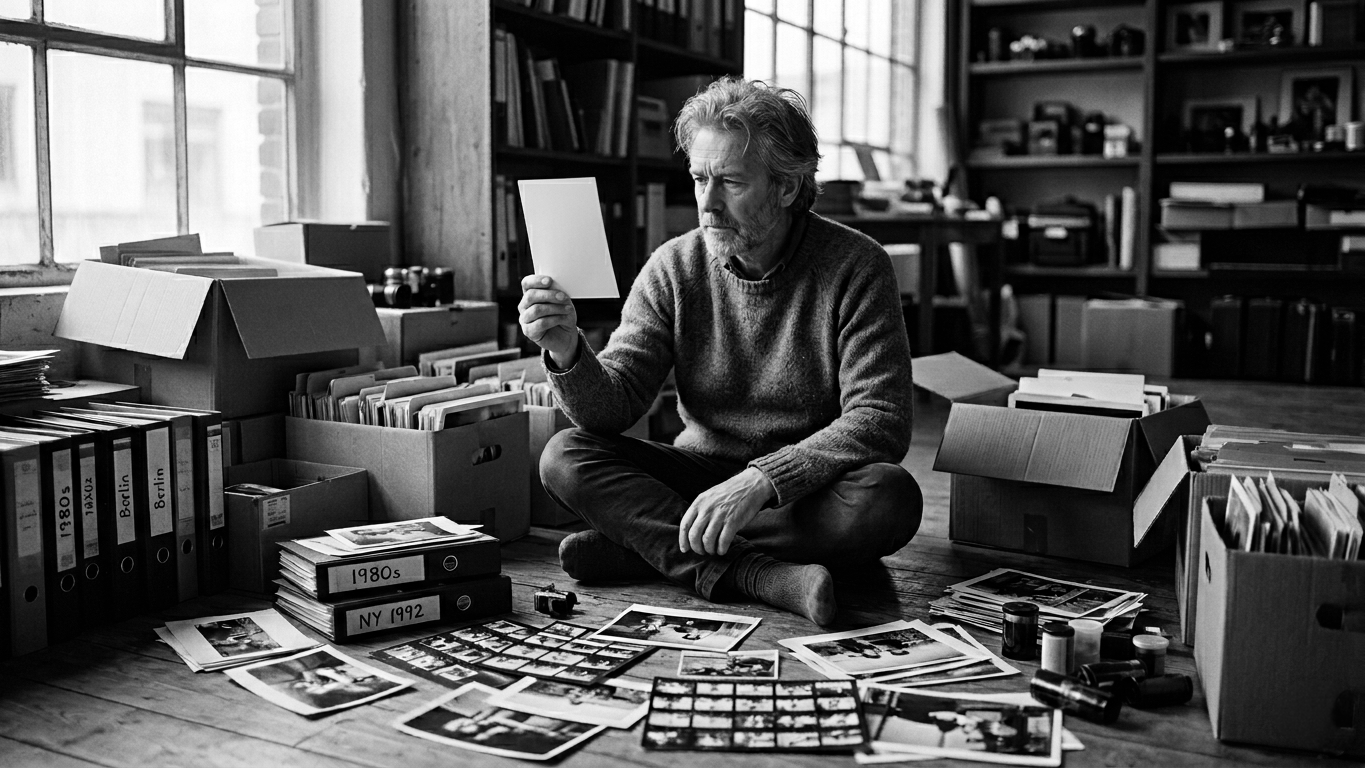
Pull up your earliest serious photographs and your most recent ones and look at them side by side. Not to judge the technical quality. To read the distance between them. What did you care about then that you no longer care about in the same way. What has emerged slowly over years that you did not expect. What does the shift in subject matter, in light, in the mood of the images, tell you about how you have changed as a person.
That gap is not empty. It is full of your life.
We want to hear your story
This is where we want to hand the conversation over to the Collective because this is a story every serious photographer has and almost nobody tells.
How has your photography changed over the years. What subjects pulled you in at the beginning that no longer hold the same power. What subjects have emerged that you did not expect. Has your relationship with light shifted. Has the work gotten quieter or louder or slower or more personal. Is there a moment you can point to where something changed or did it happen so gradually you only noticed looking back.
Share your story in the comments. We genuinely want to know. The arc every photographer travels is one of the least discussed and most interesting things about what it means to take photography seriously over a long period of time. And there is nobody better placed to talk about it than the people in this community who have been doing exactly that.
Ready to see the world differently? The Monochrome Method is a complete video course with lessons and assignments designed to help you craft compelling black and white images and build a portfolio that's unmistakably yours. Start Learning Today.
IF YOU WOULD LIKE TO IMPROVE YOUR BLACK AND WHITE PHOTOGRAPHY TRY THE LESSONS BELOW.




A Beginners Guide To Black And White Photography