
The Day My Hard Drive Died and What It Taught Me
It will not happen to you. Until it does. Here is what I learned the hard way.
I am going to tell you something that photographers know they should do but most of them have not done properly. I know this because I am one of them and it just cost me.
A few weeks ago I was in the middle of building a new backup strategy for my photography archive. I had an external SSD holding my black and white photo library. Not a backup drive. The primary drive. The one with the originals. And then, without warning, without any sign that something was wrong, it corrupted. The drive is currently undergoing a recovery process that may or may not return everything I had on it.
I am telling you this not because I enjoy sharing bad news about myself but because the experience clarified something that all the advice in the world never quite managed to make real for me. Your photographs are more fragile than you think. And the time to understand that is before the drive fails, not after.
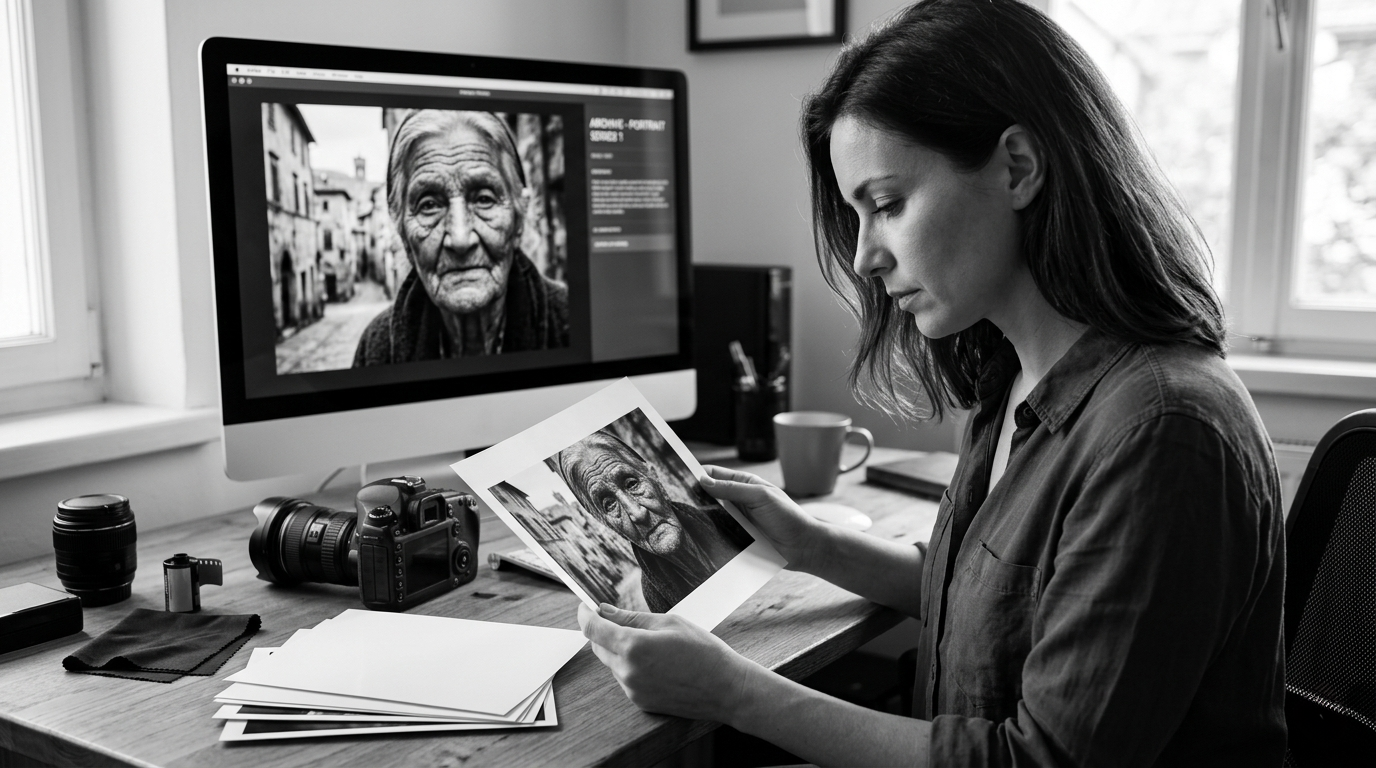
The photograph and the negative
Think about what a photograph actually is. Not the image. The file. In the age of film a photographer's archive was physical. Negatives took up space. You could hold them. You could see them deteriorating if they were stored badly. The threat to them was tangible. Fire. Flood. Fading. Things you could feel and smell and respond to.
A digital file feels permanent because it is invisible. You cannot watch it age. You cannot feel it becoming brittle. It sits on a drive somewhere and the drive hums quietly and you assume it is fine because it has always been fine before. Until one day it is not fine and by then it is too late to do anything except wait and hope that a recovery process gives you back what you thought was safely yours.
Here is the analogy. Imagine you spent years making paintings. Each one took hours. Each one captured something real about your way of seeing the world. You stored them all in a single room. One room. No copies. No photographs of the paintings. Just the originals in one place. And then one day the room floods.
That is what keeping your photographs on a single drive is. One room. No copies. The flood is coming eventually. The only question is whether you have made copies before it arrives.
The 3-2-1 rule
The photographers who lose the least sleep over this kind of thing follow a simple principle called the 3-2-1 rule. Three copies of everything. Two different storage formats. One copy stored offsite.
Three copies because any single copy can fail and any two copies can fail at the same time if they are stored together. Two different formats because different storage technologies fail in different ways, an SSD failure and a hard drive failure and a cloud service outage are different kinds of problems and having your redundancy spread across different formats protects against each of them differently. One offsite copy because fire, flood, and theft tend to affect everything in one physical location at the same time.
In practice this looks something like this. Your working files on your primary drive. A second copy on an external hard drive that lives at home. A third copy in cloud storage that lives somewhere else entirely. None of these individually is enough. All three together give you genuine protection.
What I am doing now
My own situation is a reminder that having a backup strategy in progress is not the same as having a backup strategy in place. I was building the system when the system I was building failed. The lesson is that the time to implement proper redundancy is not when you are thinking about it. It is immediately. Right now. Before the next sentence.
The recovery process for a corrupted SSD is slow, uncertain, and humbling. Software tools can sometimes retrieve files from a corrupted drive but they cannot retrieve everything and they cannot guarantee what they do retrieve is complete. The experience of watching a progress bar tell you that it may or may not be able to recover photographs you spent years making is one I would not wish on any photographer.
What your photographs are actually worth
Here is the thing that the technical discussion of drives and formats and cloud services can obscure. Your photographs are not data. They are time. They are the accumulated hours of every shoot you have ever done, every decision you made in the field, every moment you chose to press the shutter instead of walking past. They are evidence of the way you saw the world at specific moments that will never come again.
You cannot reshoot them. You cannot recreate them. The light that fell across that particular street on that particular morning is gone. The person whose face you caught in that particular moment has moved on. The version of yourself that made those images is also different now. What sits on your drives is irreplaceable in the most literal sense of that word.
Treat it accordingly.
Back up your work today. Not tomorrow. Not when you have finished building the strategy you have been thinking about. Today. An imperfect backup implemented immediately is worth more than a perfect system planned but not yet in place.
I am still waiting to find out how much of my library I get back. Learn from my mistake before you have to learn from your own.
Ready to see the world differently? The Monochrome Method is a complete video course with lessons and assignments designed to help you craft compelling black and white images and build a portfolio that's unmistakably yours. Start Learning Today.
IF YOU WOULD LIKE TO IMPROVE YOUR BLACK AND WHITE PHOTOGRAPHY TRY THE LESSONS BELOW.




















A Beginners Guide To Black And White Photography