
Weekly News Roundup
A dedicated monochrome camera that keeps selling out, Moriyama in Paris, and a film camera that develops itself. A good week.
This week in photography: Panasonic announces a compact 40mm prime, Canon's anniversary G7 X arrives, DaVinci Resolve takes on Lightroom, NASA releases new Artemis II images, the L-Mount Alliance grows, and DxO updates Nik Collection 9.
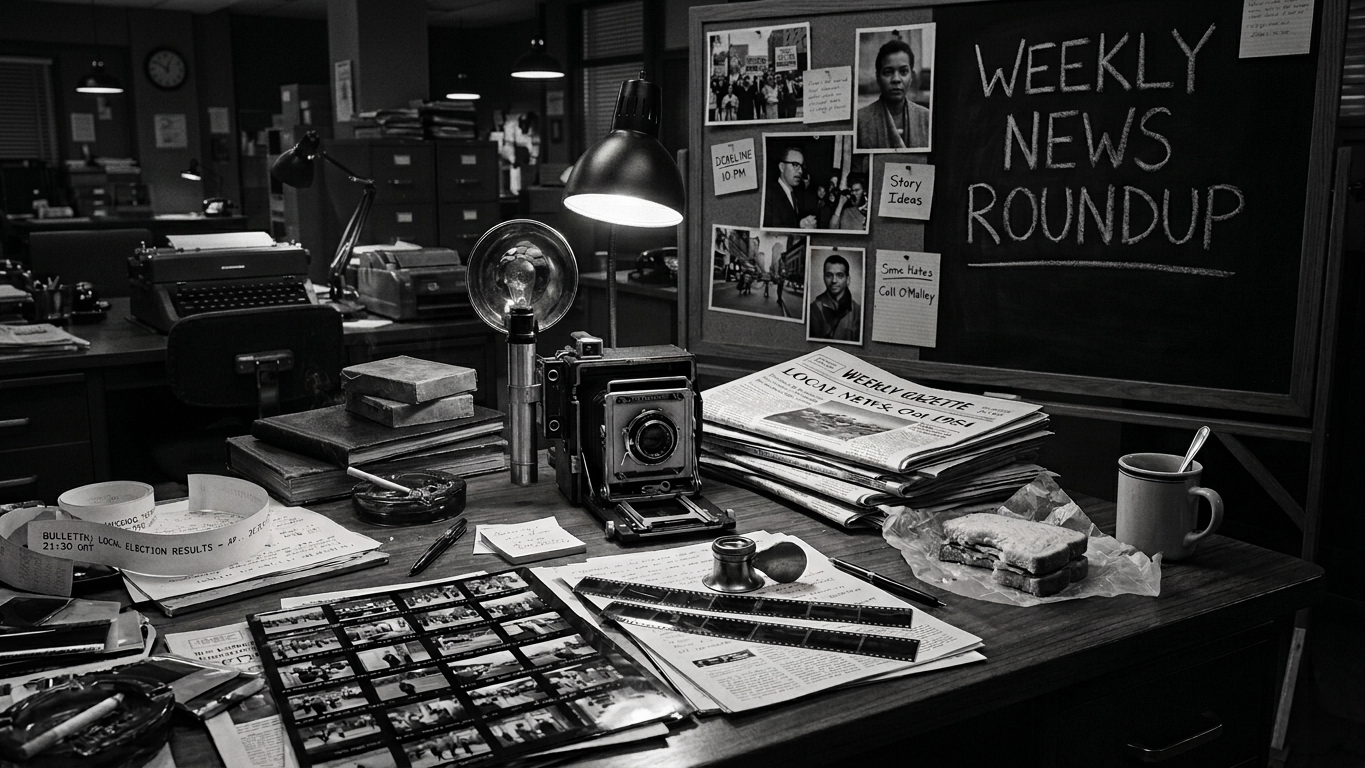
Ricoh GR IV Monochrome: The Camera Built for Us
We do not say this lightly but the Ricoh GR IV Monochrome might be the most relevant piece of camera gear for the Collective since we started writing these roundups.
Most cameras that shoot in black and white are color cameras with the color removed in processing. The GR IV Monochrome is built differently from the ground up. It uses a dedicated monochrome CMOS sensor that eliminates the color filter used to acquire color information as well as the interpolation process required to generate color images, delivering refined rendering and rich tonal gradation. Every pixel captures light directly rather than filtering it through red, green, or blue channels first. The result is more detail, finer grain, and a tonal rendering that color sensor monochrome conversion simply cannot match. Digital Photography Review
The camera is based on the GR IV body which means it is compact, fast, and pocketable. It comes with a built-in red filter that can be applied to deepen skies and add drama to architectural and landscape work. The dedicated monochrome Image Control options give you a range of tonal expressions without touching a computer. It is priced at $2,199 which is not cheap but it is significantly less than the Leica Q3 Monochrom which occupies similar conceptual territory.
The catch is getting one. The camera sold out almost immediately on release in January and has been difficult to find in stock consistently since. If you have been watching it and waiting for stock to stabilize now is a good time to check again. B&H and WEX Photo are the places to watch.
Daido Moriyama Opens in Paris
This is the exhibition worth planning a trip around if you are anywhere near Europe this summer. Declarations to Photography opens May 20 at the Henri Cartier-Bresson Foundation in Paris and runs through October 4.
The show centers on Moriyama's French connection which began with his 2008 pilgrimage to Chalon-sur-Saône, the birthplace of Nicéphore Niépce, the inventor of photography. Moriyama has maintained a deep relationship with the earliest surviving photograph, the famous View from the Window at Le Gras, and the exhibition unfolds as what has been described as a love letter to the medium of photography itself. His books and magazine contributions will feature prominently and his writings on photography will be translated into French for the first time. Dave Herring
For photographers in this community who have been influenced by Moriyama's grainy high contrast street work this is as close to a pilgrimage as the photography calendar offers this year. The Henri Cartier-Bresson Foundation is one of the best photography venues in the world and the combination of location and subject makes this genuinely unmissable.
Alfie Cameras Is Building a Film Camera That Develops Itself
This is the most genuinely novel film photography product we have come across in years. A British startup called Alfie Cameras is launching the Alfie Boxx in the next few weeks. The camera is described as an all-in-one analog experience that allows photographers to capture and develop photographs right inside the camera itself without a separate darkroom or developing kit.
The details of exactly how the development process works inside the camera are still emerging ahead of the launch. But the concept is remarkable. Instant film has existed for decades of course but the Alfie Boxx appears to be doing something more closely aligned with traditional photographic processes rather than the Polaroid or Instax model. We will have more on this as the launch details come through. Worth watching.
Photo London Opens This Month
Photo London opens in May at Somerset House. Somerset House is doing a lot of heavy lifting as a photography venue right now and if you are in London this month there is a strong argument for making the trip specifically around photography.
Photo London is one of the most significant fine art photography fairs in the world, bringing together leading galleries presenting work across vintage, modern, and contemporary photography. For photographers interested in how the market values work, what serious collectors are buying, and what galleries are championing right now it is one of the most useful events of the year to follow even if you cannot attend in person. Coverage from the fair floor will start appearing over the coming days.
Ricoh Celebrates 30 Years of the GR
October 2026 marks 30 years since the original Ricoh GR1 film camera launched in 1996. Ricoh has announced a Forever a Snapshooter anniversary campaign running throughout the year to celebrate the milestone.
Thirty years is a remarkable run for any camera line. The GR series began as a premium film compact and has evolved continuously through the digital era without ever losing its essential character. Compact. Fast. Pocketable. Uncompromising about image quality. The camera that serious photographers actually carry rather than the one they leave at home because it is too heavy or too conspicuous.
The GR has a following among street photographers that borders on devotion and it is earned. Daido Moriyama shoots with it. It has been the default compact of serious photographers for three decades. The 30th anniversary is worth acknowledging and the timing alongside the GR IV Monochrome makes this a significant year for the brand.
May Is a Great Month to Shoot the Night Sky
If you have been meaning to try astrophotography and never quite got around to it May is one of the better months to start. Two full moons bracket the month. The Flower Moon rises May 1 and a Blue Moon closes out the month at the end of May. In between the Eta Aquariid meteor shower peaks on the night of May 5 to 6 with an expected rate of 10 to 20 shooting stars per hour.
The practical setup for a meteor shower is simpler than most people think. A wide angle lens, a tripod, a dark location away from city light, and an intervalometer to take continuous exposures automatically over several hours. Set your aperture to f/2.8 or wider, ISO between 800 and 3200, and exposures of 20 to 30 seconds. Point toward the southeast and let the camera run. You will not capture every meteor but over several hours of continuous shooting you will capture some.
The last good dark sky window before summer arrives is also coming up. As the June solstice approaches the nights get shorter and the sky never fully darkens at mid-northern latitudes. If you want to shoot the Milky Way this spring the window is closing. May is the time.
Ready to see the world differently? The Monochrome Method is a complete video course with lessons and assignments designed to help you craft compelling black and white images and build a portfolio that's unmistakably yours. Start Learning Today.
IF YOU WOULD LIKE TO IMPROVE YOUR BLACK AND WHITE PHOTOGRAPHY TRY THE LESSONS BELOW.




A Beginners Guide To Black And White Photography