
Wabi Sabi and the Beauty of the Imperfect Photograph
A Japanese philosophy that has been around for centuries might be the most useful idea in photography right now.
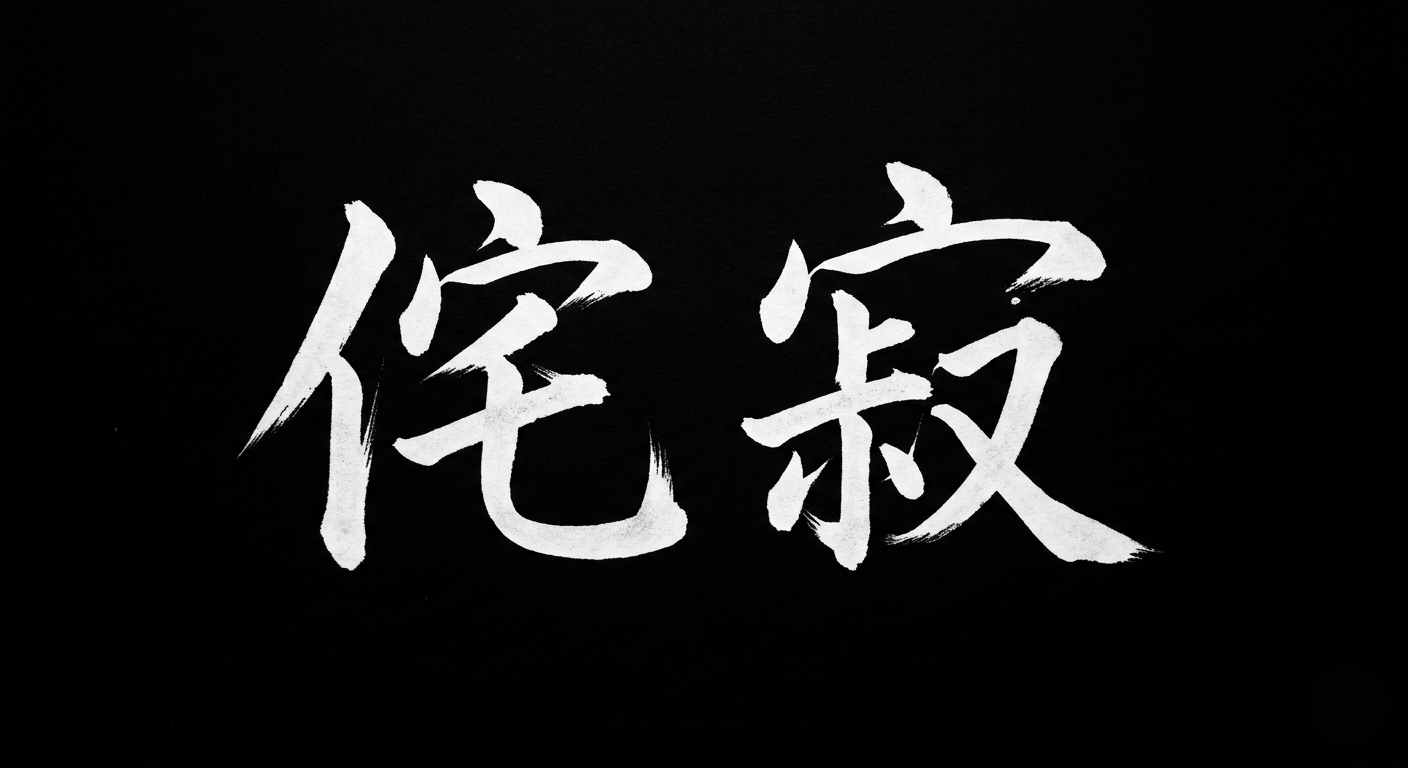
There is a Japanese philosophy called wabi sabi. It has been around for centuries and it comes from Zen Buddhism. It does not translate neatly into English which is part of why it tends to get misunderstood in the West as a design aesthetic rather than what it actually is, which is a way of seeing the world.
The simplest version of it is this. Wabi sabi finds beauty in things that are imperfect, incomplete, and impermanent. Not despite those qualities. Because of them.
The cracked glaze on an old tea bowl. The moss growing on a stone wall. A weathered wooden door with peeling paint. A face lined by decades of living. A rusted hinge on a garden gate. These are wabi sabi things. Their beauty is inseparable from their age, their wear, their imperfection. A brand new version of any of them would be less interesting. The cracks and the wear and the passage of time are not flaws to be corrected. They are the whole point.
The word combines two older ideas. Wabi originally described the beauty found in simplicity and rusticity, a kind of humble, undecorated quality that valued the essential over the decorative. Sabi described the beauty that comes specifically with age and time, the patina, the weathering, the way things become more themselves as the years pass. Together they form a single idea that sits underneath a great deal of Japanese art, architecture, and culture without always being named.
The analogy
Think about two cups. The first is a mass produced mug, perfectly symmetrical, glazed in a uniform color, identical to ten thousand others made in the same factory. It is technically flawless. The second is a handmade ceramic cup, slightly uneven, with a glaze that pooled differently on one side, a small mark where the potter's thumb rested while shaping it, a faint crack that was repaired with gold in the Japanese tradition called kintsugi. The repair is visible. The imperfection is visible. The evidence of making and use and time is visible.
Which cup is more interesting to look at? Which one would you rather hold? Which one has a story?
That is wabi sabi. The second cup is more beautiful not in spite of its imperfections but because of them. They are evidence that the cup is real, that it was made by a human being, that it has been somewhere and done something. The perfection of the first cup is actually a kind of emptiness.
What this has to do with photography
Most of the conversations we have about photography are conversations about perfection. Sharp focus. Clean exposure. Technically correct images. Noise reduction. The pursuit of a flawless result. All of that is understandable and some of it matters. But it is also in direct tension with the thing that actually makes photographs worth looking at, which is the sense that they are real.
Wabi sabi pushes back against the perfection obsession in a way that is useful for any photographer to sit with. It says that the grain in a high ISO image is not noise to be eliminated. It is evidence of a real moment made in real light by a real person. It says that the slight blur in a frame that almost missed focus might contain something the sharp version does not. It says that the photograph of a weathered face is more interesting than the photograph of a smooth one precisely because the lines and the wear tell a story that smoothness cannot.
It does not say that technical skill does not matter. It says that technical perfection is not the goal. The goal is an image that is true. And true things are almost never perfect.
Why black and white is the natural home of wabi-sabi
Color photography tends toward surface. It gives you immediate information about the appearance of things. Warmth and coolness. Saturation and richness. The visual world presented with its full decorative appeal intact.
Black and white strips all of that away. What remains is form, texture, light, shadow, and time. Those are exactly the elements that wabi-sabi cares about. The texture of an old wall. The way light falls across a worn surface. The shadow that reveals the depth and irregularity of something aged. Black and white does not just accommodate the wabi-sabi aesthetic. It amplifies it.
A cracked wall in color is a cracked wall. The same wall in black and white becomes something more abstract and more resonant. The crack is no longer a feature among many features. It is a graphic element, a line, a shadow, a form. The imperfection becomes the subject.
This is why so much of the photography that has lasted, that we still look at decades after it was made, is black and white photography of ordinary and imperfect things. Daido Moriyama's grainy Tokyo streets. Michael Kenna's long exposure landscapes stripped to their essential forms. Vivian Maier's observations of unremarkable moments on unremarkable days. These photographers were not looking for the spectacular. They were looking for the true. And wabi-sabi is a philosophy built around finding truth in the ordinary and the imperfect.
How to apply this to your own work
The practical application of wabi-sabi to photography starts with what you choose to photograph. Look for the aged, the worn, the irregular. The things that show their history. The surfaces that have been somewhere and done something. Not the new and the pristine. The old and the real.
Then look at how you edit. Before you reach for the noise reduction slider ask whether the grain is actually hurting the image or whether it is contributing something. Before you smooth every surface and sharpen every edge ask whether the imperfection you are removing is part of what makes the image honest. Not every imperfection is worth keeping. But some of them are the best thing in the frame and we remove them out of habit rather than judgment.
Then think about what you photograph. A wabi sabi sensibility in street and documentary photography means paying attention to the moments that are not dramatic or spectacular. The quiet accumulation of small true things. The person waiting. The empty space after someone has left. The ordinary scene that contains something if you look long enough. These are not easy photographs to make. They require patience and a willingness to find something in what others walk past.
Wabi sabi is not a technique. You cannot apply it as a preset or a filter. It is a shift in what you value when you look at the world and when you look at your own work. Once that shift happens it is very difficult to unsee. The perfect begins to look empty. The imperfect begins to look real.
And real is what photography is for…
Ready to see the world differently? The Monochrome Method is a complete video course with lessons and assignments designed to help you craft compelling black and white images and build a portfolio that's unmistakably yours. Start Learning Today.
IF YOU WOULD LIKE TO IMPROVE YOUR BLACK AND WHITE PHOTOGRAPHY TRY THE LESSONS BELOW.









A Beginners Guide To Black And White Photography