
The Real Gift of Modern Camera Technology Is a More Present Photographer
The camera handles the technical work. You get to actually be there.
There is a particular kind of conversation that only happens on a long familiar walk. Not a walk with a destination and a schedule. A walk on a route you know so well your feet handle it without instruction. Your body moves and your mind is free. The person walking beside you gets your full attention. You talk about things that matter. You notice the light on the buildings and the way the season is changing in the trees. You are completely present in the walk because the walk requires nothing from you consciously.
Now think about navigating somewhere new on foot with a map you are reading as you go. You are there physically. But you are not present. Part of you is always one step ahead, checking the next turn, counting the blocks, managing the route. The person beside you is getting a fraction of your attention. The light on the buildings is not something you notice because your mind is occupied with not getting lost.
The walk is the same length. The same streets. The same companion. The experience is completely different because of where your attention is.
That is what modern camera technology has done for photographers. It has turned an unfamiliar route into a familiar one. And in doing so it has given the photographer back to the moment they are trying to capture.
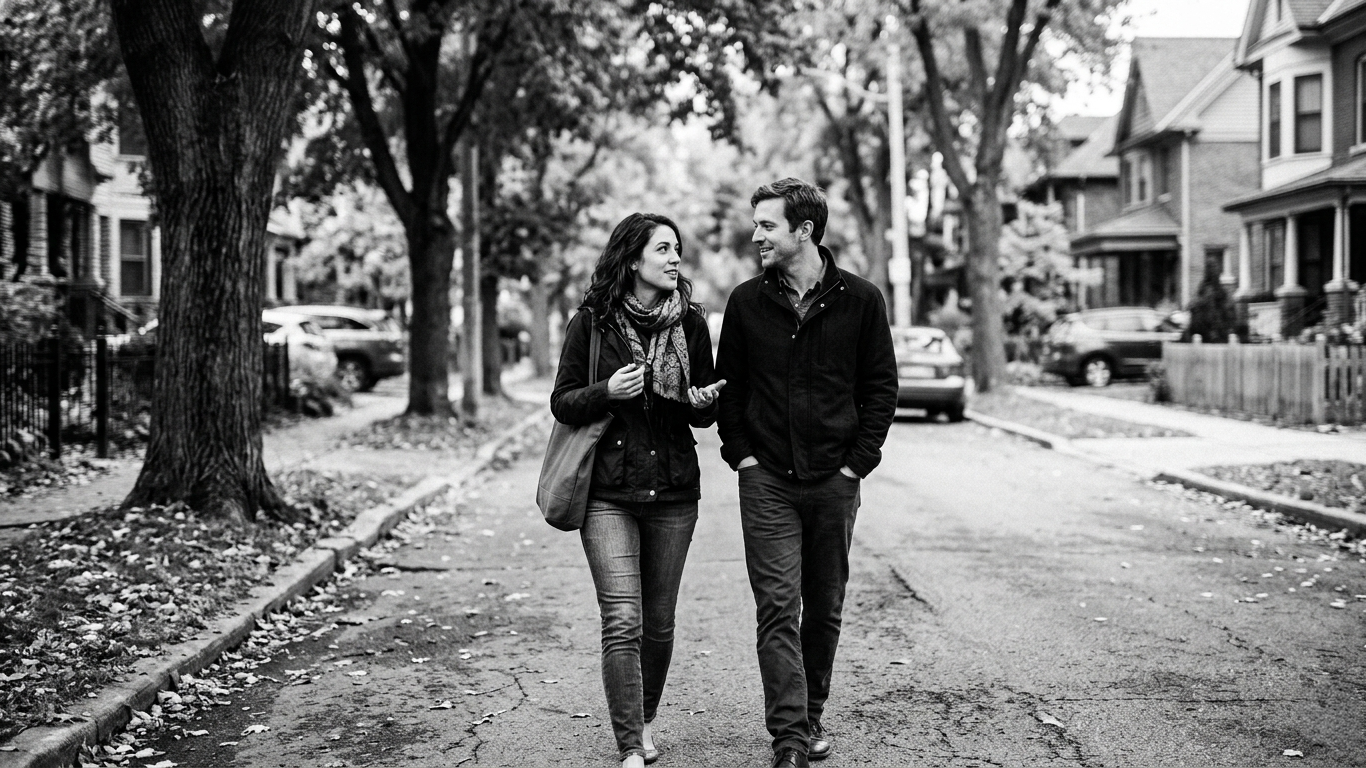
Where the attention was going
Photography used to divide your attention relentlessly. One part of your mind was tracking focus. Another was reading the light and managing exposure. Another was compensating for camera movement. Another was calculating depth of field. Another was monitoring whether the settings you had chosen five minutes ago were still right for the scene in front of you now.
All of that was happening simultaneously with the part of your mind that was supposed to be seeing. Noticing the expression forming on a face. Reading the geometry of the scene. Feeling the moment building toward something worth capturing. Watching the light change and understanding what it was doing to the world in front of you.
The technical demands and the creative demands were competing for the same limited resource. Your attention. And attention is not infinitely divisible. Every fraction you gave to managing the camera was a fraction you did not give to being present in the scene.
Autofocus did not just find focus faster. It returned the portion of your attention that finding focus was consuming. Auto exposure did not just get the right exposure more reliably. It gave back the cognitive space that calculating exposure was occupying. Image stabilization did not just reduce blur. It removed a layer of physical tension from the act of shooting that you probably did not even notice was there until it was gone.
The camera took the unfamiliar route and made it familiar. And your mind came back to the walk.
What presence actually means
Being present in a scene is not a passive state. It is not standing somewhere and waiting for something to happen. It is an active quality of attention that changes what you see and when you see it.
A photographer who is fully present in a scene notices the light shifting three seconds before the moment arrives. They feel the energy of a crowd changing before it becomes visible. They read the body language of a subject and know when something genuine is about to surface. They see the relationship between two elements in the frame that were unrelated a moment ago and are now in conversation. They recognize the decisive moment not because they were lucky but because their full attention was on the scene long enough to see it forming.
None of this is available to a photographer whose attention is split. You cannot feel the moment building if part of your brain is monitoring the focus. You cannot read the light if part of your mind is managing the exposure. The technical demands do not just slow you down. They pull you out of the scene at exactly the moments when being in the scene matters most.
The musician who knows the piece
A musician performing a piece they are still learning plays it correctly most of the time. The notes are right. The timing is close. But something is missing and anyone listening can feel it. The musician is inside the technical problem. Their attention is on the next passage, the difficult transition, the section they have not yet fully internalized. They are managing the music rather than playing it.
The same musician performing a piece they know completely is somewhere else entirely. The technical execution is handled by muscle memory and the conscious mind is free. Free to listen to the other musicians. Free to respond to the room. Free to feel the music rather than just produce it. The performance has a quality that the technically correct but internally occupied performance never had. Not because the notes are more accurate but because the musician is actually there.
That quality is presence. And it is the difference between a photograph that records a moment and one that was made inside it.
The camera learning to handle focus and exposure is the musician internalizing the piece. The technical problem does not disappear. It moves. From your conscious attention into the camera's automated systems. And your conscious attention comes back to where it belongs. On the scene. On the light. On the story. On the moment that is forming in front of you right now if you are actually there to see it.
What to do with the presence
The freedom the technology gives you is only useful if you spend it on something worth spending it on. Here is what that looks like in practice.
Slow down. The technology enables faster shooting but the best use of it is often to shoot more slowly and more deliberately. Use the attention you have been given back to stand in a place longer. To watch. To wait for the moment that is actually right rather than capturing everything and deciding later.
Look at the whole frame. Not just the subject in the center but the edges, the corners, the background, the relationship between every element in the scene. With the technical demands handled you have the bandwidth to ask what everything in this frame is doing and whether it is earning its place.
Let the light lead. Before you think about the subject think about the light. Move toward it. Wait for something worth photographing to enter it. The camera's ability to handle exposure reliably means you can work in light that used to be technically difficult and concentrate entirely on what the light is saying rather than whether the camera can capture it.
Feel the moment building. This is the thing that presence makes possible that nothing else does. The decisive moment is not a moment you catch. It is a moment you feel arriving if you are paying close enough attention. That feeling is only available to a photographer who is actually in the scene rather than managing the equipment.
The real gift
We talk about autofocus as a feature that gets sharper images. Auto exposure as a feature that reduces blown highlights. Image stabilization as a feature that lets you shoot handheld in low light. All of that is true and all of it is also beside the point.
The real gift is the walk you can finally have. The conversation with the person beside you. The light on the buildings you can finally notice. The moment you are finally inside rather than watching from behind a wall of technical decisions.
The camera handles the route now. You get to actually be there.
Use it.
The anxiety is not a sign of failure
The photographers who struggle most with the anxiety around originality are usually the ones who care most about their work. People who do not care about photography do not lie awake wondering whether their images are sufficiently original. The anxiety is evidence of seriousness not inadequacy.
But it is worth examining the belief underneath the anxiety because that belief is doing real damage. It is stopping photographers from making work, from sharing work, from developing frameworks and ideas and approaches that are genuinely theirs even if the raw materials are familiar. It is creating a standard that almost no photographer in history has actually met and then using that impossible standard to measure ordinary creative practice against.
Boden's insight is that the personally new is not a lesser version of the historically new. It is where all creative work begins. The photograph that is genuinely yours, made from your specific encounter with the world in a way that reflects your particular way of seeing, is a creative act regardless of how many photographs of similar subjects exist in the world.
Go make the work. It does not have to be new to the world. It has to be new to you. That is enough. That has always been enough.
Ready to see the world differently? The Monochrome Method is a complete video course with lessons and assignments designed to help you craft compelling black and white images and build a portfolio that's unmistakably yours. Start Learning Today.
IF YOU WOULD LIKE TO IMPROVE YOUR BLACK AND WHITE PHOTOGRAPHY TRY THE LESSONS BELOW.




A Beginners Guide To Black And White Photography