
A Photo Story: Dancing With Bears
In the mountains of Romanian Moldavia, an ancient ritual older than Christianity still beats with the pulse of the living. Armin went to photograph it and came home a different person.
Every December, in the villages of Romanian Moldavia, something ancient wakes up.
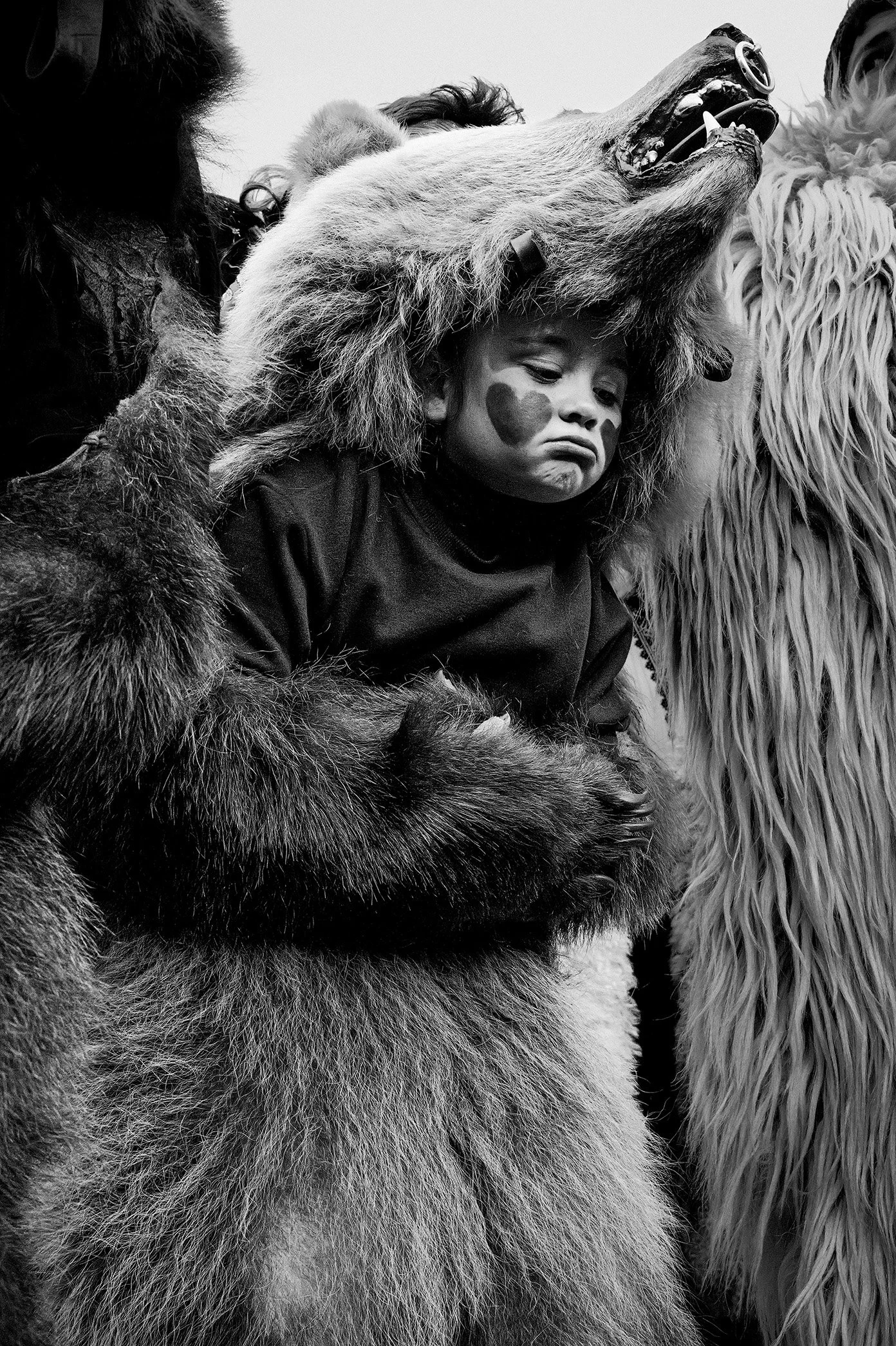
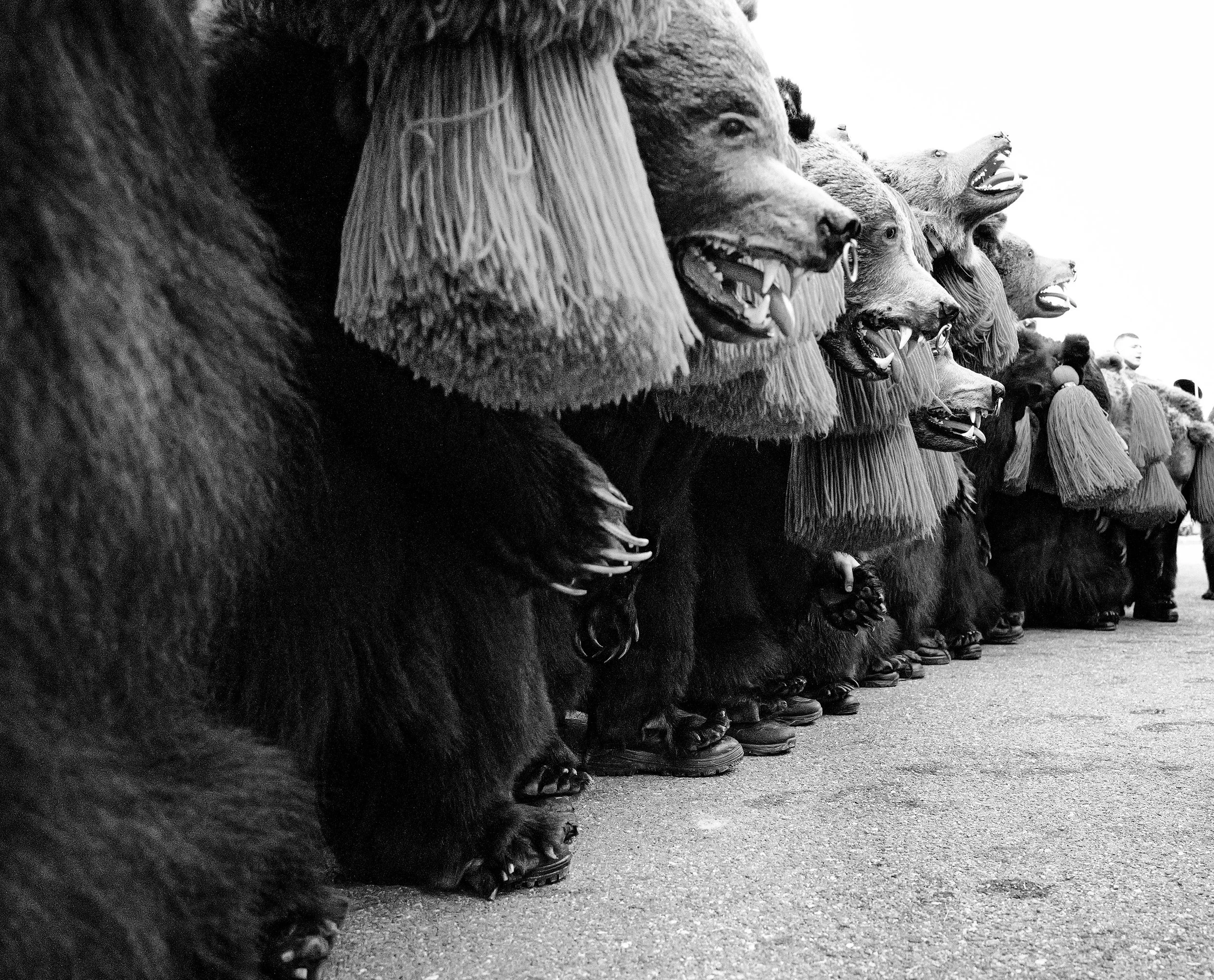
Men, women, boys and girls wrap themselves in real bear skins, some weighing more than thirty kilograms, and take to the streets. Drummers beat a rhythm that has not changed in centuries. Handlers guide the bears from house to house, through courtyards and town centers, the heavy pelts swaying, the drums pounding, the breath of the dancers rising in clouds in the freezing winter air. The Bear Dance Festival is a pre Christian ritual of purification and rebirth, older than the churches that now stand in the same villages, older than almost any tradition still practiced on the continent. It is not folklore performed for tourists. It is a defiant, living act of cultural memory carried in the bodies of three generations.
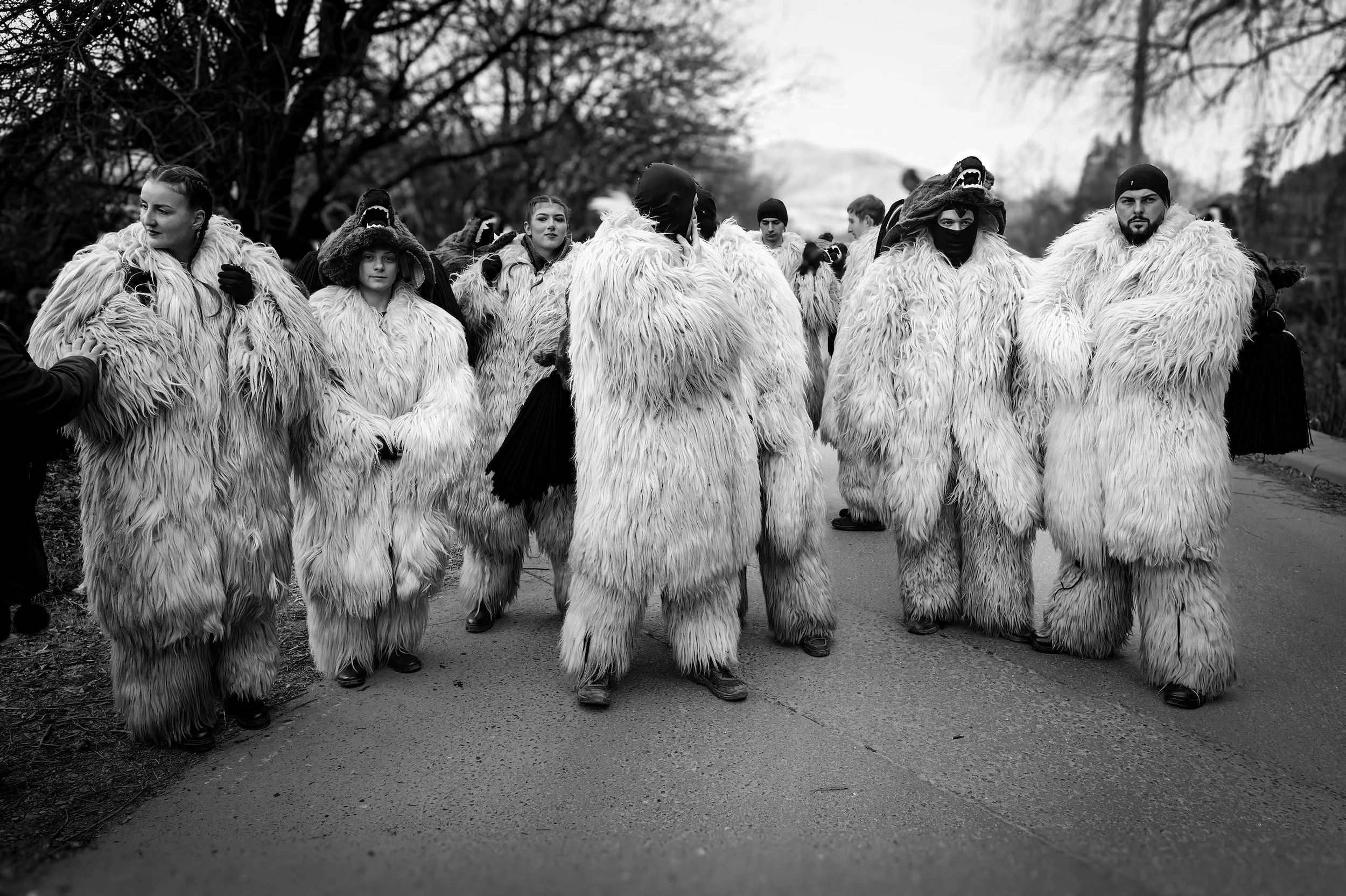
Armin is a photographer based in Nuremberg, Germany. He travels the world looking for what he calls the unfiltered reality of the human spirit, the grit and sweat and raw truth of real life. He has documented fishermen in the docks of Muara Angke, ancient tribes in the South Omo Valley, the daily life of Dharavi in Mumbai. He is not interested in clean or staged photography. He goes toward the difficult thing and stays there until something true comes through.
He came to Romanian Moldavia because of the bears. He left because of something he did not expect to find.
Armin left Romania at fifteen years old. He grew up in Germany. For decades his connection to his roots had faded quietly, the way things fade when you are busy living somewhere else. He went to Moldavia as a photographer fascinated by archaic customs. He did not go as a Romanian. But the drums had other ideas.
"As I immersed myself in the shoot, my original language and a long buried sense of identity suddenly came rushing back to me through the rhythm of the drums," he says.
The homecoming was not planned. It arrived unbidden through the sound of drumbeats in a freezing courtyard in a village he had never visited, in a language he thought he had left behind.
Into the Ritual
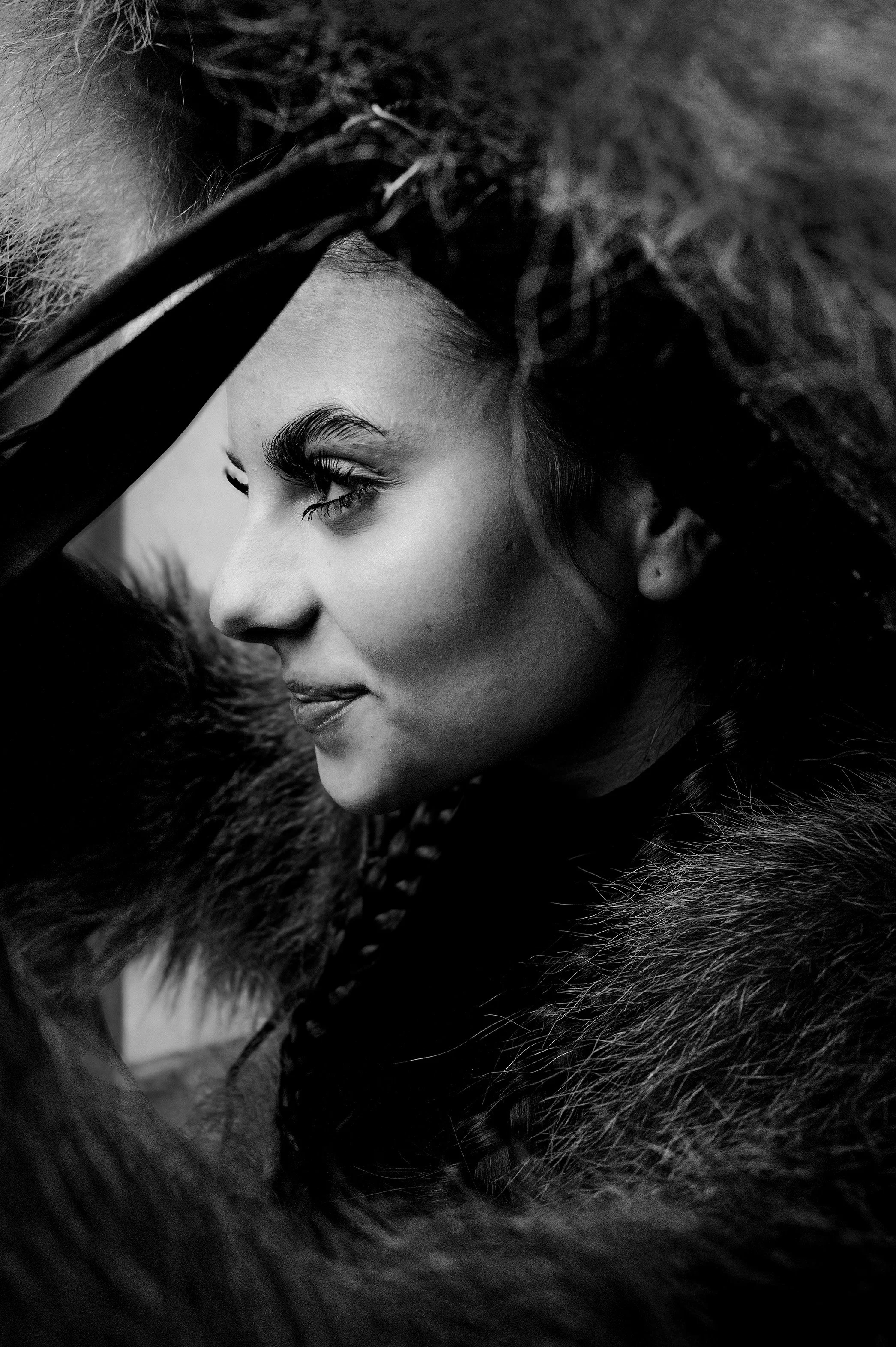
Access to the Bear Dance is not easily given to outsiders. Armin was there with Ovidiu Șelaru, an internatinal photographer with local roots, whose deep connections to the community made the difference between being permitted to observe from a distance and being welcomed into the private spaces where the ritual actually lives.
What he found in those spaces was not performance. It was preparation. Families in their backyards handling the bear skins with the care of people who understand exactly what they are holding. Grandparents and children side by side, three generations carrying the same legacy forward with a fierce and quiet pride. Armin spent hours in their homes before the procession began, earning the kind of trust that cannot be hurried and cannot be faked.
"The families welcomed me into their private spaces. I spent hours in their homes and yards, which allowed me to capture honest, unguarded expressions and the quiet moments of preparation that a typical observer would never be allowed to see."
By the time the bears took to the streets Armin was no longer an outside observer. He had moved with the group through every stage of the day, from the private rituals of preparation to the final public march, close enough that by the end he was, as he puts it, vibrating with the same trance like rhythm as the dancers themselves.
The Weight of the Fur
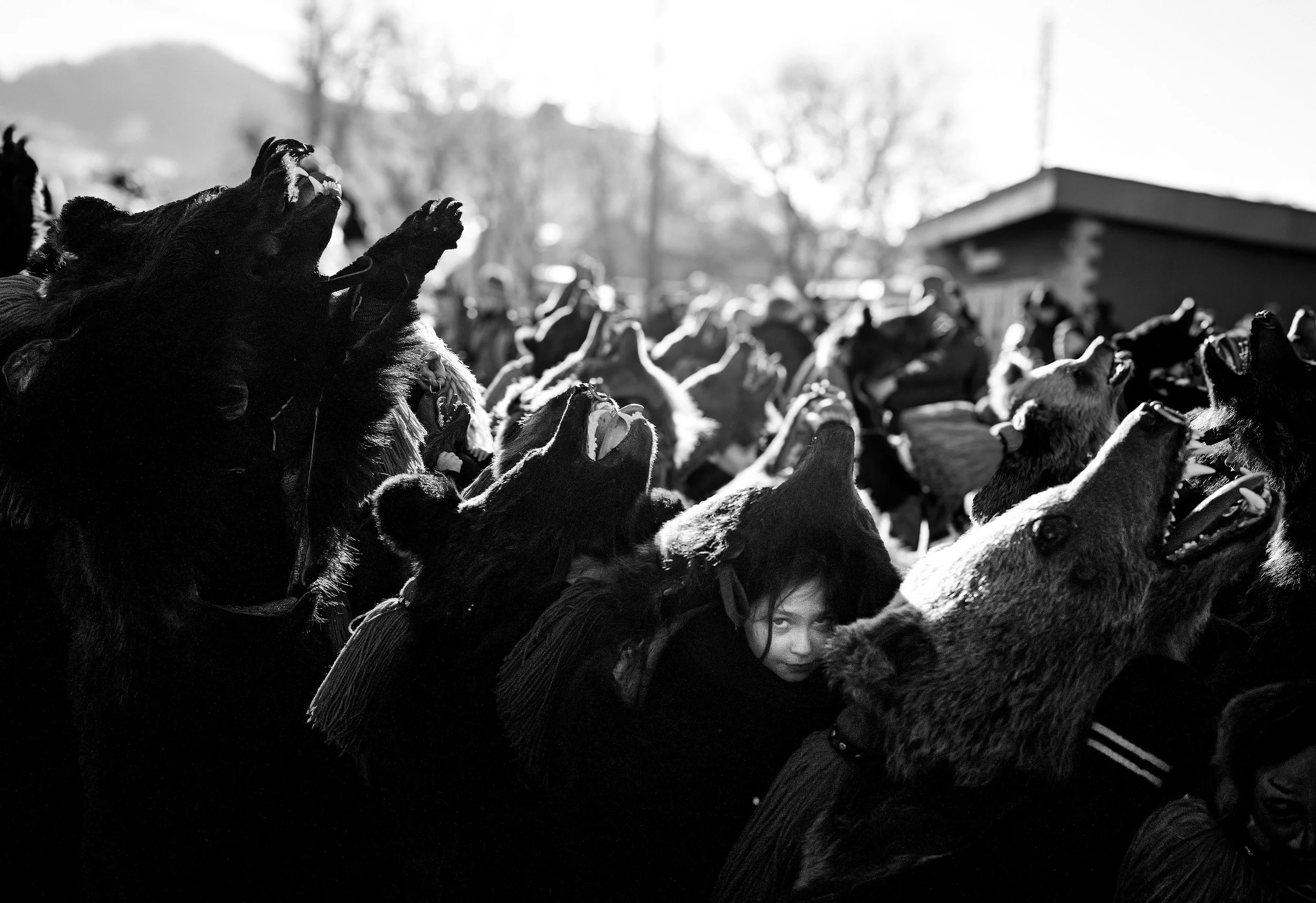
The physical reality of the Bear Dance is difficult to convey in words. The suits weigh more than thirty kilograms. The dancers wear them for an entire day, moving constantly, in freezing temperatures, driven by the relentless pulse of the drums. Armin followed them through all of it.
"The greatest challenge was the physical endurance required to follow the group and stay in the thick of the action for a full, grueling day. It was exhausting just to keep up with the bears in the freezing cold."
He pauses on what he witnessed.
"Witnessing the dancers, I found it almost impossible to imagine the mental and physical strength it took to stay inside those heavy, suffocating furs for an entire day while constantly moving."
He shot with a Leica Q3, a choice that was less about aesthetics than survival. In those conditions, among moving bodies in tight spaces, in the cold and the chaos, a compact camera that responds instantly was not a preference. It was the only way to stay in the action without the action leaving him behind.
Why Black and White
The choice to photograph the Bear Dance in monochrome was deliberate and considered. Color, Armin felt, would have pulled the images toward the present. It would have made them contemporary. What he wanted was the opposite.
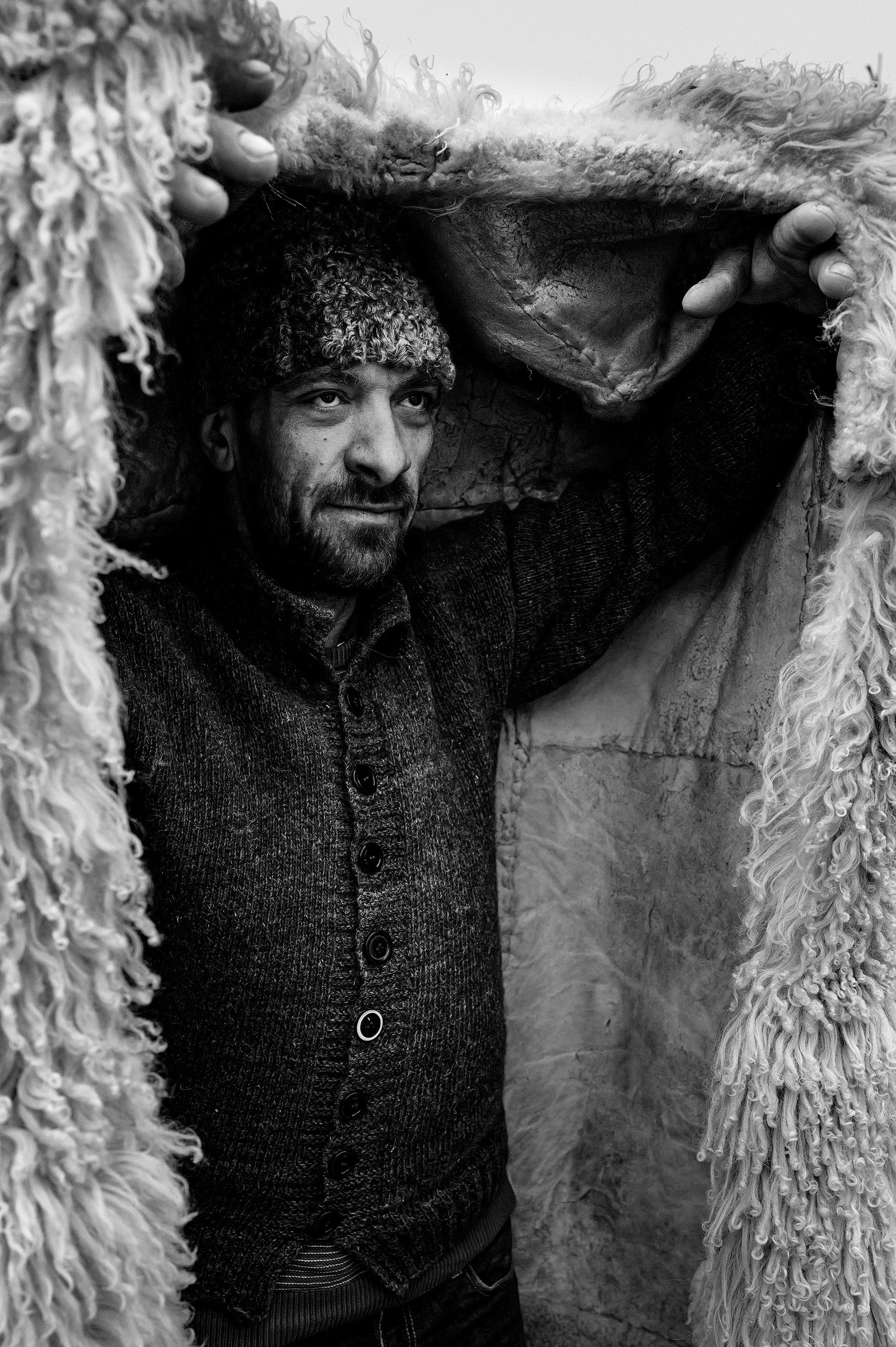
"Black and white was a deliberate choice to strip away the modern world and focus on the aesthetics of resistance. It emphasizes the raw, tactile textures. The thirty plus kilogram bear pelts. The sweat of exhaustion on the dancers' faces. The harsh, biting winter light of the Carpathians."
In black and white the images step out of time. The matted fur, the painted masks, the drum driven procession through streets that have seen this same ritual for hundreds of years, all of it lands differently when color is removed. You are not looking at something that is happening now. You are looking at something that has always been happening. The distinction matters.
The People
They are, in Armin's telling, incredibly resilient and proud. Three generations, grandparents and parents and children, all carrying on a legacy that asks a great deal of them and gives back something that cannot be measured in the ordinary currency of modern life.
"This isn't just folklore for tourists," he says. "It is a defiant preservation of their ancestral soul."
That phrase stays with you. Defiant preservation. In a world that flattens difference and smooths tradition into something palatable and shareable, the Bear Dance of Romanian Moldavia refuses. It remains heavy and loud and demanding and strange. It asks the people who carry it to carry it literally, in real fur, in real cold, to the sound of real drums, year after year after year.
What the Drums Gave Back
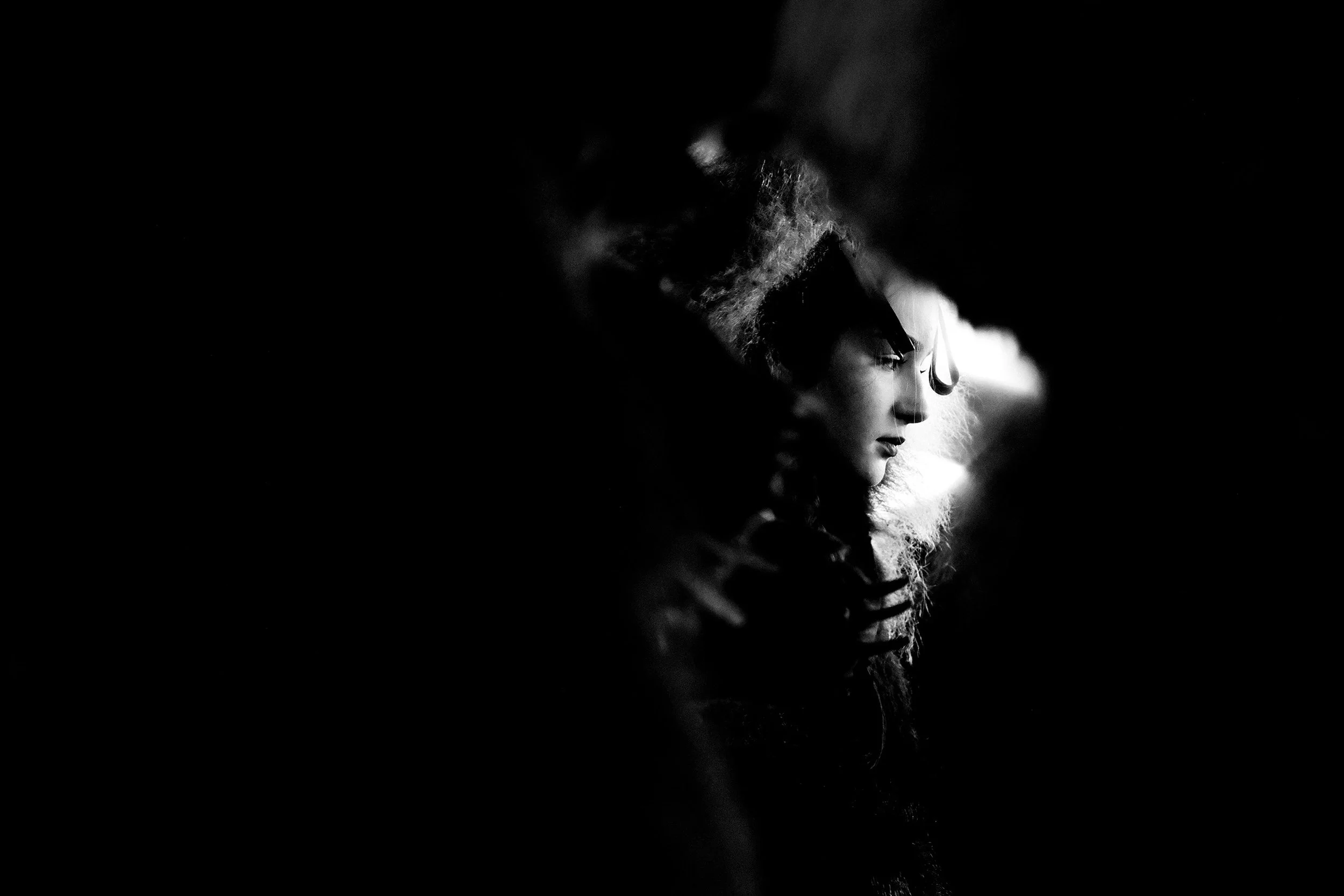
The sensory memory of the shoot stays with Armin. The bone shaking vibration of the drums felt in the chest rather than heard with the ears. The smell of old fur and woodsmoke in the freezing air. The faces of the dancers in transformation, no longer quite the people they were before they put on the skins.
And underneath all of it, the most unexpected gift of the entire experience. His language returning to him. Romanian rising up through years of disuse, called back by drums and cold air and the faces of people carrying something ancient and unbroken.
He went to Moldavia to document a tradition. He came back with something of his own.
You can check out more of Armins work on foto @sarmin007 or on his website.
Armin is a world traveling photographer and storyteller based in Nuremberg, Germany. Driven by a deep fascination with unfiltered human experience, his work takes him to the edges of the world in search of the grit, the sweat, and the raw truth of real life. From the fishing docks of Indonesia to the tribes of the South Omo Valley to the streets of Mumbai, he looks always for the extraordinary beauty found in the unpolished reality of the human spirit.
Ready to see the world differently? The Monochrome Method is a complete video course with lessons and assignments designed to help you craft compelling black and white images and build a portfolio that's unmistakably yours. Start Learning Today.
IF YOU WOULD LIKE TO IMPROVE YOUR BLACK AND WHITE PHOTOGRAPHY TRY THE LESSONS BELOW.







A Beginners Guide To Black And White Photography