
How Project Photography Can Elevate Your Work
A single strong photograph is wonderful. A body of work that says something together is a different thing entirely.
Most photographers shoot reactively. Something interesting appears in front of them and they respond to it. The quality of light on a particular morning. A face in a crowd. A scene that presents itself unexpectedly on a street they happened to be walking down. This kind of shooting produces individual images, some strong, some not, but rarely a body of work with genuine coherence or depth. It is photography as collection rather than photography as statement.
Project photography is the opposite approach. You choose a subject, a question, a theme, or a place deliberately. You return to it over time. The project gives the shooting a frame and that frame changes what you see, how you edit, and ultimately what kind of photographer you become.
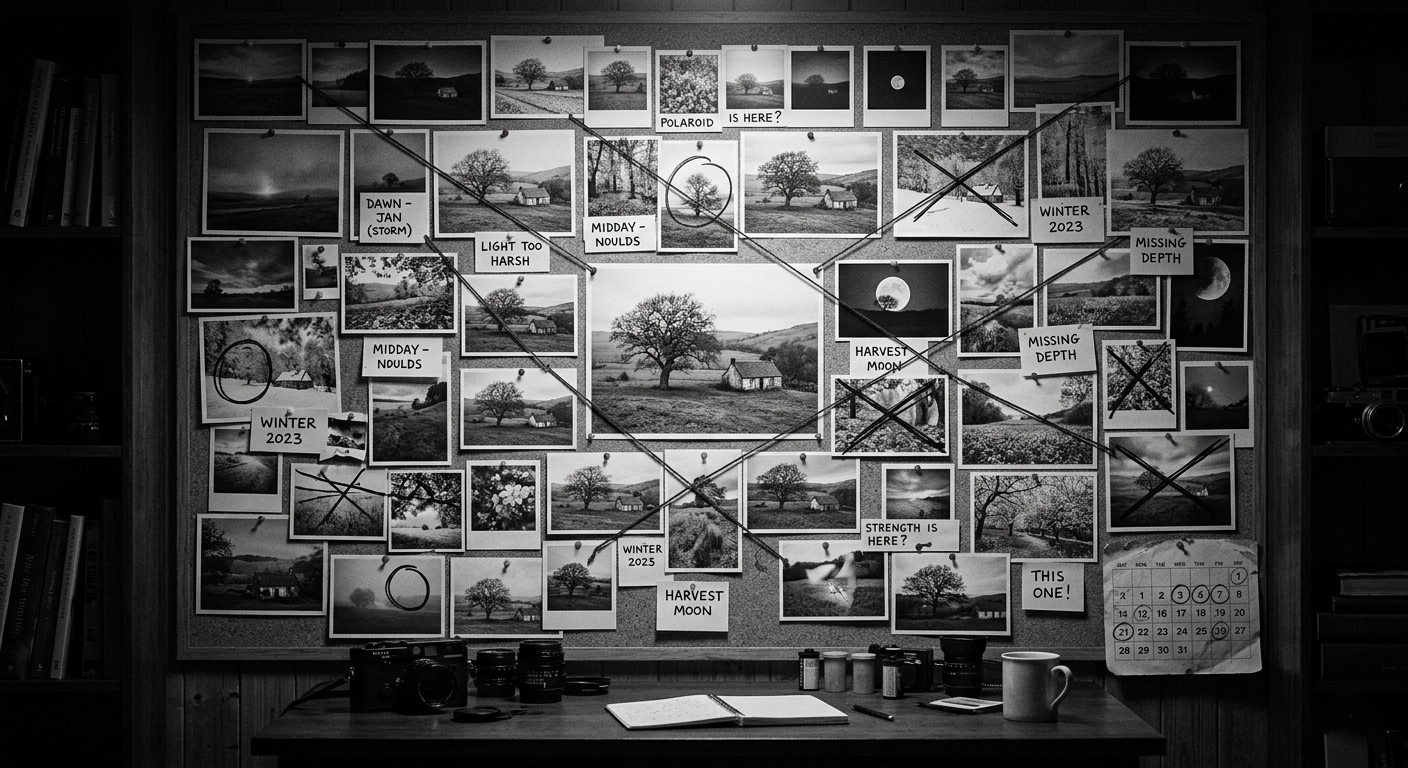
Commitment produces depth
The most immediate effect of committing to a project is what happens to your attention. When you return to the same subject repeatedly you start to see things that were invisible on the first visit. The second time you go you notice what you missed. The fifth time you understand something about the subject that no amount of single visit shooting could have revealed. The tenth time you are making photographs that could only have been made by someone who has been paying sustained attention to this specific thing for a significant period of time.
This is the depth that reactive shooting almost never produces. A photographer who spends an afternoon at a location and moves on has the surface of the subject. A photographer who returns over weeks and months has something closer to its truth.
Joe Moro's Block series, which we featured here recently, is a clear example. He has been returning to the same corner of Elizabeth Street in Melbourne two or three times a week for months. What he is building has a quality of sustained attention that no single visit could produce. The familiarity itself becomes part of the work. He knows the light at different times of day. He recognizes the people who inhabit the space. He has waited long enough to see patterns that a passing photographer would never notice. That depth is visible in the images.
Eugene Smith spent years on his photo essays. Salgado spent decades on his projects. The duration was not incidental to the quality of the work. It was the source of it.
Commitment forces editing decisions
A project does something else that is equally important and less often discussed. It forces you to develop a clear editorial sense about your own work.
When you are shooting reactively there is no particular reason to exclude any strong image. Each one stands alone and is judged on its own merits. When you are building a project every image has to answer a different question. Does this serve the project. Does it add something the other images do not. Is it in conversation with the work or just near it.
That question is harder and more productive than asking whether an individual image is good. It forces a specificity of vision that reactive shooting never requires. The images that belong stay. The ones that do not go, even if they are technically strong or personally meaningful. The ruthlessness of project editing produces stronger work than the generosity of keeping everything you like.
This is where photographers begin to develop a genuine point of view rather than a set of preferences. When you have to make decisions about what serves a larger purpose you are forced to understand what that purpose actually is. You cannot edit a project honestly without asking yourself what you are trying to say. And that question, asked repeatedly over the course of a project, is one of the primary engines of photographic growth.
Commitment forces you to develop a point of view
This is perhaps the deepest effect of project photography and the one that is hardest to quantify. When you commit to a subject over time you are eventually forced to ask why. Why this subject and not another. What you actually think about it. What you are trying to say that has not already been said. What your specific way of seeing brings to this particular thing that another photographer's way of seeing would not.
These are not comfortable questions. They are much easier to avoid than to answer. Reactive shooting allows you to avoid them indefinitely. A project does not. Sooner or later you have to know what you are doing and why. That reckoning is where a photographer stops making technically accomplished images of whatever is in front of them and starts making work with a genuine and personal vision.
This is why the photographers whose work we find most distinctive and most memorable are almost always project-based photographers. Vivian Maier returned to the same streets for decades. Daido Moriyama has been photographing Tokyo for sixty years. Diane Arbus spent years building relationships with the communities she photographed. Their vision is inseparable from their commitment. The depth of the point of view and the depth of the commitment are the same thing seen from different angles.
A photographer who shoots whatever interests them on a given day produces a portfolio that reflects their taste. A photographer who commits to a subject over time produces a body of work that reflects their vision. The difference between taste and vision is not a small one. Taste is what you respond to. Vision is what you see that others do not. You develop taste by looking. You develop vision by committing.
Starting a project
The barriers to starting a project are mostly psychological rather than practical. You do not need a commission or a gallery or a publication. You do not need to know in advance exactly where the project is going. You need a subject that genuinely interests you, a commitment to returning to it, and enough patience to let the work develop at the pace it requires rather than the pace you would prefer.
The subject can be anything. A place you pass through every day. A community you are part of or curious about. A question you cannot stop thinking about. A theme you keep returning to in your reactive shooting anyway, which is often a reliable signal that a project is already forming whether you have named it or not.
What it cannot be is vague. A project about life or people or the human condition is not a project. It is a description of photography in general. The specificity is what gives the project its frame and without the frame none of the other benefits follow.
In a future t post we will get practical. Specific ideas for projects that work across different kinds of photography, different locations, different levels of experience, and different amounts of available time. If you have been thinking about starting a project and not known where to begin that post is for you.
Ready to see the world differently? The Monochrome Method is a complete video course with lessons and assignments designed to help you craft compelling black and white images and build a portfolio that's unmistakably yours. Start Learning Today.
IF YOU WOULD LIKE TO IMPROVE YOUR BLACK AND WHITE PHOTOGRAPHY TRY THE LESSONS BELOW.





A Beginners Guide To Black And White Photography