
A Photo Story: Cuba 25 Years Ago
A Chilean journalist arrived in Cuba with no agenda and a camera loaded with Tri-X. What he found was a country that demanded to be photographed and people who demanded to be known.
Twenty five years ago, Eduardo Cerda Sanchez boarded a plane to Cuba. He was not going as a photographer with a project. He was going as a student, enrolled in a documentary filmmaking course at the International School of Film and Television in San Antonio de los Baños, a small town about forty kilometres from Havana. He had a camera. He had film. He had three months.
He did not need much more than that.
"Cuba alone invites you to photograph it," Eduardo says. "You don't need any special inspiration. I mainly wanted to walk through its streets and meet people."
That simplicity of intention, no theme, no brief, no agenda, turned out to be exactly the right approach for a country that reveals itself most honestly to those willing to simply show up and pay attention.
The School in San Antonio de los Baños
The International School of Film and Television is one of the most unusual institutions in the world. Founded in 1986 with the support of Gabriel García Márquez, it draws students from across Latin America, Africa, and beyond, united by a shared interest in documentary storytelling. For a young Chilean journalist with a passion for documentary photography, it was a natural destination.
Eduardo arrived and immediately found himself somewhere between student and wanderer. The coursework gave structure to his days. The streets of San Antonio, and eventually Havana, gave purpose to his evenings and weekends. He walked. He talked. He photographed.
"I think I talked more than I photographed," he says, laughing. "The warmth of the people, who welcome you despite all the needs they have. I fell in love with the country."
The connections he made during those three months did not dissolve when he left. Twenty five years later, he is still in contact with people he met during that time. Cuba, for Eduardo, was not a destination. It was a relationship.
Why Black and White
Eduardo shoots in black and white for a reason he articulates with the clarity of someone who has thought carefully about it.
"I like black and white photography because you can focus on content and ideas, without the distractions that colour sometimes provides."
He tells a story about a photography teacher who once showed a colour image of a diver collecting algae beneath a huge wave of intense green. The class looked at the colour of the sea. Nobody looked at the diver.
"The colour got in the way," Eduardo says. "It took away the spotlight from the action."
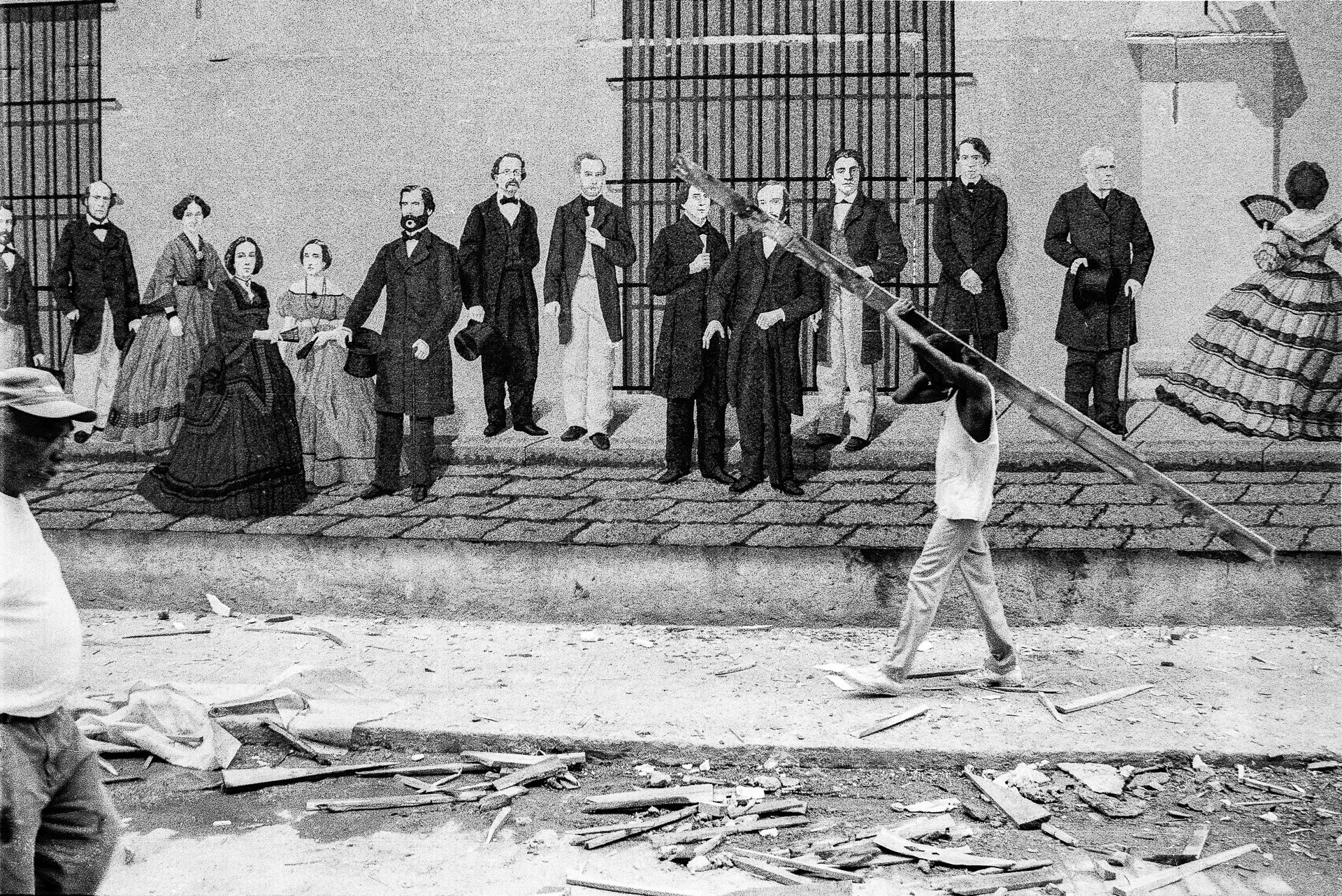
For documentary photography specifically, this is not a stylistic preference. It is a philosophical one. Black and white removes the thing that pulls the eye away from what matters. It forces the viewer to look at the person, the moment, the relationship between light and shadow and human presence. In Cuba, where the architecture is extraordinary and the light is relentless, that discipline was particularly valuable. Without it, the photographs risk becoming postcards.
Light, Shadow, and Kodak Tri X
The technical conditions Eduardo encountered in Cuba were demanding. The Caribbean light is high contrast by nature, deep shadows alongside brilliant highlights, often within the same frame. He did not always have the luxury of choosing when to shoot.
"I almost always found myself with a lot of light and shade at the same time," he says. "Preserving the film in that environment is also complex."
He shot primarily on Kodak Tri X and T Max 100 and 400, with some frames on Agfa APX 100. The choice of Tri-X is telling. It is a film stock with a long history in documentary photography, gritty, high contrast, with a tonal range that holds detail in difficult lighting conditions. In the hands of a photographer working in strong Cuban sunlight, it produced exactly the kind of images Eduardo was after. Not clean. Not clinical. Alive.
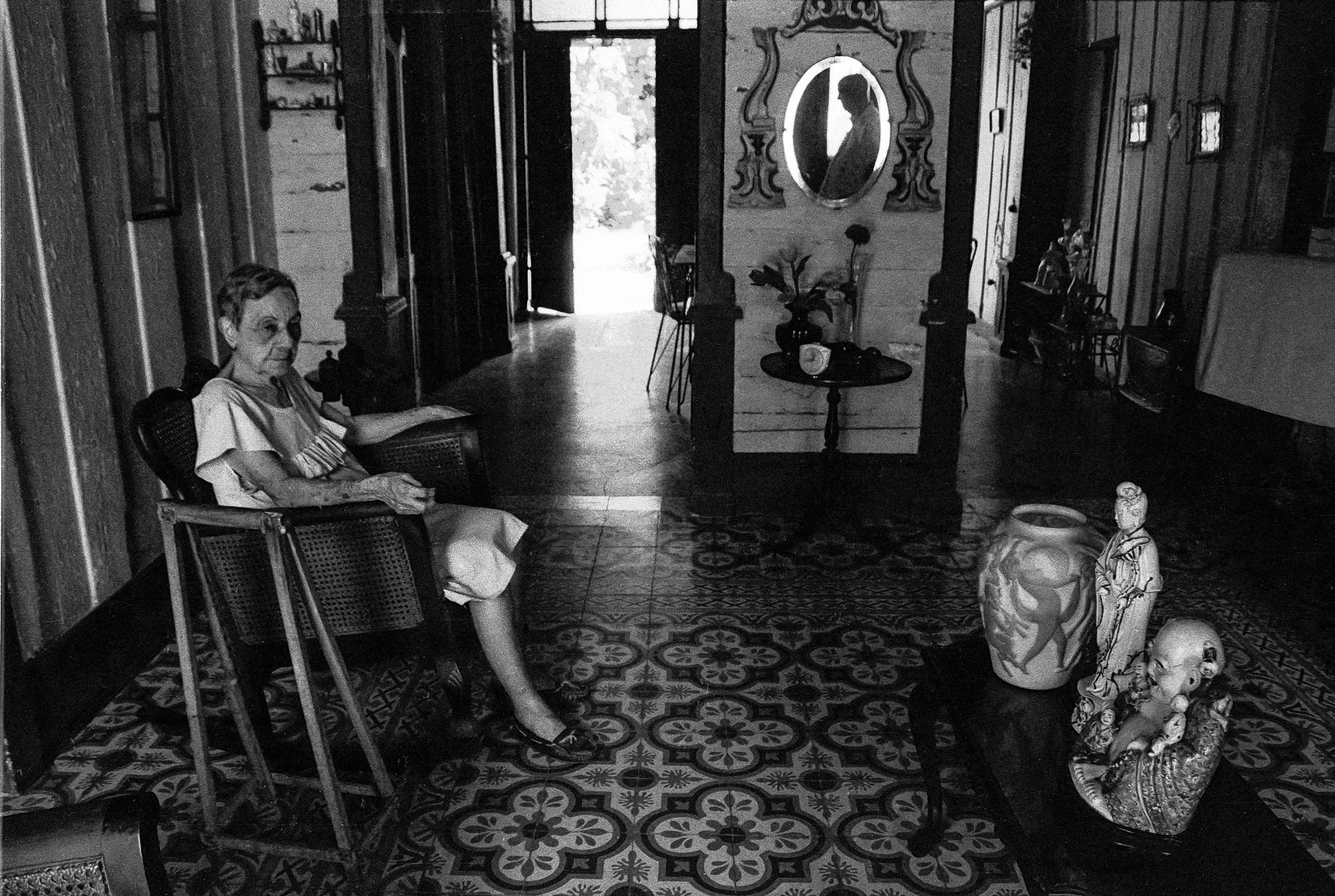
The high contrast he encountered became a visual signature rather than a problem to be solved. The deep blacks and bright highlights in his frames mirror something true about Cuba itself, a place of extraordinary beauty and profound hardship existing side by side, often within the same scene.
The Photographs He Remembers
Two images stand out in Eduardo's memory when he talks about the series.
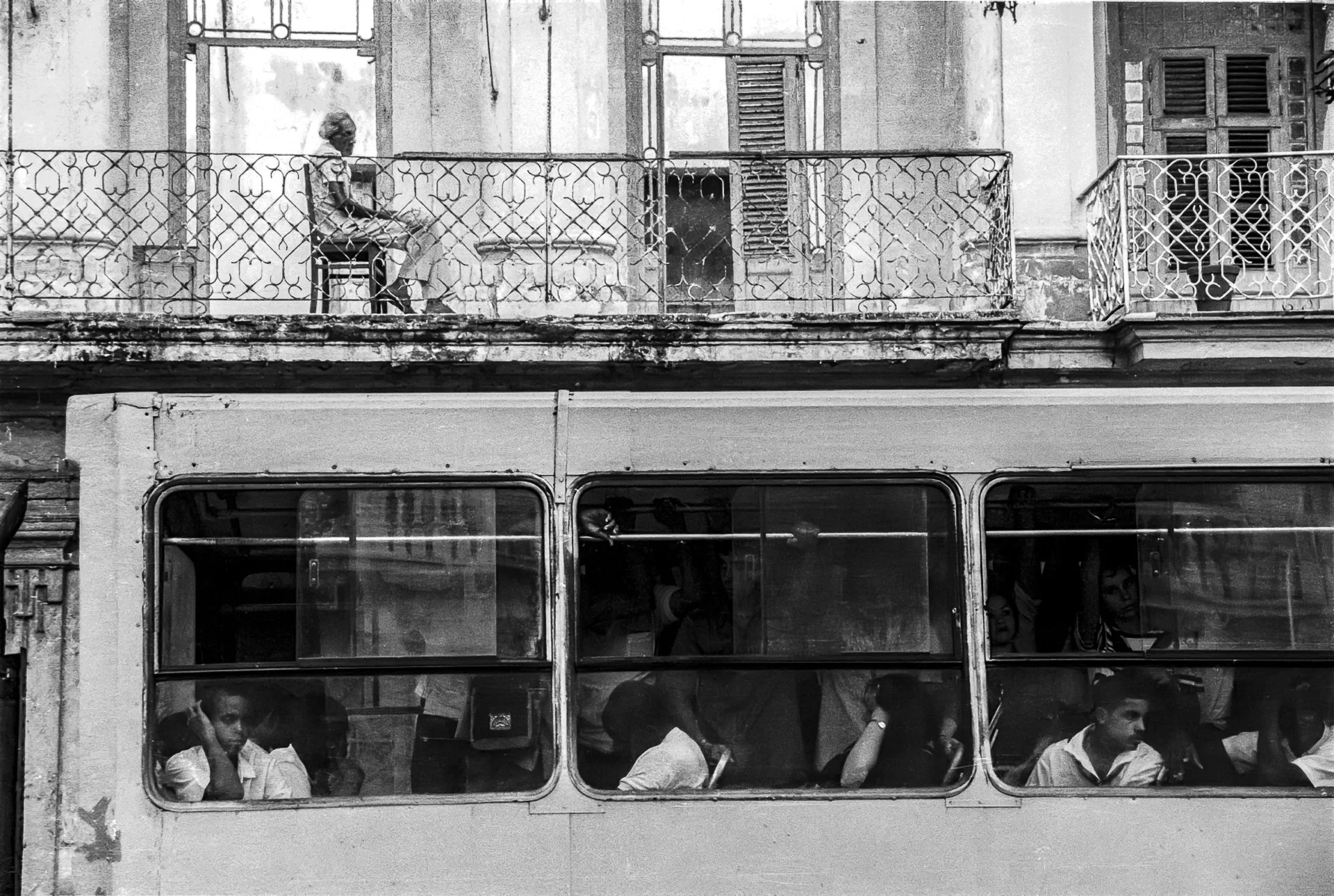
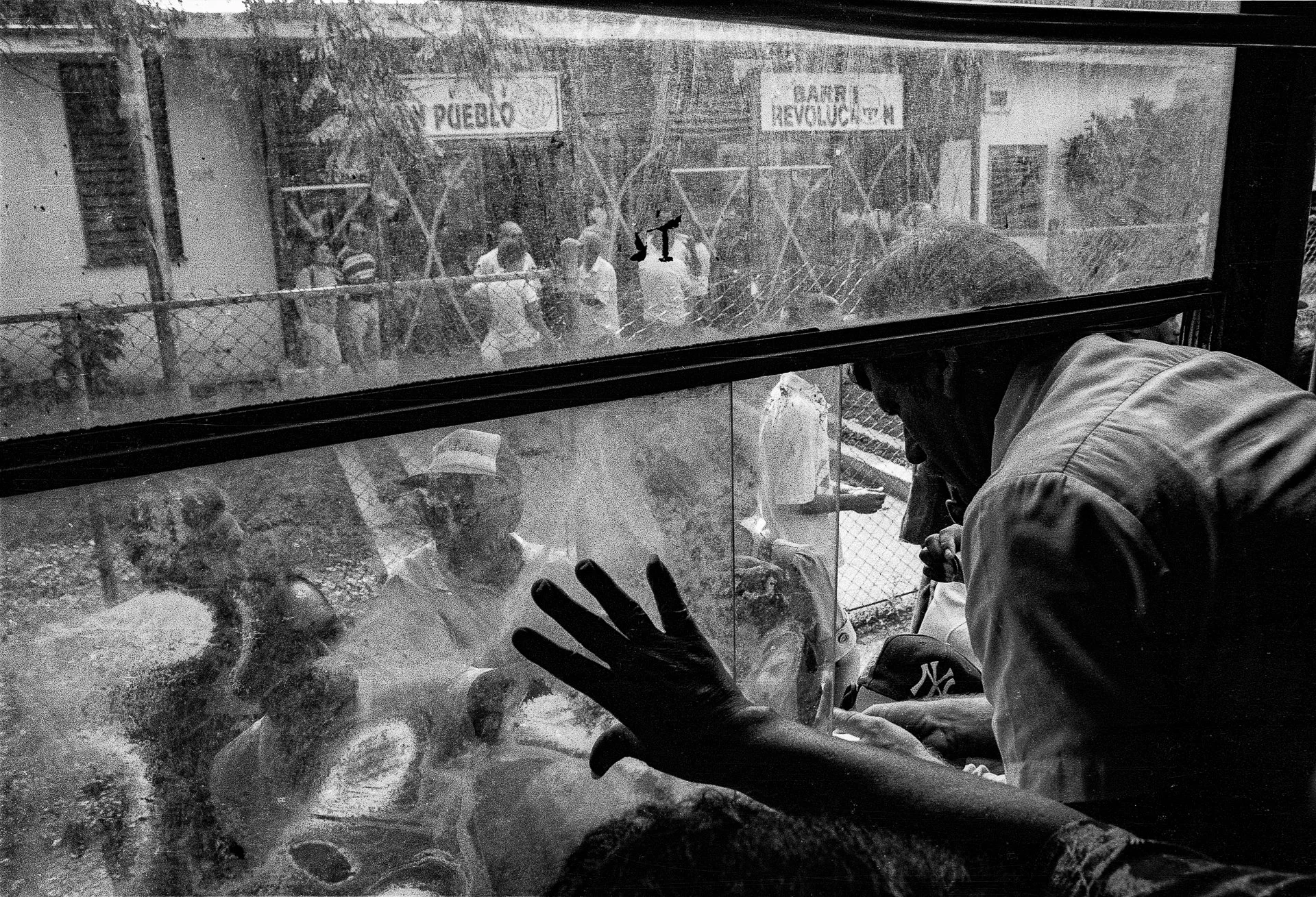
The first was taken from inside a bus. Through the window, a hand reaches toward the glass. Outside, people wait. Signs are visible in the background, legible enough to place the image in time and context. It is a photograph about separation and proximity, the person on the bus and the people outside, divided by glass, sharing the same moment.
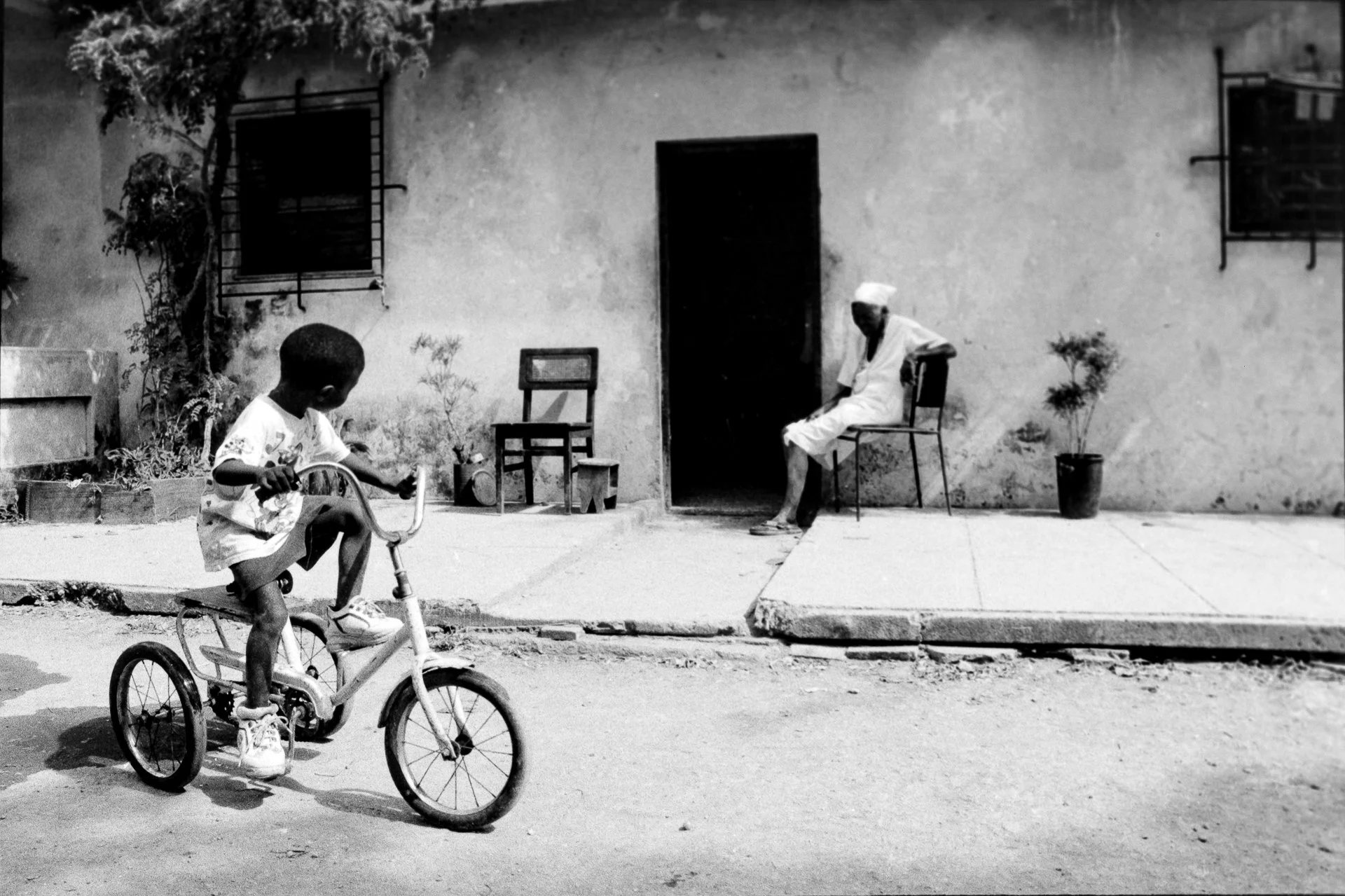
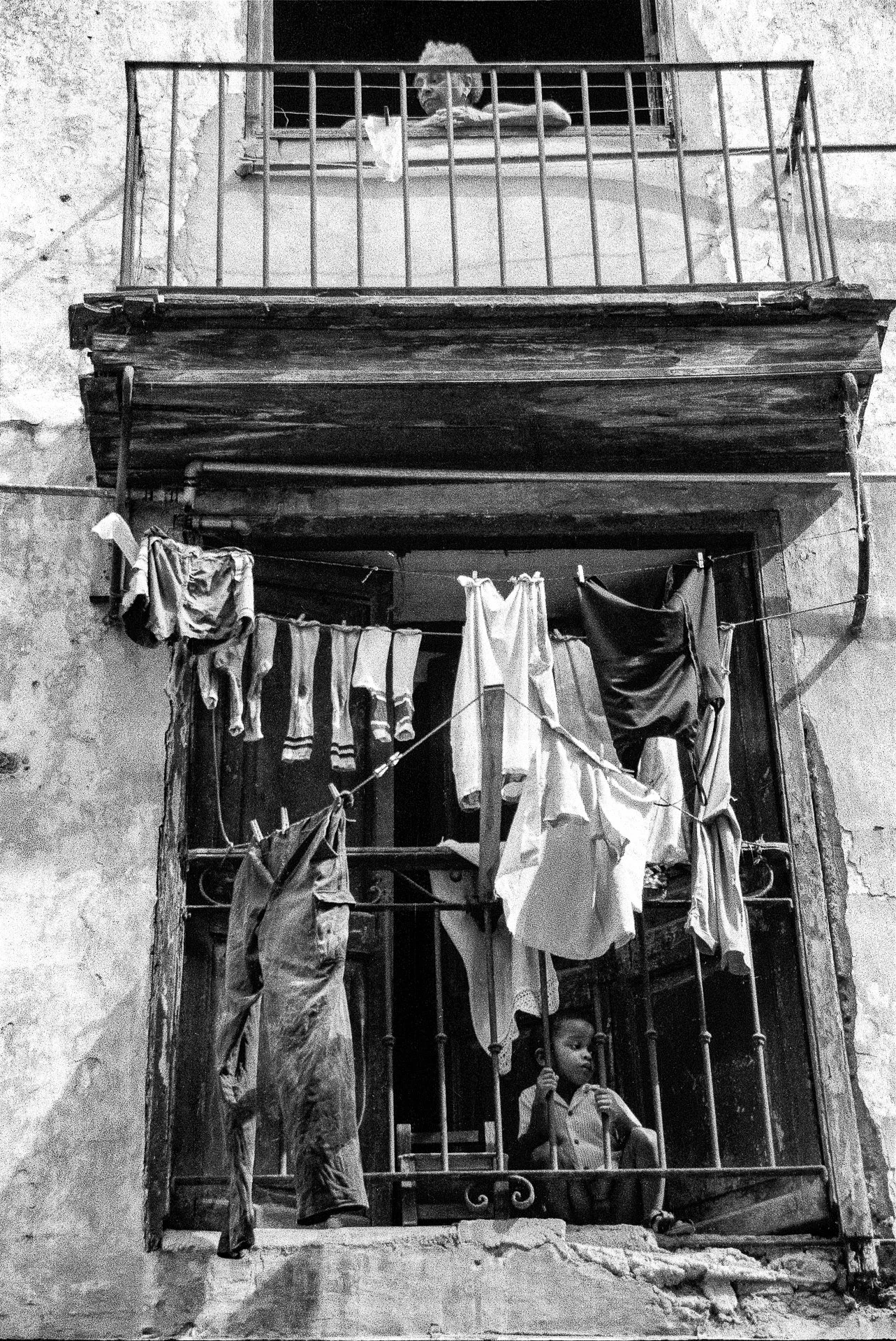
The second is a balcony scene. An old woman and a child occupy the frame together, the contrast between them as sharp as the light. Nearby, another child on a tricycle echoes the same tension, youth and age, movement and stillness, the present and the past in the same frame.
"For me it reflected what Cuba was at that time," Eduardo says.
That instinct to find in a single frame the thing that defines a whole place is what separates documentary photography from travel photography. Eduardo was not recording what Cuba looked like. He was recording what Cuba felt like.
A Story Without a Project
Eduardo is honest about the fact that if he went back today he would approach it differently. He would go with a project in mind. A specific question to answer. A specific community to document. The deliberateness that comes with experience.
But there is something in the work he made twenty five years ago, without an agenda, that a more structured project might not have produced. The photographs have the quality of genuine encounter. They were not made to illustrate a thesis. They were made because Eduardo was there, walking, talking, paying attention, and something kept demanding to be seen.
Cuba, it turns out, does not need a photographer with a project. It just needs a photographer willing to show up.
You can check out more of Eduardos work on foto @ephotoc or on his website eduardocerda.cl/.
Eduardo Cerda Sanchez is a photographer and journalist based in Chile. These photographs were made twenty five years ago during a three month residency at the International School of Film and Television in San Antonio de los Baños, Cuba. They were shot on Kodak Tri-X, T-Max 100 and 400, and Agfa APX 100.
Ready to see the world differently? The Monochrome Method is a complete video course with lessons and assignments designed to help you craft compelling black and white images and build a portfolio that's unmistakably yours. Start Learning Today.
IF YOU WOULD LIKE TO IMPROVE YOUR BLACK AND WHITE PHOTOGRAPHY TRY THE LESSONS BELOW.





A Beginners Guide To Black And White Photography