
The Idolatry of Sharpness
We have confused technical precision with artistic quality and it is costing us better photographs.
I heard the phrase recently and it stopped me immediately. The idolatry of sharpness. I do not know who said it first but whoever did was onto something important. Because that is exactly what it is. An idolatry. A false worship of a technical quality that has very little to do with whether a photograph is actually any good.
Open any camera forum, any gear review, any comment section under a photograph posted online and you will find it. Is it sharp? How sharp is it at the edges? Which lens is sharpest at f2? My last camera was sharper than this one. The pixel peeping. The 100 percent crops. The endless comparison tests. We have built an entire culture around the pursuit of sharpness as if it were the primary virtue a photograph can possess.
It is not even close!
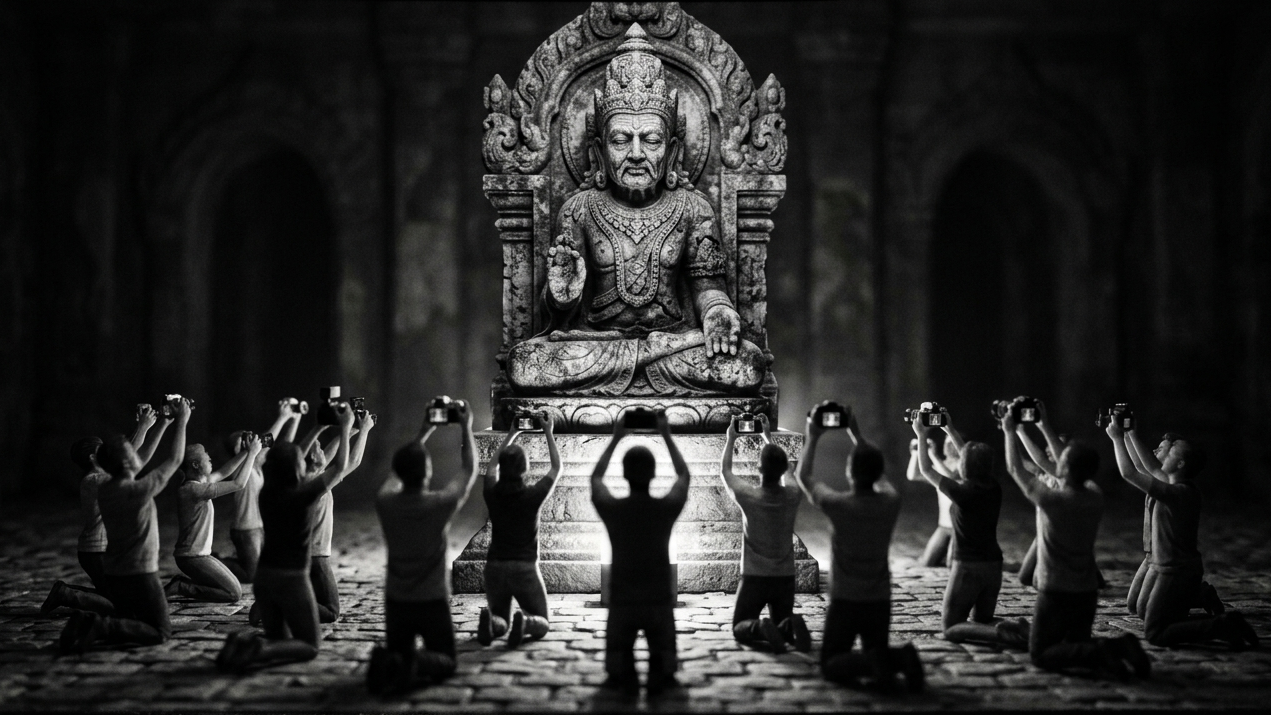
Think about the photographs that have stayed with you. The images that made you feel something. The ones you remember years after seeing them. How many of them were sharp? How many of them were you even thinking about sharpness when you looked at them? The answer, almost certainly, is none. You were thinking about what was in the frame. About the light. About the expression on a face or the weight of a moment or the strange beauty of an ordinary thing caught at the right time. Sharpness had nothing to do with it.
Some of the most powerful photographs ever made are technically soft. Robert Capa's Falling Soldier, one of the most famous war photographs in history, is blurred and grainy and shot under conditions that made technical perfection impossible. It does not matter. The image has a force that no amount of sharpness could add to and no lack of sharpness can take away. Saul Leiter spent his career making photographs that were intentionally soft, layered, impressionistic. He was not failing to achieve sharpness. He was refusing it. The blur was the content.
Alexey Titarenko built his entire City of Shadows series on the deliberate rejection of sharpness. Long exposures that turned crowds into ghosts, into flowing abstract masses of humanity. If sharpness were the measure of a great photograph those images would fail entirely. Instead they are among the most emotionally resonant photographs of the twentieth century. The softness is precisely what makes them work.
This is not an argument against sharp photographs
Sharp photographs are often the right choice. A portrait where the eyes are in focus. A street photograph where the geometry of the frame depends on crisp edges. A landscape where the texture of rock and water is the whole point. There are many situations where sharpness serves the image completely.
The problem is not sharpness. The problem is the idolatry of it. The belief that sharpness is a virtue in itself, that a sharper image is by definition a better image, that the technical precision of a lens or a camera has something meaningful to say about the quality of the photographs made with it.
This belief has been supercharged by the internet. We now look at photographs on screens, at sizes and resolutions that allow a level of scrutiny that was simply not possible when photographs lived on paper. We zoom in to 100 percent. We examine corners. We compare bokeh transitions. We have given ourselves tools for a kind of technical analysis that has almost no relationship to the experience of actually looking at a photograph as a photograph.
Nobody stands in front of a print at a gallery and zooms in to check the sharpness. Nobody remembers a great photograph because of how sharp it was. The things that make a photograph worth looking at are the same things they have always been. Light. Timing. Composition. Emotion. Intention. The sense that a particular person with a particular way of seeing was present at a particular moment and made a decision about what mattered.
Sharpness is a tool
Use it when it serves the image. Ignore it when it does not. And stop worshipping it.
The idolatry of sharpness is costing us better photographs. Every hour spent pixel peeping is an hour not spent looking at the world. Every photograph rejected because it is not quite sharp enough might be the most honest image you made all month. Every lens comparison test is a conversation about equipment that could have been a conversation about seeing.
Put the magnifying glass down. Go make a photograph that moves someone. Sharp or not.
Ready to see the world differently? The Monochrome Method is a complete video course with lessons and assignments designed to help you craft compelling black and white images and build a portfolio that's unmistakably yours. Start Learning Today.
IF YOU WOULD LIKE TO IMPROVE YOUR BLACK AND WHITE PHOTOGRAPHY TRY THE LESSONS BELOW.














A Beginners Guide To Black And White Photography