
Are Long Exposures Only for Landscape Photography?
The technique most photographers associate with tripods and waterfalls has a very different and very powerful life on the street.
Ask most photographers what long exposure is for and they will tell you about waterfalls. Silky water. Star trails. Light painting. The kind of image that requires a tripod, a remote shutter release, and a location you have to drive to before sunrise. Long exposure, in the popular imagination, belongs to the landscape photographer. It is a technique for making nature look other-worldly.
That is one way to use it. It is not the only way.
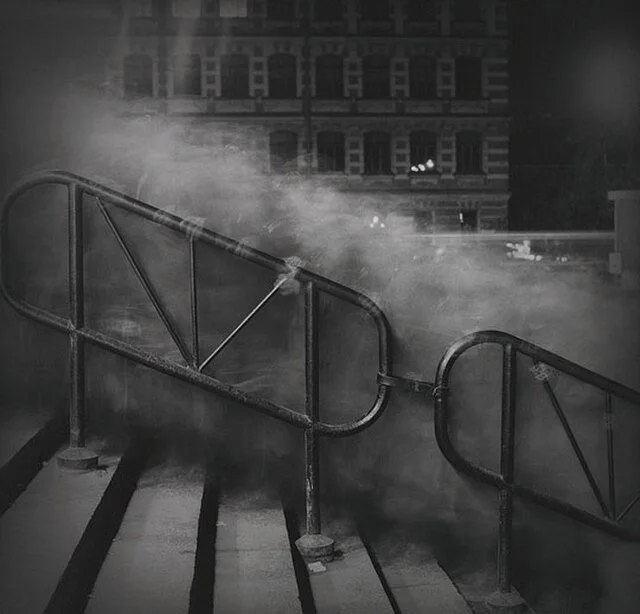
Some of the most powerful long exposure photographs ever made were taken not in national parks or on mountain ridges but on the streets of St Petersburg, Russia, in the early 1990s. They were made by a photographer named Alexey Titarenko, and they changed what a lot of people thought photography was capable of.
What Titarenko did and why
Titarenko was living in St Petersburg during the collapse of the Soviet Union. It was a period of profound upheaval. The economy had disintegrated. People queued for hours for basic provisions. The city felt haunted by something it could not name. Titarenko wanted to make photographs that captured not just what he saw but what he felt. The anxiety, the weight, the sense of people being swept along by forces they could not control.
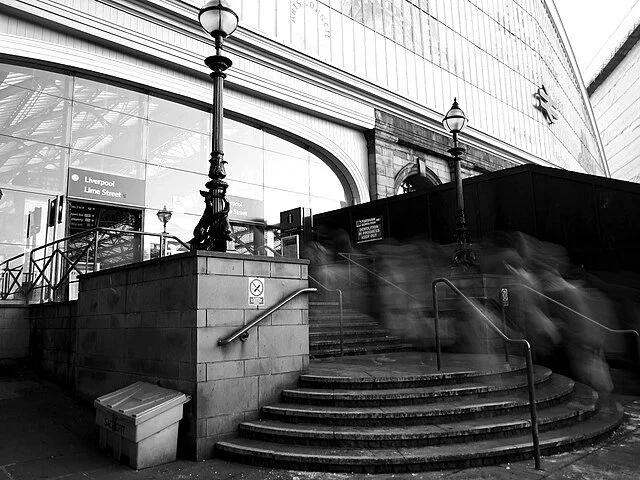
He mounted his camera on a tripod outside metro stations and in crowded public spaces. He used very long shutter speeds, sometimes several seconds. The architecture and the stationary elements of the scene remained sharp. The crowds moving through the frame blurred into flowing, ghostly masses. Figures dissolved into each other. Individual people became something more like a collective force, a wave of humanity, a shadow of a crowd rather than the crowd itself.
The resulting series, City of Shadows, is one of the most significant bodies of work in twentieth century photography. The technique was not decorative. It was the content. The blur was not an accident or a limitation. It was the whole point. Titarenko was using the physics of light and time to express something about the human condition that a sharp, frozen image could never have communicated.
"I decided that I should return to the nineteenth century technique of a long exposure shot," he said, "to convey my condition through the metaphor of the shadows."
The technique in practice
Long exposure street photography works differently from landscape long exposure but the fundamentals are the same. You need a stable camera, a slow shutter speed, and a scene where some elements are moving and others are not. The relationship between the still and the moving is what creates the tension in the image.
A tripod is the obvious choice but not the only one. Titarenko used a tripod. You can also brace the camera against a wall, a railing, or any solid surface. The key is that the camera itself must not move. What moves is the world in front of it.
Shutter speed depends on how much blur you want and how fast your subjects are moving. A busy city street at one second will produce very different results from the same street at a quarter second. Experiment. The sweet spot is usually somewhere between half a second and four seconds for pedestrian crowds, but there is no rule here. Shoot a lot and see what the light and the movement give you.
For black and white photographers in particular this technique is worth exploring seriously. The absence of color already pushes an image toward the abstract and the emotional. Add motion blur and the effect compounds. A blurred crowd in monochrome does not look like a technical mistake. It looks like memory. It looks like time.
What you lose and what you gain
The obvious objection to long exposure street photography is that you lose the decisive moment. You cannot freeze a specific gesture or expression. You cannot isolate a single face in a crowd. The individual disappears into the collective.
But that loss is also the point. There are things that long exposure can express that a fast shutter cannot. The feeling of being caught in a crowd and carried along by it. The way a city feels at rush hour when everyone is moving in the same direction. The loneliness of standing still while the world rushes past. The sense of time pressing forward whether you want it to or not.
These are not things you can capture in a fraction of a second. They require duration. They require letting time accumulate on the sensor or the film. And that is precisely what makes long exposure street photography its own distinct thing, not a variant of landscape technique but a genuinely different way of seeing and communicating.
Where to start
Find a location with consistent movement. A busy intersection. A train station concourse. A market. A staircase where people flow up and down in a steady stream. Set up your camera so that some element of the scene is fixed and immovable, a wall, a pillar, a parked vehicle, and let the people move through it.
Shoot in the early morning or late evening when the light is low enough to allow a longer exposure without overexposing the frame. If you are shooting in bright light you will need a neutral density filter to reduce the amount of light reaching the sensor and allow a slower shutter speed.
Then do what Titarenko did. Stop thinking about freezing the moment. Start thinking about letting it flow.
The landscape photographers were right about one thing. Long exposure changes the way the world looks. They just did not go far enough with the idea.
You can view more of Titarenko's City of Shadows series at www.nailyaalexandergallery.com
Ready to see the world differently? The Monochrome Method is a complete video course with lessons and assignments designed to help you craft compelling black and white images and build a portfolio that's unmistakably yours. Start Learning Today.
IF YOU WOULD LIKE TO IMPROVE YOUR BLACK AND WHITE PHOTOGRAPHY TRY THE LESSONS BELOW.





A Beginners Guide To Black And White Photography