
To Crop or Not To Crop That Is The Question
The belief that cropping is a correction rather than a creative decision has been holding photographers back for too long.
There is a belief that circulates in photography communities with the quiet authority of received wisdom. It goes something like this: a well composed photograph should not need cropping. If you are cropping in post you are fixing a mistake you should have avoided in the field. A real photographer gets it right in camera.
It sounds reasonable. It is not.
The idea that cropping means you got it wrong is one of the most stubborn myths in photography. It discourages experimentation, limits creative flexibility, and imposes an artificial standard that has no basis in the actual history of the medium. More than that, it stops photographers from finding the best version of their images.
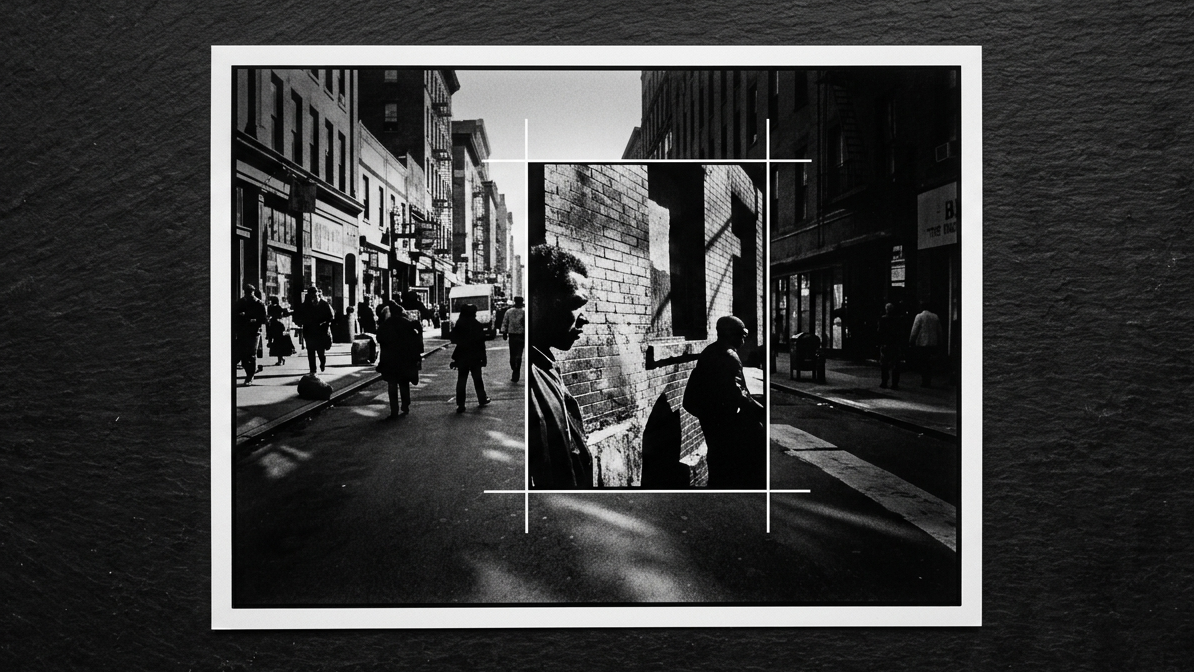
Let us start with the history.
Henri Cartier-Bresson famously refused to crop his photographs. He believed the full frame represented the complete vision of the photographer at the moment of capture and that any alteration weakened that. His position was genuine and consistent and it produced some of the greatest photographs ever made. It also became, through his enormous influence, a kind of rule that later generations absorbed as universal truth rather than one man's personal choice.
But Cartier-Bresson was one photographer with one approach. He was not speaking for everyone else.
Ansel Adams cropped. W. Eugene Smith cropped. Irving Penn cropped. The darkroom was always a place where the image continued to be made, not simply processed. Dodging and burning, contrast adjustments, and yes, cropping, were all understood as legitimate parts of the process. The idea that the image was finished the moment the shutter closed is not supported by the history of photography.
Now think about what actually happens when you are shooting. The light is changing. The subject is moving. You have seconds, sometimes less, to respond. In those conditions the frame you capture is the best you could do in that moment. It is not necessarily the final word. Your eye may have seen the image clearly but the reality of the situation did not always allow you to fully execute it. Cropping later is simply continuing a process that the conditions did not allow you to finish in the field.
There is also a simpler point. The full frame and the best image are not always the same thing. Sometimes they are. Often they are not. A slightly tighter crop can remove a distraction at the edge of the frame. A more radical crop can change the whole feeling of the image. A square crop can bring a stillness and calm that the original rectangle did not have. These are not fixes. They are decisions.
For monochrome photographers this matters even more. Black and white photography depends on strong tonal relationships, clean geometry, and the careful use of space. A crop that tightens the geometry or clarifies what the image is about is not a repair job. It is part of making the photograph. It is the same instinct that drove the great darkroom printers to work and rework their images until what was on the paper matched what they had seen in their mind.
The only honest question to ask about any creative decision is whether it makes the image better. Not whether it represents the full frame as captured. Not whether it follows a rule about what should be done in camera. Just whether it makes the image better.
Develop the discipline to frame well in the field. Train your eye. Work on your timing and your positioning. Those things matter. But do not let a rule stop you from making the best photograph you are capable of making. The crop is a tool. Use it when it serves the image.
Ready to see the world differently? The Monochrome Method is a complete video course with lessons and assignments designed to help you craft compelling black and white images and build a portfolio that's unmistakably yours. Start Learning Today.
IF YOU WOULD LIKE TO IMPROVE YOUR BLACK AND WHITE PHOTOGRAPHY TRY THE LESSONS BELOW.




A Beginners Guide To Black And White Photography