
A New Black And White Film Has Something To Teach Photographers
Richard Linklater's love letter to Godard is also a masterclass in monochrome intention.
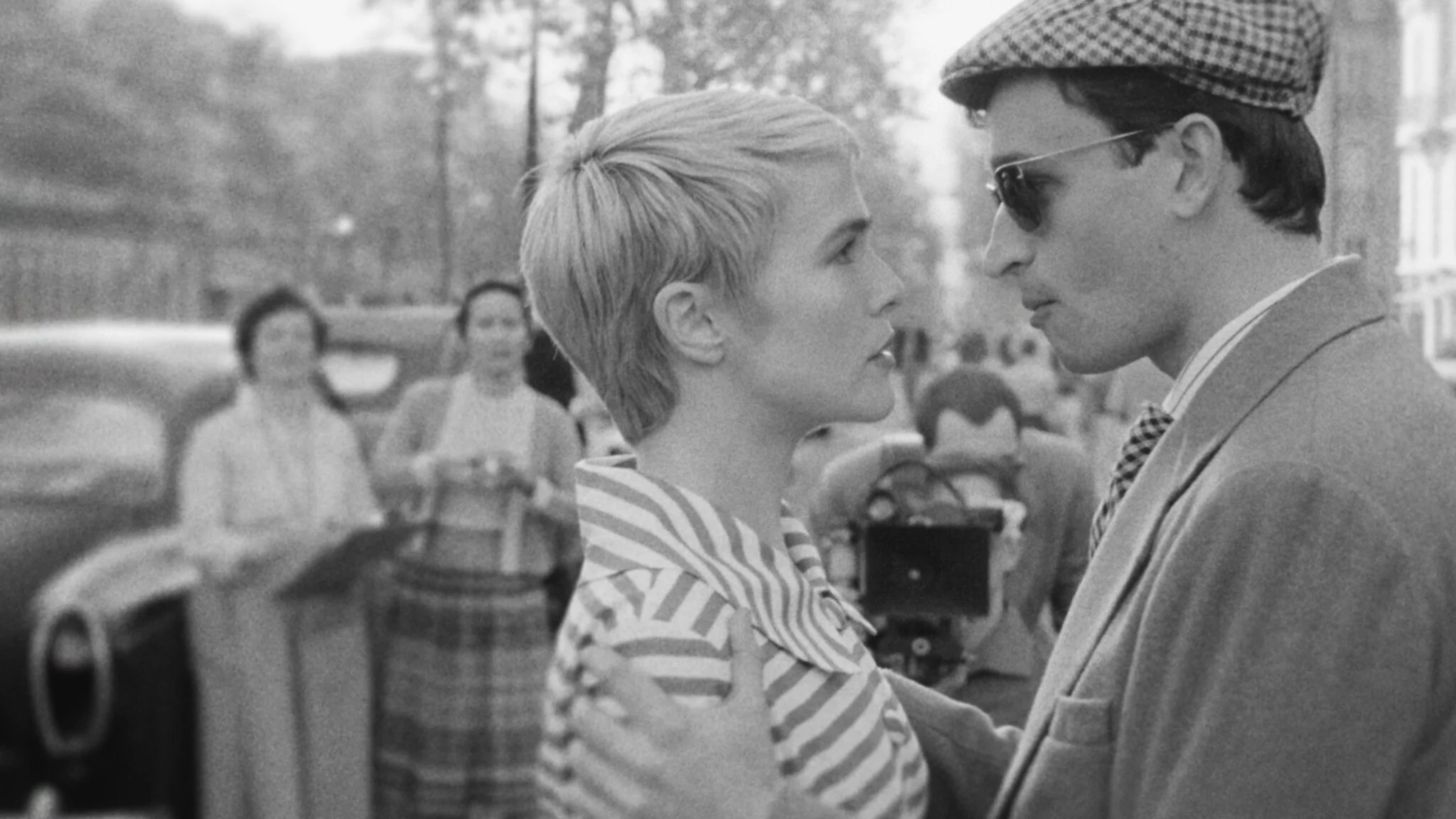
There is a scene early in Richard Linklater's Nouvelle Vague where Jean Luc Godard refuses to allow makeup on his lead actress. No artificial lighting. No more than two takes. He wants what is there, not what can be manufactured. He wants the truth of the moment, not a polished version of it.
If you have been paying attention to your own photography, that probably sounds familiar.
Nouvelle Vague is now streaming on Netflix. It is a black and white film shot in a 4:3 aspect ratio, in French, about the making of Godard's 1960 debut Breathless, one of the most influential films ever made. Directed by Linklater and starring Zoey Deutch as Jean Seberg and Guillaume Marbeck as Godard, it premiered at Cannes to an eleven minute standing ovation and has been one of the most talked about films of the past twelve months.
It is made for cinephiles. But I think it has more to say to photographers than most photography books do.
Here is what I took from it.
Black and white is a choice, not a fallback
Linklater did not shoot Nouvelle Vague in black and white because colour was unavailable. He shot it in black and white because the story demanded it. The grain, the 4:3 frame, the absence of color, all of it was intentional. Every frame asks you to look at light and shape and texture rather than the distraction of color. That is exactly the decision we make every time we choose to shoot monochrome. It is not a filter applied afterwards. It is a way of seeing that begins before the shutter opens.
Constraints produce better work
Godard had almost no money. No dolly, so he used a wheelchair. No lighting budget, so he used available light. No time for multiple takes, so he worked fast and trusted his instincts. The result was one of the most original films ever made. We talk a lot in photography about gear and equipment but the most interesting work almost always comes from working within limits rather than around them. One camera. One lens. One roll of film. See what happens.
The intention behind the frame matters more than the frame itself
Godard shot Breathless the way he did because he had something to say and he was not willing to compromise it for the sake of convention. He was not trying to make a film that looked like other films. He was trying to make a film that felt like the truth. That distinction is worth sitting with. When you raise the camera, are you trying to make a photograph that looks like good photography, or are you trying to make something honest?
Style is not decoration. It is argument
The French New Wave did not just look different. It thought differently. The style was inseparable from the ideas behind it. When we talk about developing a photographic style we sometimes treat it as a surface concern, a particular tone or crop or way of processing an image. But the photographers with a real style are the ones whose visual choices are an expression of how they see the world, not just how they want their feed to look.
Nouvelle Vague is available on Netflix now. Watch it with the lights off and pay attention to how the cinematographer David Chambille uses light. Then go out and shoot.
Ready to see the world differently? The Monochrome Method is a complete video course with lessons and assignments designed to help you craft compelling black and white images and build a portfolio that's unmistakably yours. Start Learning Today.
IF YOU WOULD LIKE TO IMPROVE YOUR BLACK AND WHITE PHOTOGRAPHY TRY THE LESSONS BELOW.




A Beginners Guide To Black And White Photography