
Drop The Anchor
Every strong composition has a fixed point that everything else organizes itself around. Here is how to find yours.
A ship without an anchor is not free. It is lost.
There is a difference between the two that most people miss. Freedom implies intention. The ship knows where it wants to go and moves toward it deliberately. Lost means the opposite. It means drifting. Moved by whatever current happens to be running that day, with no fixed point to return to and no way of knowing how far from home you have traveled.
A photograph without an anchor is the same thing. It drifts. Your eye enters the frame and has nowhere to land. It moves around looking for something to hold onto and when it cannot find it, it leaves. Not because the image is bad. Because it has no fixed point. No anchor.
Every strong composition has one.

An anchor in photography is the element in the frame that everything else organizes itself around. It does not have to be the most visually dramatic element. It does not have to be large or bright or centered. It simply has to be definitive. It has to say, with quiet authority, this is where the image begins.
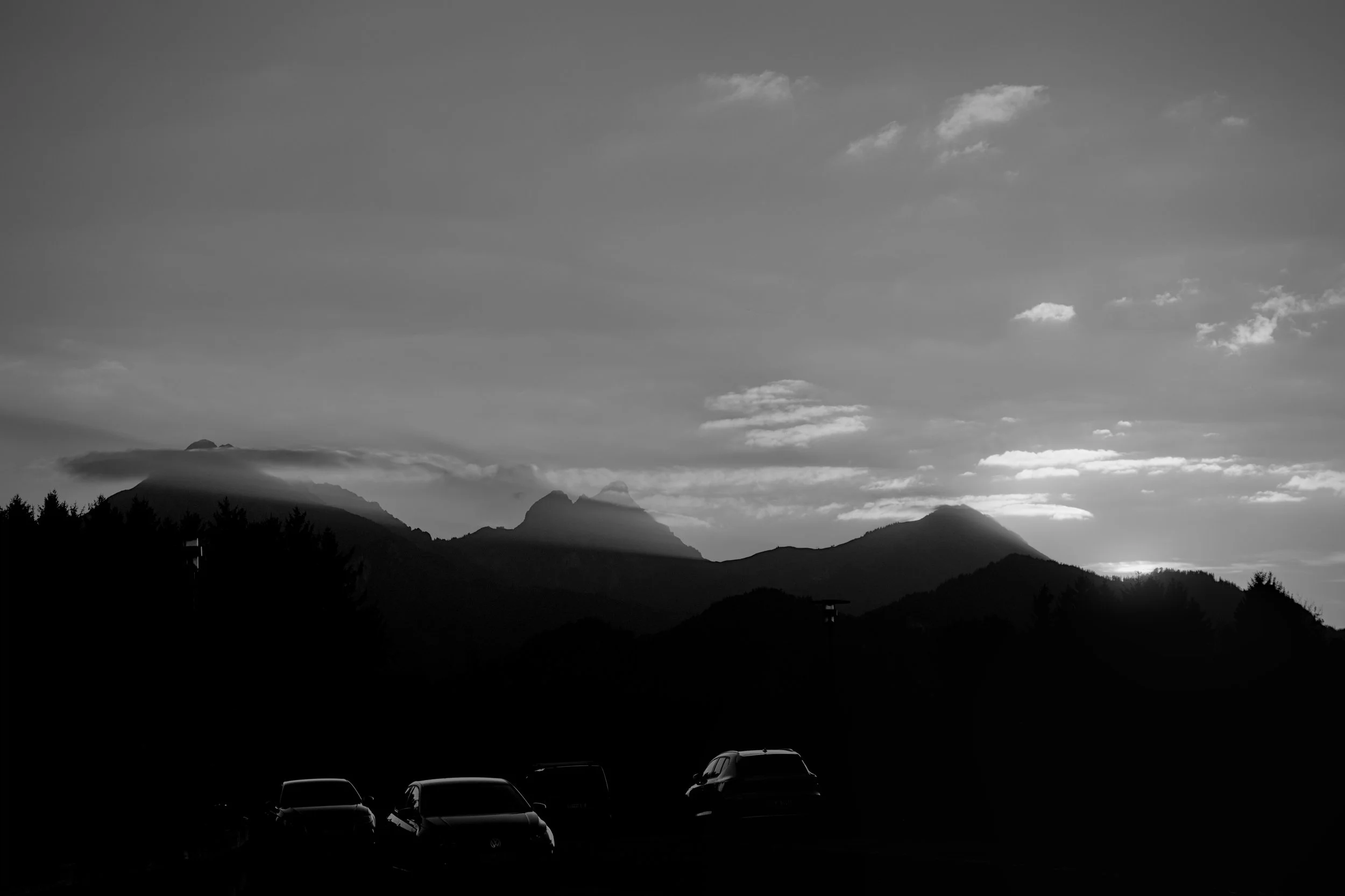
In monochrome photography the anchor is almost always tonal. A deep black in a field of grey. A single point of sharp focus in a sea of blur. A face catching the only light in an otherwise dark frame. These are not accidents. They are decisions. And the photographers who make them consistently are the ones whose work always feels resolved, always feels like it means something, even when the subject is ordinary.
Think about what an anchor actually does for a ship. It does not stop the ship from moving entirely. The ship still shifts with the tide. It still responds to the wind. But it always returns to the same point. It always knows where home is. The anchor creates a relationship between the vessel and a fixed point in the world, and that relationship is what gives the ship its stability.
A compositional anchor works exactly the same way. Once your viewer finds it, everything else in the frame becomes readable. The negative space makes sense because the anchor gives it context. The secondary elements make sense because they have something to be secondary to. The tension in the image makes sense because there is a fixed point for that tension to pull against.
Without it you have elements. With it you have a composition.
This is why the first question worth asking before you press the shutter is not about light or exposure or timing. It is simpler and more fundamental than any of those things. It is this. Where is the anchor in this frame?
If you can answer that question clearly and quickly, shoot. If you cannot, wait. Move. Change your angle. Get closer or step back. Find the fixed point that everything else needs to make sense. Because the image you make before you find the anchor and the image you make after are not the same photograph. One of them drifts. The other one holds.
The tide will do what the tide does. The light will shift. The moment will pass. But the anchor is always your decision. It is the one thing in the frame that belongs entirely to you.
Drop it deliberately.
Ready to see the world differently? The Monochrome Method is a complete video course with lessons and assignments designed to help you craft compelling black and white images and build a portfolio that's unmistakably yours. Start Learning Today.
IF YOU WOULD LIKE TO IMPROVE YOUR BLACK AND WHITE PHOTOGRAPHY TRY THE LESSONS BELOW.


















A Beginners Guide To Black And White Photography