
Landscape Photographers Stop Turning Your Back on the Light
The oldest rule in landscape photography is to keep the sun behind you. Here is why breaking it changes everything.
Every beginner photography guide says the same thing. Keep the sun behind you. Light your subject from the front. Make sure everything is visible and evenly lit.
It is practical advice. It is also, in black and white landscape photography, often completely wrong.
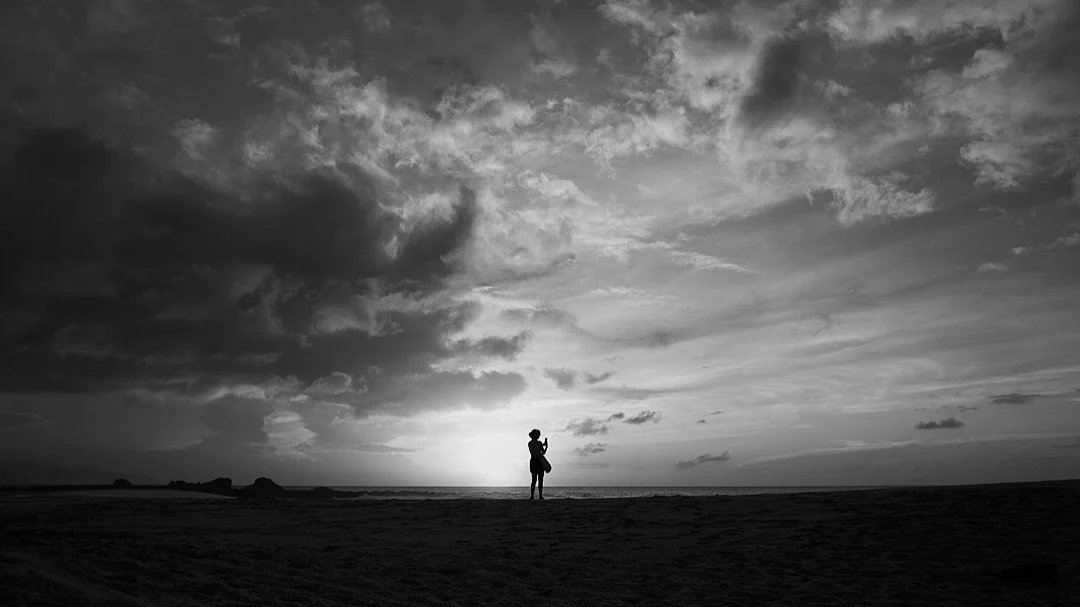
Think about how we experience light in real life. When something is backlit, when the sun is behind a person or a tree or a hillside, we do not see it clearly. We see its outline. We see the glow around its edges. We see the way light bends around form and turns the ordinary into something that feels almost sacred. We do not see the details. We feel the presence.
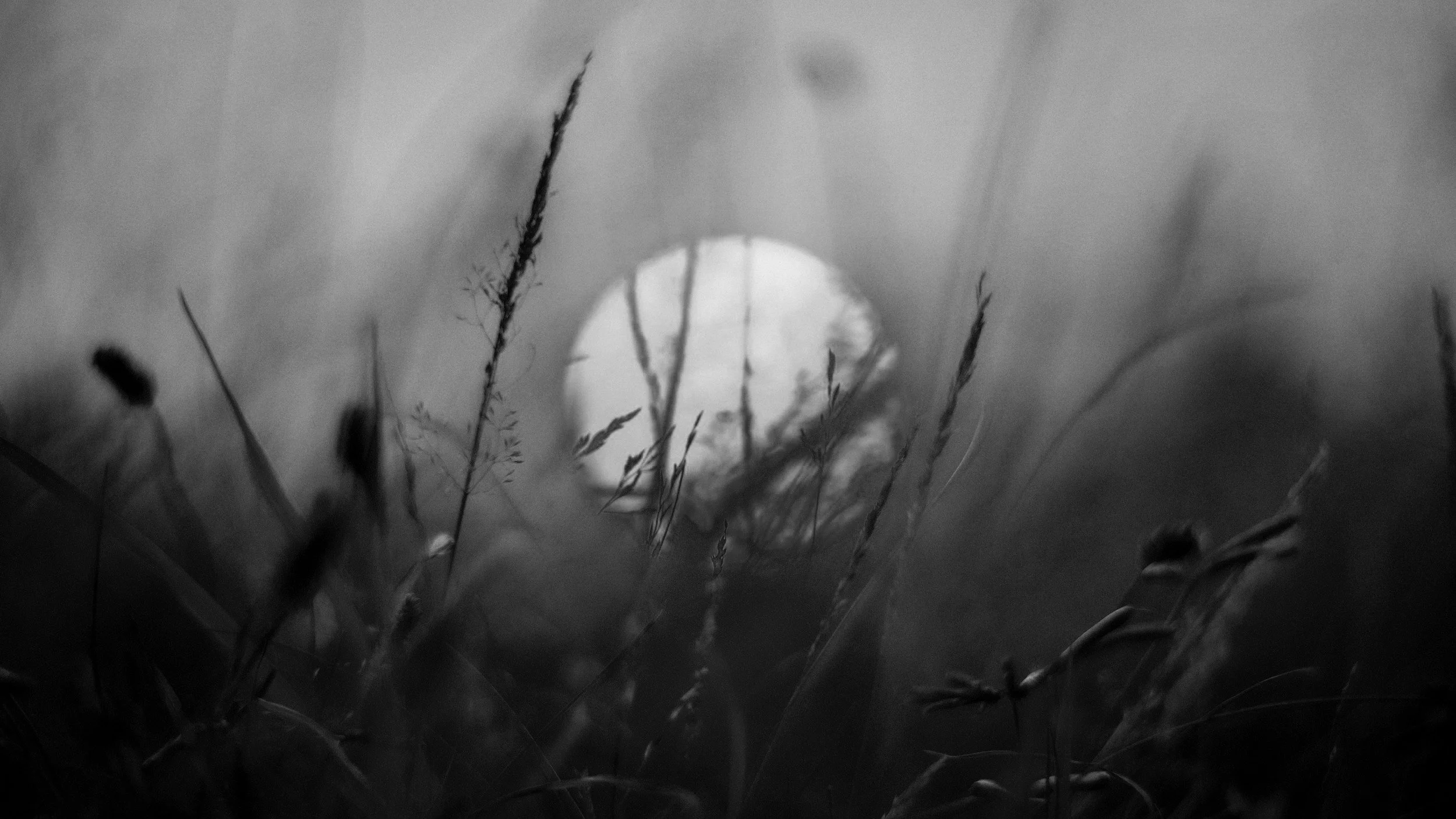
That is exactly what your camera can capture when you turn around and shoot into the light. And in black and white it is one of the most powerful tools you have.
Consider a candle in a dark room. If you shine a torch directly at the candle you see a candle. Wax, wick, a small flame. Nice enough. But if you let the candle be the only light source, if you let it backlight everything around it, suddenly the room comes alive. Shadows stretch. Edges glow. The ordinary objects on the table become something else entirely. The light is doing the work that color normally does. It is creating drama from nothing.
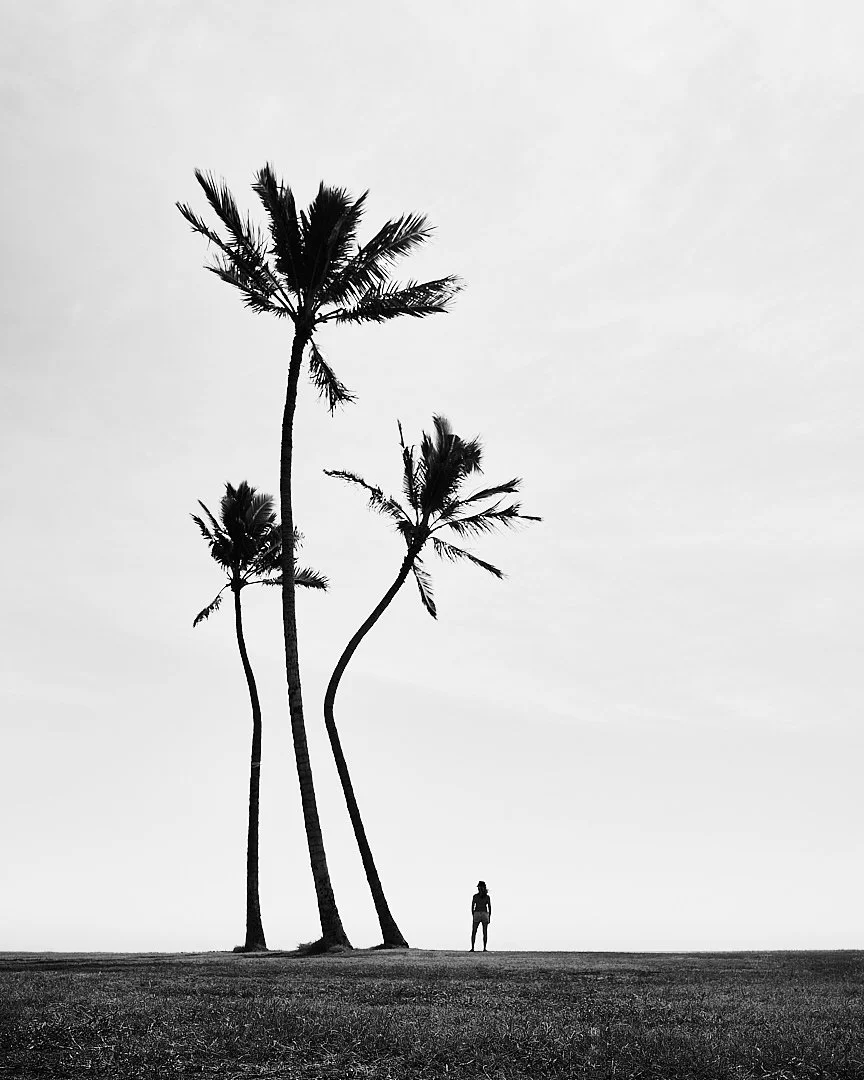
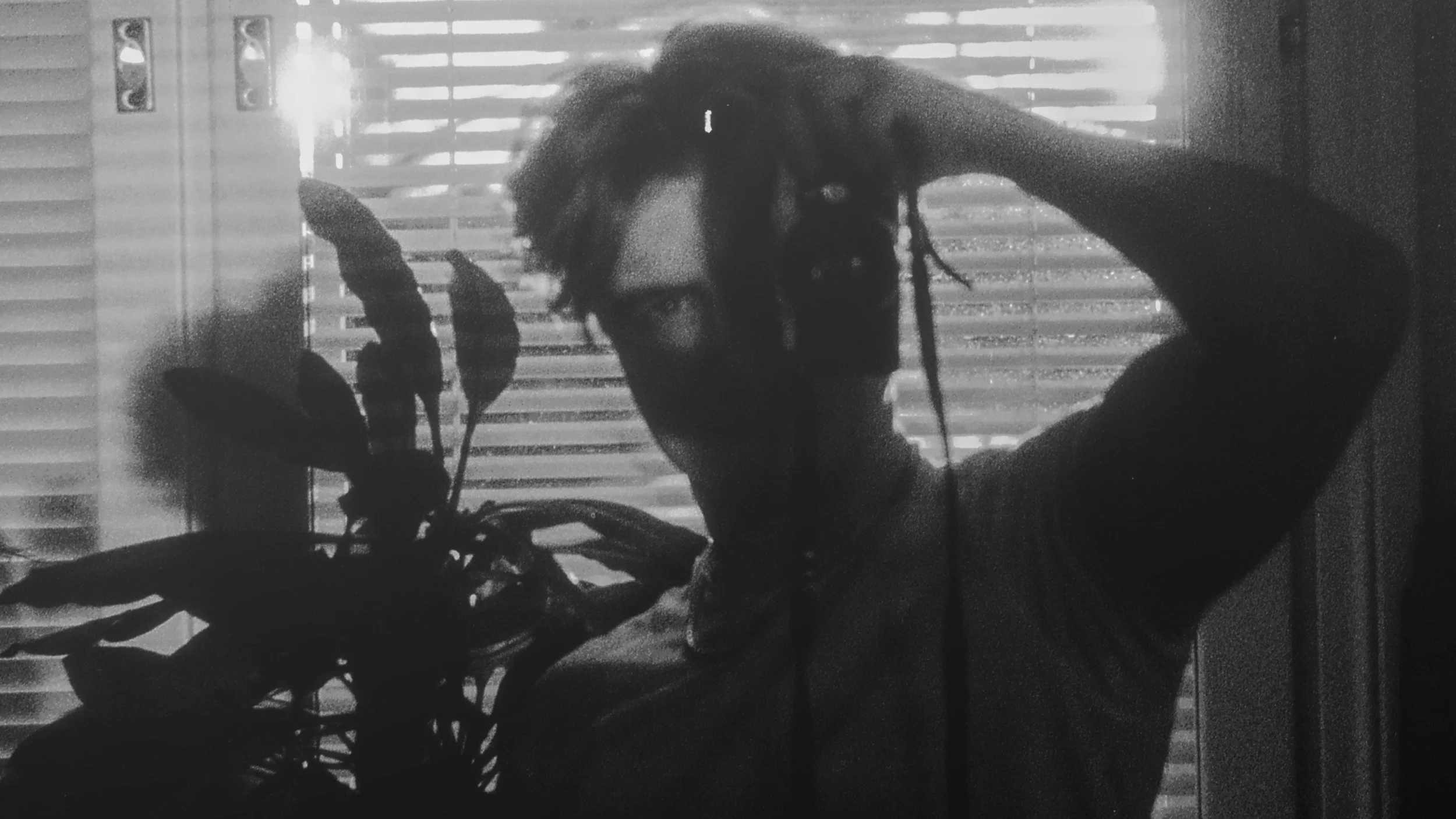
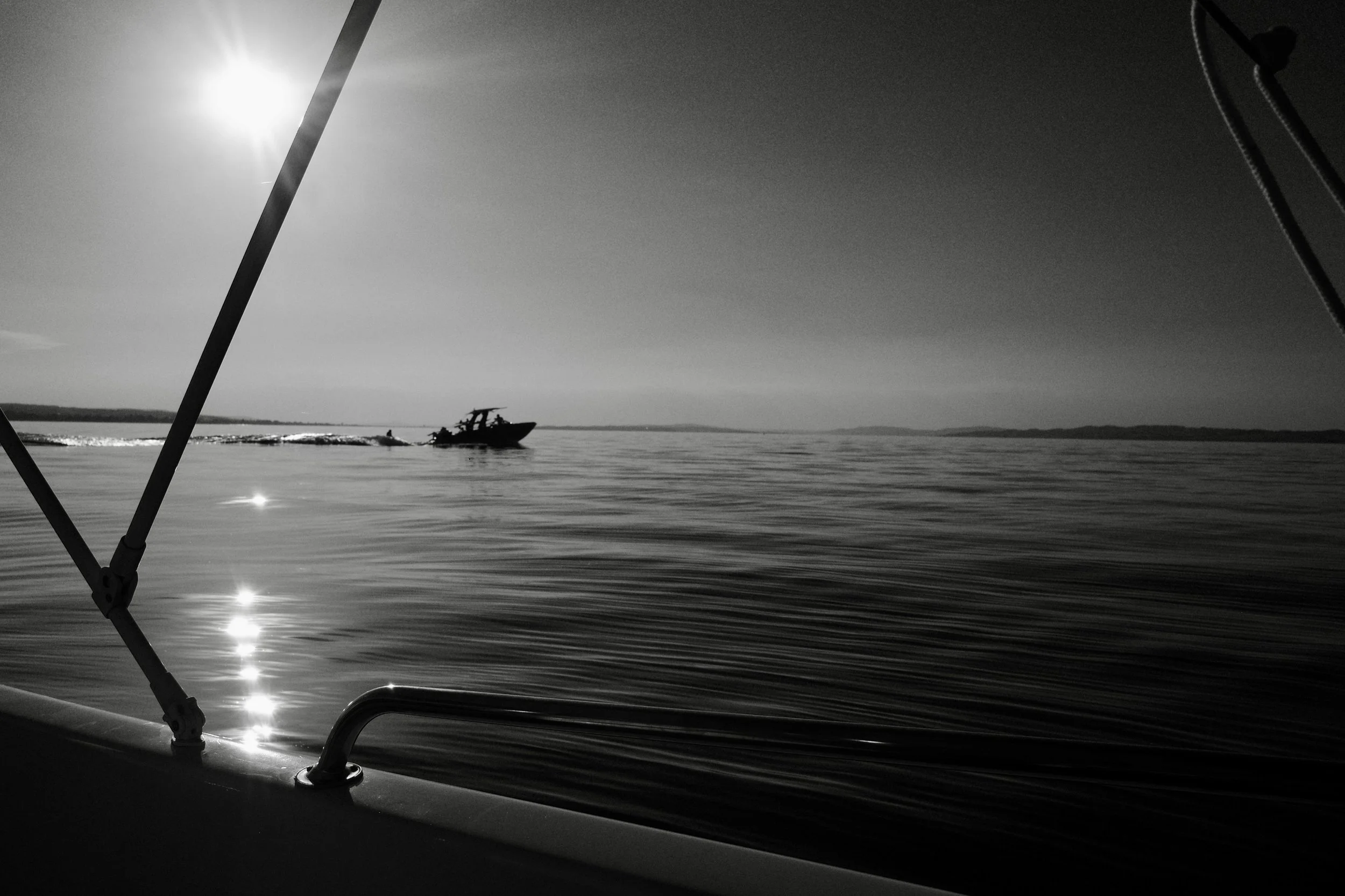
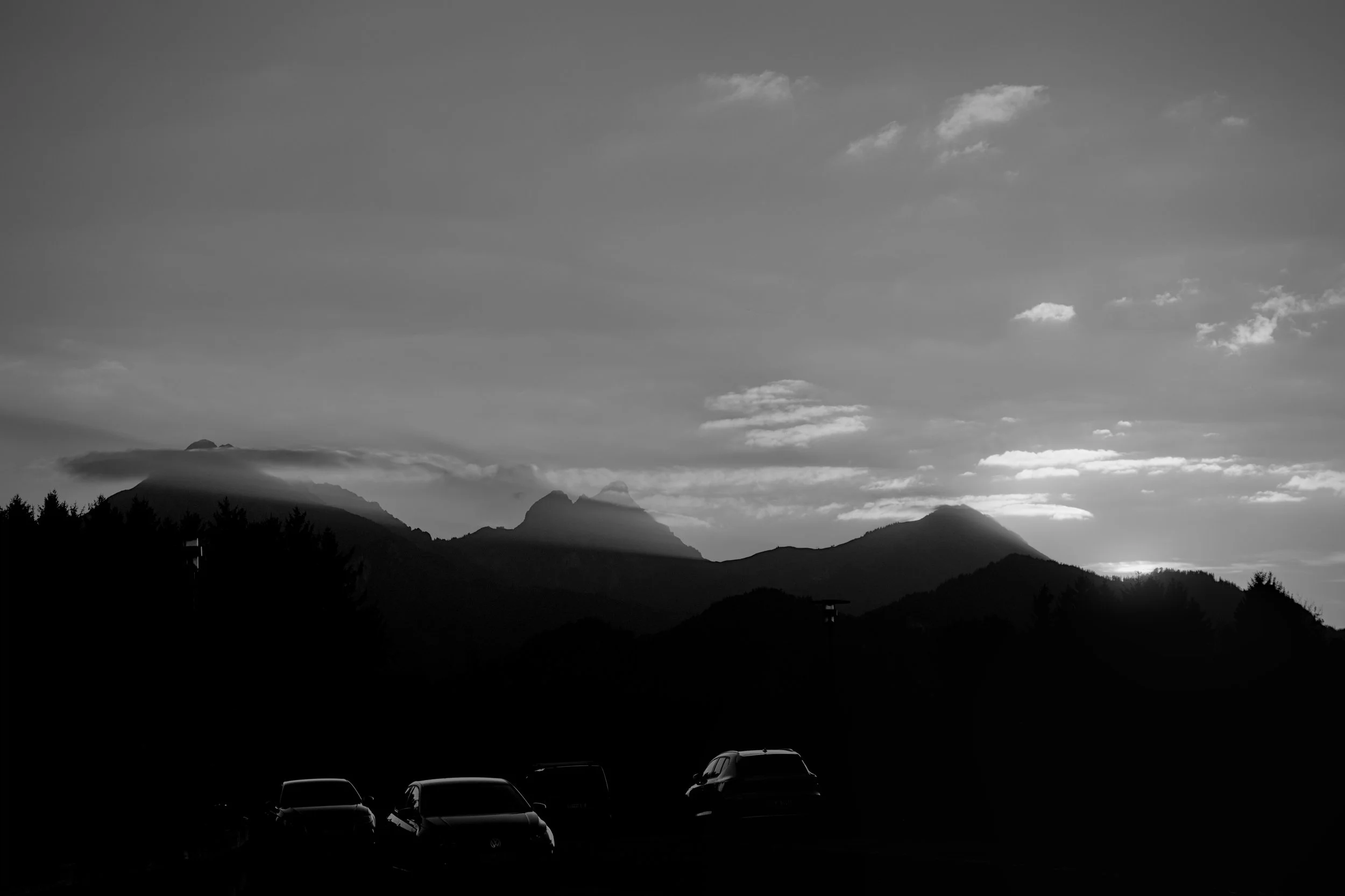
Shooting into the light in a landscape works the same way. A tree against a bright sky becomes a silhouette with a halo. A hillside with the sun cresting behind it becomes a study in rim light and shadow. A person walking toward you with the sun at their back becomes a shape, an outline, a presence rather than a portrait. The detail disappears and something more interesting takes its place.
In color photography shooting into the light is risky because the washed out sky and blown highlights look like mistakes. But in black and white those same qualities read as intention. The white sky is not overexposed. It is a tonal choice. The dark silhouetted foreground is not underexposed. It is contrast. The language of monochrome turns what color photography treats as technical failures into creative decisions.
The practical thing to know is that you need to expose for the brightest part of the scene. Let the foreground go dark. Trust the shadow. The temptation will be to lift the exposure until you can see everything but that is exactly what flattens the image. The power is in the extremes. Let the light be light and the dark be dark and see what happens between them.
The sun has been behind you your whole life. Turn around.
Ready to see the world differently? The Monochrome Method is a complete video course with lessons and assignments designed to help you craft compelling black and white images and build a portfolio that's unmistakably yours. Start Learning Today.
IF YOU WOULD LIKE TO IMPROVE YOUR BLACK AND WHITE PHOTOGRAPHY TRY THE LESSONS BELOW.









A Beginners Guide To Black And White Photography