
We Are All Still Fighting The Battle
For most of its history, photography was not considered art. Understanding that fight changes how we think about what we do.
When the daguerreotype was announced to the world in 1839, the painter Paul Delaroche reportedly declared that painting was dead. He was wrong about painting. But he was also, in a different sense, wrong about photography. Because for the next hundred years, the argument was not whether photography had killed painting. It was whether photography was art at all.
It was not considered to be.
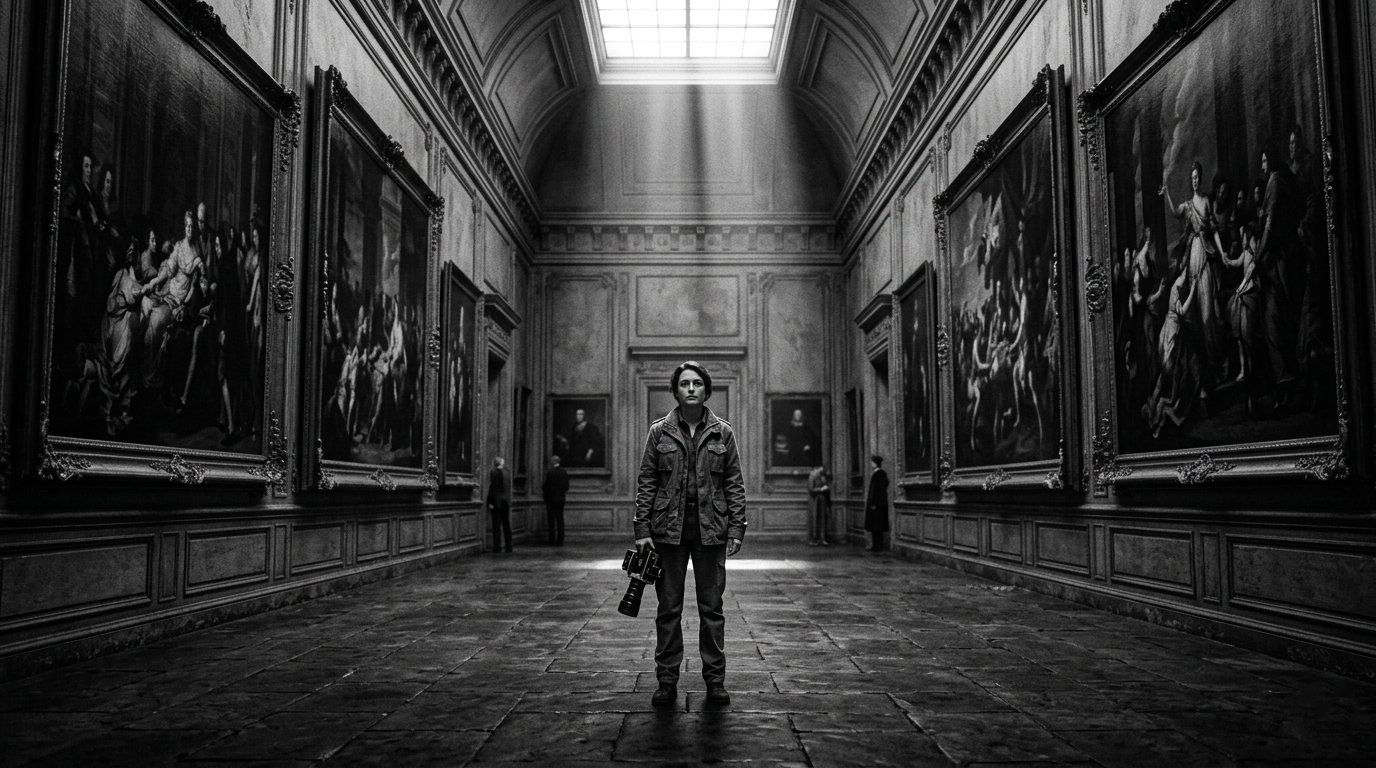
The prevailing view throughout the nineteenth century was that photography was a mechanical process. You pointed a machine at the world, light did the work, and a record was produced. There was no imagination involved. No hand. No soul. The camera was a tool of science and commerce, useful for documentation and portraiture and little else. The idea that a photograph could express something, could make an argument about the world, could be the product of a genuine artistic vision, was largely dismissed.
This had real consequences. Photography was excluded from fine art academies. It was shown in industrial exhibitions alongside machinery rather than in galleries alongside paintings. When photographers tried to make the case for their medium as art, the response from the establishment was largely condescending.
The Pictorialists were the first serious attempt to fight back. In the late nineteenth and early twentieth centuries, photographers like Alfred Stieglitz, Edward Steichen, and their contemporaries deliberately made photographs that looked like paintings. Soft focus. Atmospheric effects. Carefully staged compositions. The implicit argument was that if photography could look like accepted art then it deserved to be treated like accepted art. Stieglitz founded Camera Notes and then Camera Work, publications that presented photography with the same seriousness as any fine art journal. He opened Gallery 291 in New York and showed photographs on the wall alongside Picasso and Matisse.
It was a necessary battle but it was fought on the wrong terms. By trying to make photography look like painting, the Pictorialists were conceding the argument. They were accepting that painting was the standard against which art was measured and that photography had to earn its place by approximating it.
The real shift came when photographers stopped apologizing and started insisting on what photography could do that nothing else could. Straight photography. The sharp, unmanipulated, direct image. Stieglitz himself eventually moved in this direction. So did Paul Strand, Edward Weston, Ansel Adams, and the photographers who formed Group f/64 in 1932, named after the small aperture that produces maximum depth of field and razor clarity. Their argument was not that photography was like painting. It was that photography was its own thing entirely, with its own aesthetic possibilities, its own relationship to light and time and the real world, and its own capacity for beauty and meaning.
That argument took decades to win. The Museum of Modern Art in New York did not establish a photography department until 1940, over a hundred years after the medium was invented. Even then, photography was considered a lesser category within the institution. It was not until the 1970s that the art market began treating photographs as collectible objects with serious monetary value. The auction houses followed. The galleries followed. The critics followed, reluctantly and not all at once.
Today the argument is largely settled. Photographs hang in the world's great museums. Photographers win the Turner Prize. A print by Ansel Adams or Diane Arbus or Cindy Sherman sells for hundreds of thousands of dollars. The institutions that once excluded photography now compete to acquire it.
Here is why this history matters to us.
The fight for photography's recognition as art was not just a fight about status or money or institutional access. It was a fight about whether the act of looking, of choosing a frame, of responding to light, of finding meaning in the visible world, constitutes a creative act. Whether the person behind the camera is an artist or an operator.
We know the answer now. But knowing the answer does not mean the question has stopped being relevant. Every time someone says that digital photography is too easy, that filters make anyone look talented, that AI is making the whole thing meaningless, they are echoing the same argument that was made against photography itself in 1839. The tool is mechanical. Anyone can use it. There is no real skill involved.
The photographers who won the argument the first time did it by making work that could not be ignored. Work that was unmistakably the product of a particular vision, a particular way of seeing, a particular relationship with the world. That is still the answer. It was always the answer.
The camera does not make the photograph. You do!
Ready to see the world differently? The Monochrome Method is a complete video course with lessons and assignments designed to help you craft compelling black and white images and build a portfolio that's unmistakably yours. Start Learning Today.
IF YOU WOULD LIKE TO IMPROVE YOUR BLACK AND WHITE PHOTOGRAPHY TRY THE LESSONS BELOW.




A Beginners Guide To Black And White Photography